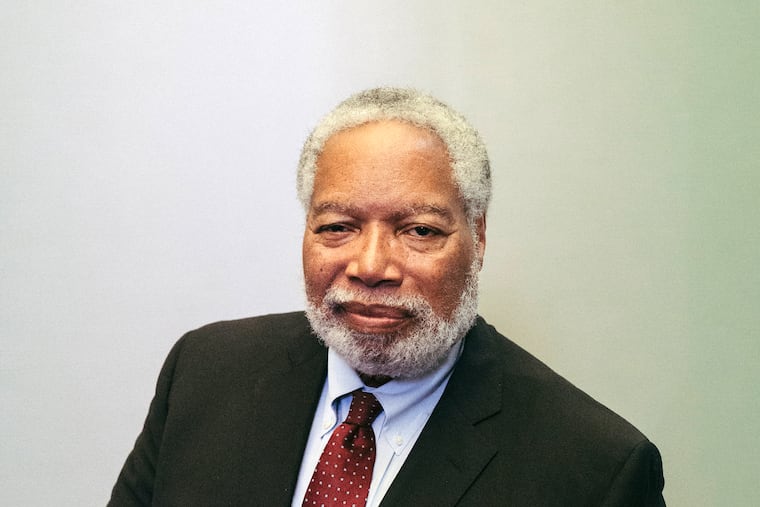
Don’t call Joe McEwen’s book a music business memoir. It’s about Tastykakes, Gamble & Huff, Michael Jackson, and more
The Philadelphia native and legendary music exec thought "Soul Music Saved My Life" would make a good title. Then Butterscotch Krimpets came to mind.
Joe McEwen was going to call his book Soul Music Saved My Life.
“Because, in a sense, it did,” says the music executive and journalist who grew up in Philadelphia in the 1960s, and got an education listening to legendary Philly DJs like Georgie Woods, Sonny Hopson, Hy Lit, Joe “Butterball” Tamburro, Jimmy Bishop, and Jerry “The Geator” Blavat.
“Or if it didn’t quite save my life, it certainly gave me a life.”
But McEwen wanted to add extra Philly flavor to his book. It collects profiles of 1970s Black music luminaries such as Kenny Gamble and Leon Huff, George Clinton, Mavis Staples, and — at a pivotal, rarely documented moment in his career — Michael Jackson.
So he came up with a title for that celebrates his favorite snack in the years he spent coming of age in Northeast Philly and Delaware County.
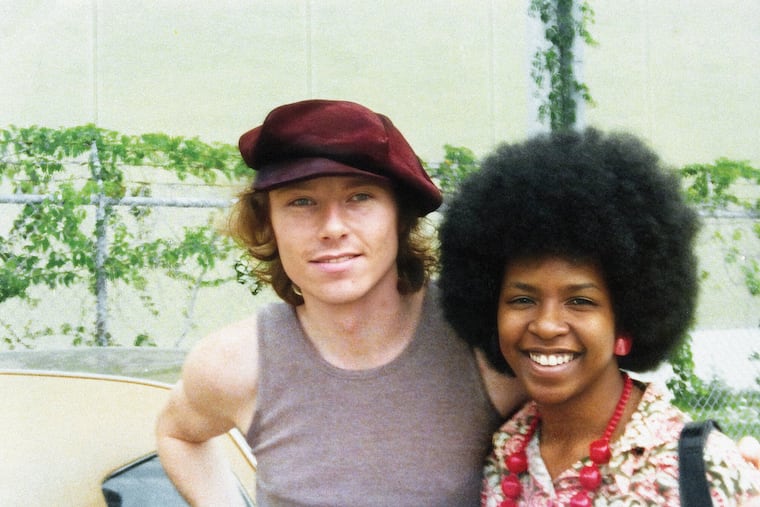
The book, which features a ‘70s photo of McEwen with Miami R&B singer Betty Wright on its cover, is called Tastykakes, Soul Songs & Shining Stars: Affections and Reflections, 1973-2025.
The title is partly inspired by a quote from the late Philly Soul producer and songwriter Thom Bell, whom McEwen captures in a short sketch from 1973.
“What people call the Sound of Philadelphia,” Bell told Philadelphia magazine in 2021, “I had a hand in almost all of those songs, the O’Jays’ ‘Back Stabbers,’ Harold Melvin & the Blue Notes’ ‘If You Don’t Know Me By Now.’ You name it. We were happy. We were from Philadelphia. We were eating Tastykakes and hoagies and drinking Frank’s orange soda.”
(Is it Frank’s? Thanks.)
“I wanted to have a Philadelphia reference from my childhood that wasn’t cheesesteaks,” says McEwen, 75, talking this month from his home in Laguna Niguel, Calif.
And for the book that also includes odes to Philly sports heroes Dick Allen, Moses Malone, and Caldwell Jones, “it wasn’t going to be scrapple.”
“Back then, you just walked to the corner store, and if you had 10 or 20 cents, it was a Butterscotch Krimpet. Or how about a Peanut Butter Tandy Cake, or a Chocolate Tandy Cake?"
Not a music business memoir
Starting in the late 1970s, McEwen had an illustrious career as an A&R executive. (The initials stand for Artist & Repertoire.) Before retiring in 2024, he worked for labels like Columbia, Sire, Verve, and Concord and teamed with Elvis Costello, Allen Toussaint, Uncle Tupelo, Paul Simon, Little Jimmy Scott, Charlie Rich, Dinosaur Jr., Steve Earle, Lizz Wright, and many others.
Tastykakes, Soul Songs and Shining Stars isn’t a music business memoir, however. It includes McEwen’s writing for the website of his friend Peter Guralnick, the Elvis Presley and Sam Cooke biographer, and tributes to departed Philly soul exemplars like Walter “Bunny” Sigler and William “Poogie” Hart of the Delfonics.
There’s also an autobiographical intro in which McEwen uncovers painful family secrets that, he says, “were locked in a closet of memory.” And it tells of a cultural awakening in which his guides were Philadelphia DJs on stations like WFIL and WDAS, the latter which gave voice to the Black community during the Civil Rights era.
Temptations songs played on ‘DAS soundtracked the pickup basketball games a teenage McEwen played at Rose Playground in Overbrook Park. In 1966, he saw James Brown at the Philadelphia Arena at 46th and Market. “It changed my life,” McEwen says.
In Tastykakes, he writes: “It was the first music performance I ever attended. Somewhere inside remains the heart of a 16-year-old kid at the Arena, overcome by a sense of uncompromising, incredulous amazement at the drama and spectacle unfolding before me, along with ten thousand other frenzied attendees surrendering ourselves to James Brown.”
“For me, it was a great time to grow up,” McEwen says. “The idea that disc jockeys were as big or bigger than artists — Georgie Woods at the Uptown would be in huge letters, and Martha & the Vandellas would be below that.”
The main courses in McEwen’s book are profiles he wrote in the 1970s for alt-weeklies like the Boston Phoenix and the Real Paper after leaving Philly to go to Tufts University outside Boston. There he launched his own Sundays with Mr. C radio show.
Finding history in a garage
Digging up his writing from the ‘70s for the book “was a labor of love and a vanity project,” McEwen says. The trouble was, none of it was digitally available.
Some turned up as mildewed copies he found in 2019 in the garage of the Montclair, N.J., house he had shared with his former wife, the late music publicist Mary Ellen Cataneo.
Among those he paged through during the COVID-19 lockdown was the Gamble and Huff story from 1973, when he spent an afternoon with the Philadelphia International Records team at their South Broad Street office.
In retrospect, McEwen feels that as a 22-year-old white kid he was in over his head, trying to understand the inner workings of one of the great soul music labels of all time. “I didn’t know what I was doing,” he says. “I thought I did, but I didn’t.”
McEwen is selling himself short: The profile offers a fascinating perspective on PIR when the label was riding high with hits like the Intruders’ “I’ll Always Love My Mama” and MFSB’s Soul “TSOP (The Sound of Philadelphia).”
Better still is the Michael Jackson profile from 1977, which McEwen needed an archivist friend to track down after it didn’t turn up in the garage.
‘Who cares about Michael Jackson?’
The piece — well-timed with Tastykakes publication by Ze Books days after Anton Fuqua’s Michael biopic opened to boffo business — chronicles an in-between time for Jackson. His child star run with the Jackson Five was over. Solo superstardom with Off the Wall and Thriller was yet to come.
MJ and brothers had left Motown and worked with Gamble and Huff, among others on 1976’s The Jacksons and 1977’s Goin’ Places. While the 19-year-old was regarded as a massive talent, his future was uncertain.
“No one’s ever written anything like this about Michael Jackson,” McEwen says. “Or I could never find anything. It was that period of time when he was doing The Wiz, and his record sales were at a low ebb. My editor said to me, ‘Who cares about Michael Jackson?’”
McEwen did, and hung around a New York soundstage during the filming of Sidney Lumet’s musical in which Jackson played the Scarecrow alongside Diana Ross’ Dorothy.
“There’s a lot of music inside of me that I haven’t brought out,” Jackson told McEwen. “I like to write about more than ‘I need you baby, come and hold me.’ I like writing songs about a chair, or a tree, or a lonely man. Odd things, like the Beatles song “The Fool on the Hill.” Those are the types of songs I really like.”
In the piece which Rolling Stone excerpted last week, Jackson talks about how people would throw money at him in appreciation of his James Brown dance moves when he was 6, and kids would steal that money when he went to school the next day.
Before going to a party with a chaperone handler who won’t allow him to attend alone, he watches an old video of himself performing with his brothers on The Ed Sullivan Show.
“Sometimes, though, I look at kids playing in the playground and I wonder what that really feels like,” he tells McEwen. “I never did run in the streets or any of that stuff. I never was really free.”
“Tastykakes, Soul Songs & Shining Stars: Affections and Reflections, 1973-2025″ is now available in bookshops.