The Wanamaker Light Show and Dickens Village are safe this year. The future remains uncertain.
The beloved — and endangered — Philadelphia holiday traditions will go on this holiday season, at least. Fundraising continues to ensure its future.
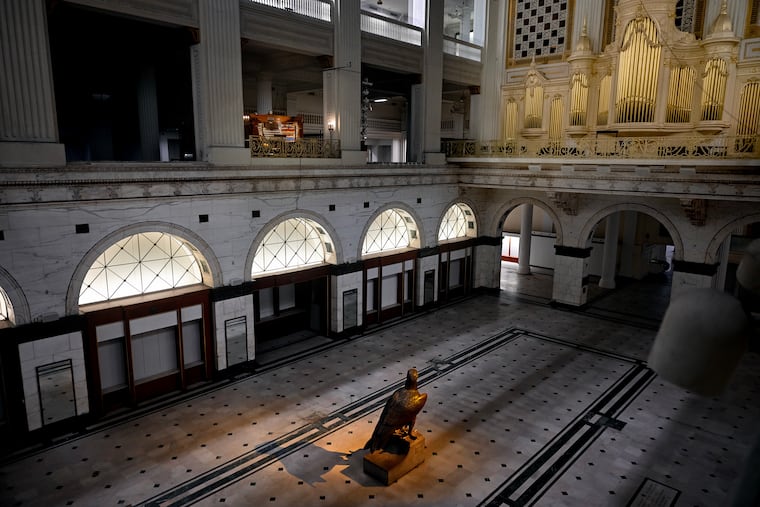
The lights are dark now.
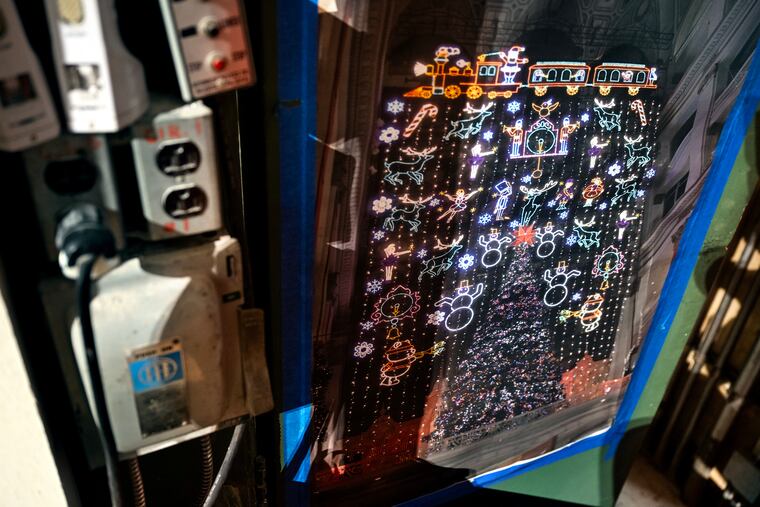
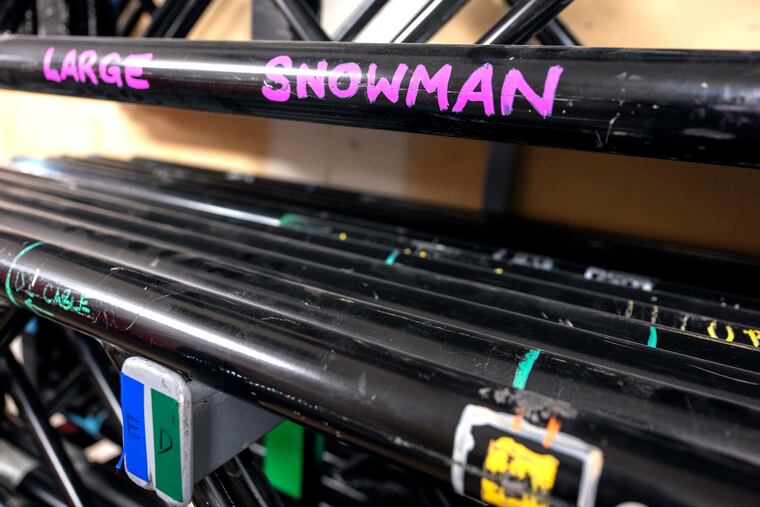
The 100,000 individual bulbs that sparkle and dance during the Wanamaker Light Show, and the paneled Santa and Sugarplum Fairies and snowflakes, are stowed away above Wanamaker’s Grand Court, in a tiny circuit room, known as “Frosty Central.”
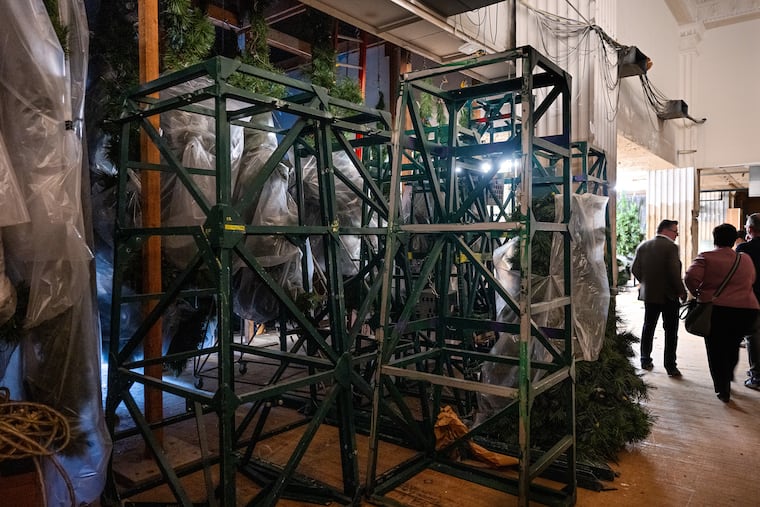
The 154 branches of the show’s towering tree hang in a storage room behind the Wanamaker Organ, an expanse known affectionately as the “meat locker.”
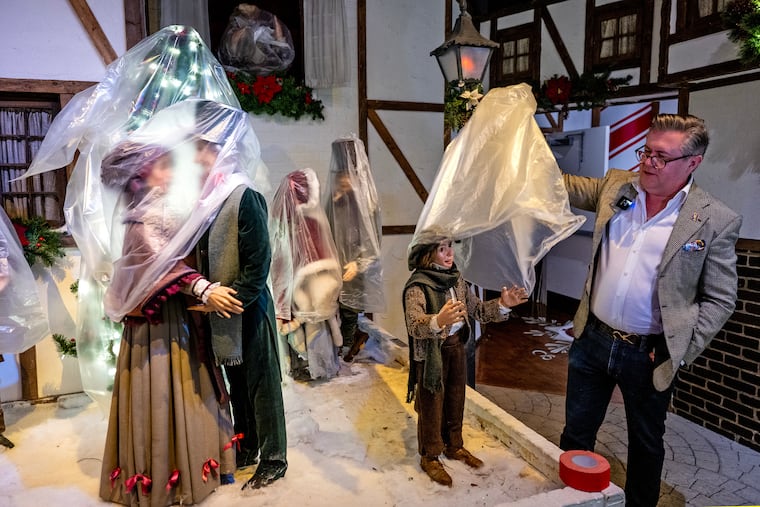
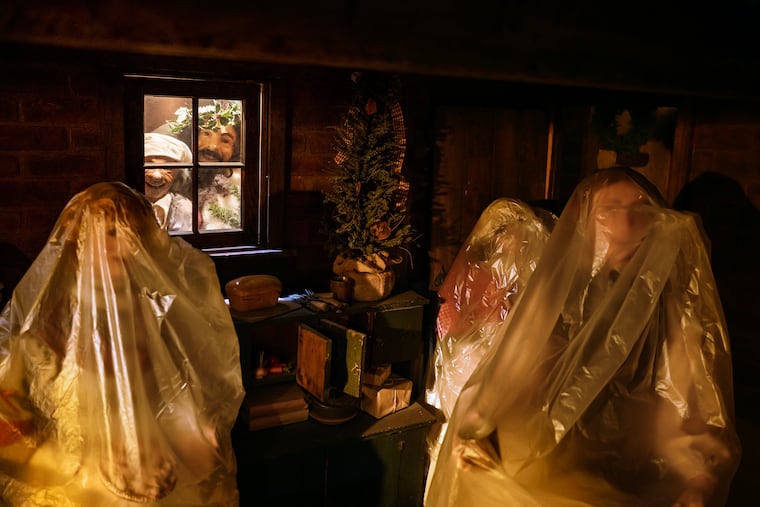
And the cobbled streets of Dickens Village are dark and deserted, the animatronic characters that display scenes of Ebenezer Scrooge’s Christmas redemption, frozen in place and sheathed in plastics, like ghosts all themselves.
Despite the sale of Macy’s earlier this year, the Light Show and Dickens Village, both beloved Philadelphia holiday attractions, will be broken out of their boxes and wrapping once more come Thanksgiving. And while news this summer that a fundraising effort would ensure that the shows endured for at least one more holiday season fell on many merry ears like the joyous Christmas morning shouts of Scrooge himself, a question remained: What is yet to come for the future of the Light Show?
In July, the Philadelphia Visitor Center, in partnership with new Wanamaker Building owner TF Cornerstone pledged to raise $350,000 to bring both attractions back this winter — and to begin to plan for their future care.
“The more we raise, the more hours it can be open.”
Kathryn Ott Lovell, president and CEO of the Philadelphia Visitor Center, and leader of the effort to Save the Light Show, said this week that with nearly 700 individual donors and gifts from philanthropic foundations, the group has reached enough of its goal to say definitively that the Light Show and Dickens Village will be produced this holiday season. And that both shows will remain free to the public.
But with less than 100 days until Christmas, the fundraising continues, Lovell said.
“We’re not sure how many days we can do it and how long each day,” she said of the Light Show, last performed five times a day during the holiday season. “The more we raise, the more hours it can be open. The more accessible it can be.”
But then there’s next year and all the years after that — and the challenge of perhaps having to find a new permanent home, and steady source of funding, for the cherished holiday attractions.
“We’re set for 2025,” Lovell said. “The future is unknown.”
‘Who’s looking out for the Light Show?’
Beginning in 1956, the Wanamaker Light Show has long been a cherished Philly holiday staple. For life-long Philadelphians, like Lovell, those holiday memories run deep.
“Nostalgia is a core, fundamental feature of us as Philadelphians,” said Lovell, who first started attending the show, when her father, a supermarket employee from Mayfair, began bringing her family in the 1970s. And who kept bringing them back year after year even after he got robbed of his Christmas money on Market Street.
“It just symbolizes the holidays,” said Lovell, who now brings her own daughters. “We never miss the Light Show.”
So when word came in March that Macy’s was sold — and that the organ and Grand Court were both protected as landmarks — a question immediately occupied Lovell: “Who’s looking out for the Light Show?”
She quickly realized she was not alone in her concern.
Brian Cawley, a visual director at Macy’s, who helped produce the show for years before the store was closed, quickly signed on. Cawley, 52, remembers coming to the Light Show as a child from Delaware and thinking he had walked into a palace.
“You really thought you were in the North Pole,” said Cawley, who is also a card-carrying board member of the Friends of the Wanamaker Organ. “It was magical.”
Nearly every day of his 12 years at the old department store, customers shared their memories of the Light Show, he said.
“This place was always more than a store,” Cawley said, on a recent afternoon, touring the quiet streets of Dickens Village. “Since its inception, the Grand Court has been a cultural crossroads and touchstone for the city of Philadelphia. Everyone was welcomed here.”
With other volunteers, the pair turned their attention to this Christmas. They found a receptive ear in Jake Elghanayan, senior vice president at TF Cornerstone, which is based in New York.
“I didn’t know how central it is to the Philadelphia holiday experience,” Elghanayan said. But he does now. “When I try to explain it to other people, I say it’s the rough equivalent of [New York’s] Macy’s Thanksgiving Parade.”
With renovation of the building slated to begin in February — and expected to last two years, it’s likely the show will have to find a new home during that time. While helping to ready the building and providing operational support for this year’s show, Elghanayan said he is glad that a private group has stepped up to try to secure the show’s future.
“We’re a real estate company, so we don’t exactly know how to operate a light show,” he said.
Where will it go?
Small donations to save this year’s light show immediately poured in, Lovell said. (With the calendar getting thinner, the group is asking any potential donors to pledge the Christmas-y amount of $12.25, since every dollar helps.)
So did the holiday memories.
Robin Shreeves, 58, a freelance food and wine reporter from Haddonfield, first began going to Wanamaker Light Show as a child, when tickets were still sold for breakfast with Santa and the old monorail still ran along the ceiling of the toy floor. She donated, she said, because she hopes to keep bringing her full grown boys back each year.
“It represents magic to me,” she said. “And the holidays wouldn’t be the same without it.”
Growing up in Trevose, Beth D’Ercole, 71, remembers riding the old Reading Railroad to her holiday show, when she was 6 — along with the smell of chestnuts and hot pretzels on Market Street. She attends the Light Show each year with about a dozen family members, she said.
“You can’t keep the people from the Light Show,” she said.
But the issue, Lovell said, is where can you put the Light Show?
It immediately became clear to Lovell and Cawley just how big a challenge it may be to produce the Light Show — which operates on suspended trusses and a digitized lighting and sound program — and all 6,000-square-feet of Dickens Village, anywhere besides the Wanamaker Building. By this point, it’s practically built into the building, they said.
As much of an emotional grip that the show has on many Philadelphians, it’s also an economic driver, Lovell said, adding that each year 2,000 visitors per hour attend the Light Show and 10,000 people a day visit Dickens Village.
Whether a new permanent home is needed is a question that won’t be settled until new tenants for the building are announced. For now, it’s just all about this year, Lovell said. And all the costs — security, staffing, cleaning — that come with putting on a historic Light Show in a shuttered department store.
“My hope is that if we do it right this year, maybe we can prove ourselves to show that we can continue this partnership for years to come,” she said. “We need the public’s help.”