Carter Hart will be even more important to the Flyers as the NHL keeps evolving | Mike Sielski
Scoring is up, which means an elite goalie has become more valuable. The Flyers finally have one.
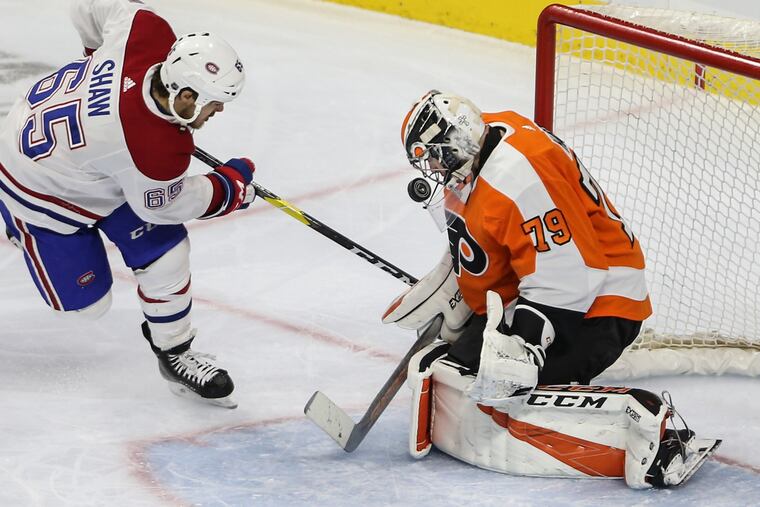
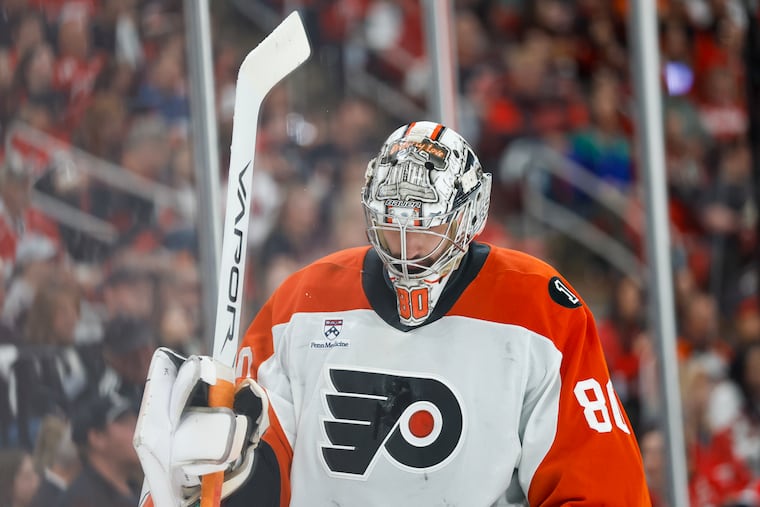
Carter Hart wants love handles. It doesn’t go too far to say that one of his offseason goals is to add them, for practical reasons. He stands 6-foot-2 and weighs 185 pounds. But because the NHL, over the last two years, has changed its rules and parameters regarding goaltending equipment, including streamlining the leg and chest padding that goalies can wear, Hart doesn’t naturally cover quite as much of the net as he’d like.
“I wouldn’t mind being 190, 195, just to put a little extra on the waist,” he said after the Flyers had practiced Tuesday at the Skate Zone in Voorhees. “I do want to put on muscle this summer, for sure.”
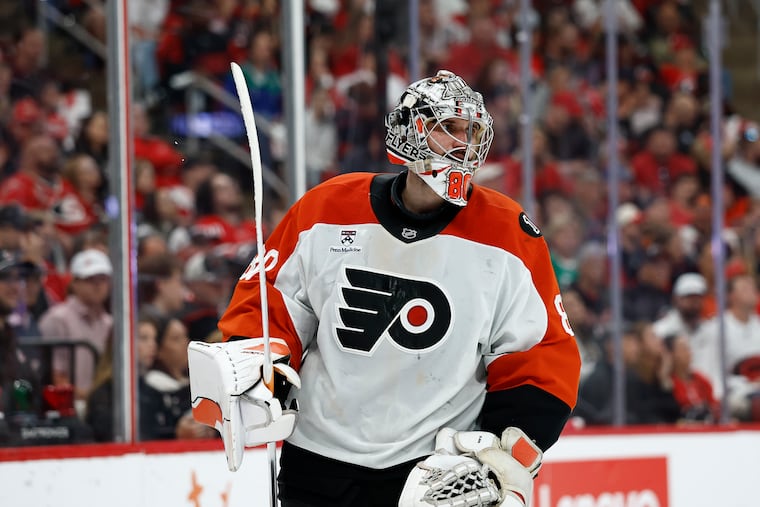
Whatever carb loading and protein pounding Hart might do during the next few months will have a plan and a purpose behind them, of course. The aim will be to make a bigger, even better version of himself, and his team will need such a goaltender, now more than ever. Hart has been the best thing to come out of this bus wreck of a Flyers season, and if the league continues trending as it has recently, his presence and excellence will become only more valuable to them.
For a decade in the wake of the 2004-05 lockout and the rules changes, designed to open up offense, that it wrought, the NHL went through what was, statistically speaking, a golden age of goaltending. The average save percentage climbed from .901 in ’05-06 to .915 in 2015-16. The notion that a team needed a “franchise goalie” to compete for a Stanley Cup, let alone win one, became dubious, and rightfully so. The gap between a truly great goaltender and a merely good one had shrunk until it was all but irrelevant, until the more consequential difference between two teams wasn’t their goalies but their overall amounts of talent (and, in certain situations, their styles of play).
Those days are gone, at least for now. Average save percentage has fallen each of the last four seasons, to .910 this season, and offense is up around the NHL. Ahead of Tuesday night’s slate of games, the average team was scoring 3.02 goals per contest, the highest such figure since 2005-06 (3.08). The smaller, thinner equipment is a reason for that jump, but it’s not the only one. Goaltenders got taller, wider, and more athletic over time, and playing the position evolved into what Flyers television analyst Bill Clement has called “a teachable system,” allowing goalies to grow so technically proficient that they became harder to beat. Now, the scorers are starting to catch up.
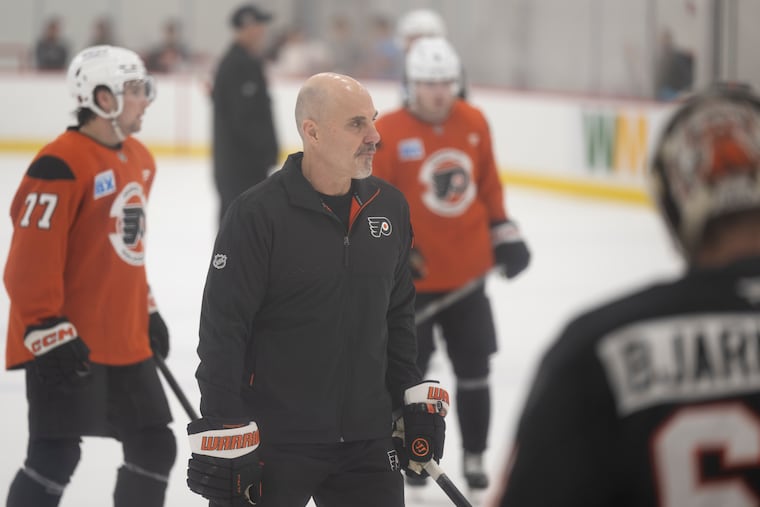
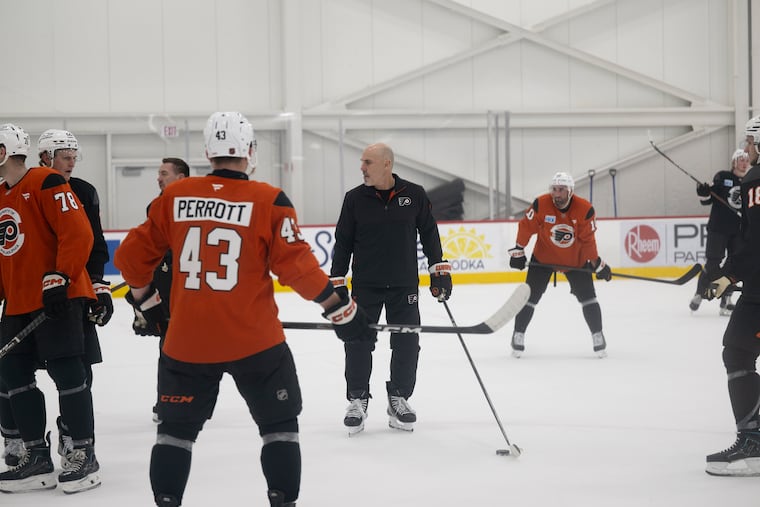
“You have forwards who have skills coaches and learn different ways to protect the puck and shoot the puck in different situations: forehand, backhand, pull it in, push it away, quick-twitch shots,” said Flyers coach Scott Gordon, himself a former NHL goalie. “There are a lot of things that shooters focus on now during the summer, and they’ve gotten themselves back to where they’re even with the goaltenders.”
Hart himself has picked up on these developments. “As a goaltender,” he said, “you notice every little different detail that’s in the game.” He was asked, then, to consider their implications: In this environment, the gap between a good goaltender and a great one will grow. An elite goalie will be a greater advantage to his team, because his God-given ability to stop the puck won’t be offset by a lesser counterpart’s oversize leg pads or bulletproof chest protector, and one could argue Hart already is elite. His save percentage, .921, is the eighth-best in the league this season among all goaltenders who have played as many games, 27, as he has, and it’s the highest for any pre-21-year-old goalie in NHL history.
“For me, personally, I’ve just been having fun,” he said. “I hear about all the things that people say about Flyers goaltending and all that stuff. I’ve heard it since I got drafted here. But for myself, I just try to worry about myself and the team and everything that’s going on in here. The only thing that matters is what’s inside this locker room and inside this group.”
Cliched as Hart’s answer was, he’s not completely wrong. His emergence answered, or should have answered, general manager Chuck Fletcher’s most pressing question: What will this team look like once it has a settled goaltending situation? As it turned out, the team doesn’t look much different. It’s convenient to suggest that, under Gordon, the Flyers have won more frequently because they’ve been a sounder defensive team, that they’re better coached than they were under Dave Hakstol. But according to the database Natural Stat Trick, they’ve given up more scoring chances per game under Gordon (28.2) than they did in their 31 games this season with Hakstol (25.1), and they’ve surrendered about the same number of high-danger scoring chances per game (10.9 under Gordon, 10.6 under Hakstol). For the most part, Hart has just masked their mistakes.
Those figures suggest that there are more, and more significant, changes for Fletcher and the team’s coaches (whoever they might be next season) to make. Those changes might include adding another defenseman, persuading a few of the team’s most gifted offensive players to be more conscientious defensively – and yes, we’re looking at you, Jake Voracek and Travis Konecny – and/or acquiring forwards who already play both ends of the ice. The fortunate part for the Flyers is, this sport has become all about the goalies again, and by all appearances, they’ve finally found one.