Denver Barkey has earned his look at center and could fill an area of need for the Flyers long term
Rick Tocchet said that he thought Barkey was the team’s best player in Game 1, and, impressed, kept Barkey at center in Game 2. Now he'll be leaned on with Noah Cates out for the series.
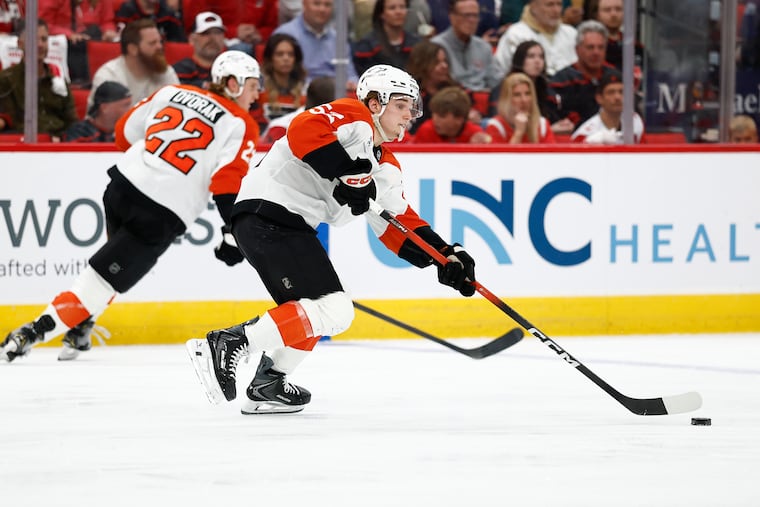
Late in Game 1 against Carolina, desperate for a spark on offense, the Flyers moved Denver Barkey to center on a line with Alex Bump and Matvei Michkov.
Rick Tocchet said later that he thought Barkey, 21, was the team’s best player, and, impressed, kept Barkey at center in Game 2. Now with Noah Cates sidelined for the rest of the series, Barkey’s going to get more runway in the middle as the Flyers progress.
It was actually team president Keith Jones who initially planted the seed for Tocchet to try Barkey at center.
“Jonesy came up to me and said, ‘Hey, don’t be afraid to use Barks,’” Tocchet said Wednesday. “So I got to give Jonesy [credit], because I think Jonesy’s scouted him and talked him up quite a bit.”
Barkey played center in the OHL with the London Knights, but was projected as a winger at the NHL level, in no small part because of his 5-foot-10, 171-pound frame.
But Tocchet has praised Barkey for his relentless play style, staying aggressive on pucks despite his small frame.
“If you get thrown in that position, I think the biggest thing for me is, in the D-zone, you’re in the corners,” Barkey said. “As the center, you’ve got to win a lot more battles, have good body positioning — big guys in the corners, too.
“That’s the biggest thing I try to take pride in, when I am at center, is getting in there and winning those battles, showing that I’m not going to get pushed around.”
Cates is a player who also initially came to Philadelphia with designs of being a winger. He was experimented with at center and now is the Flyers’ primary shutdown defensive pivot.
“He’s so smart,” Cates said of Barkey. “Good on the walls. When he has the puck with space in the middle, he obviously makes the right play 99 percent of the time. Making those little plays. If he can do that from the center position, that really adds to him and his team.”

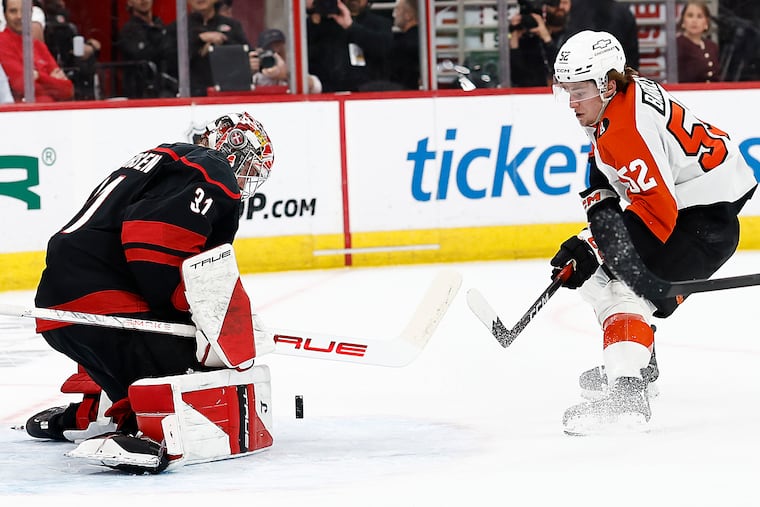
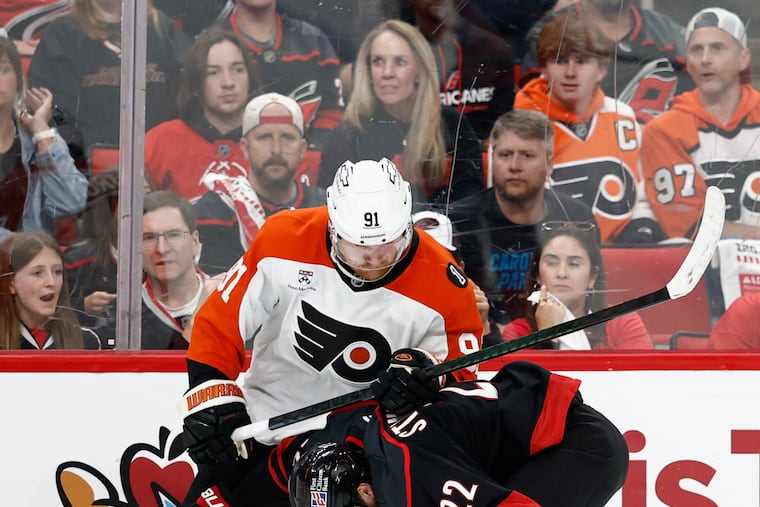
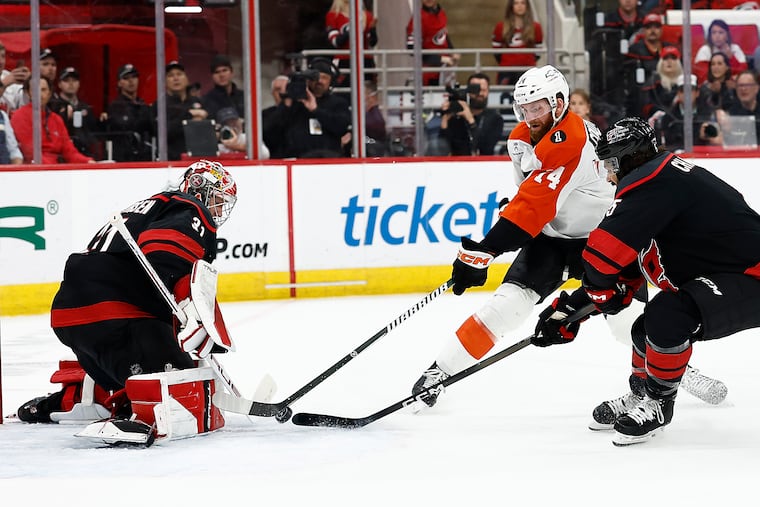
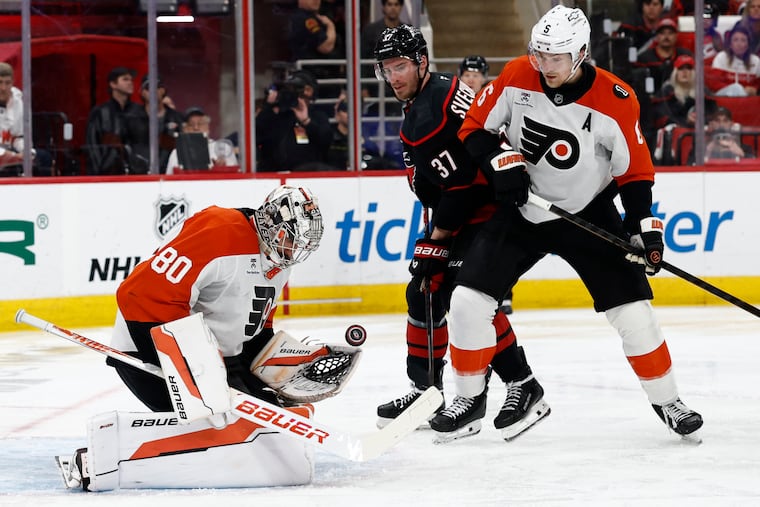
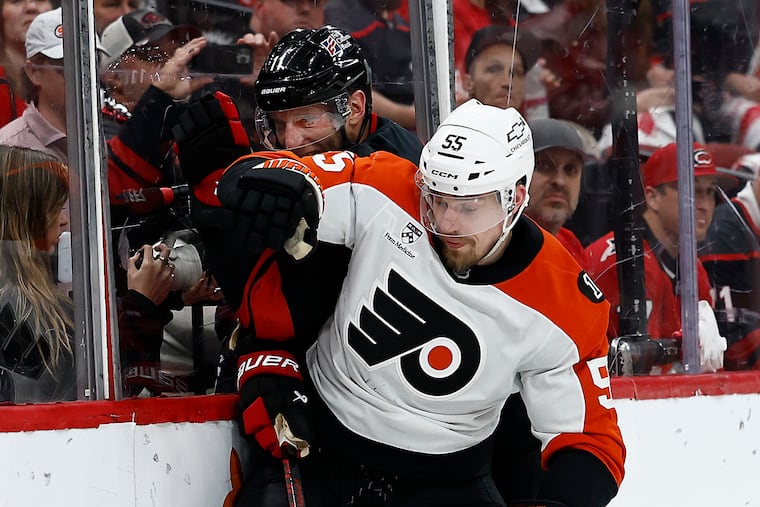

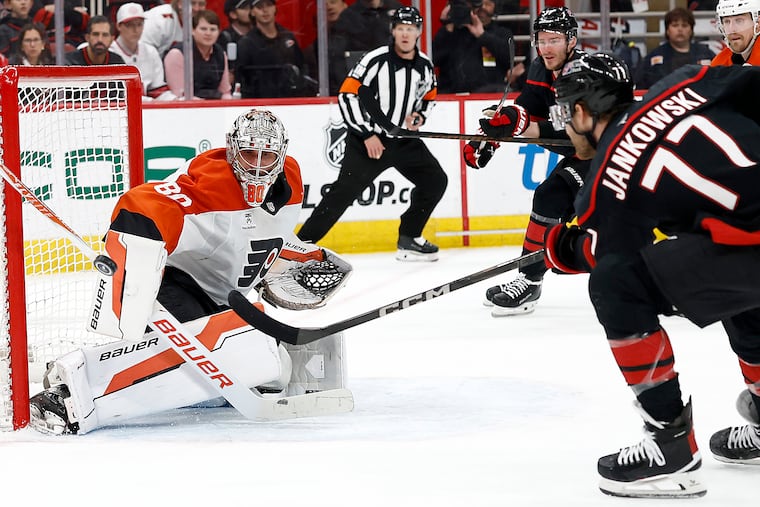
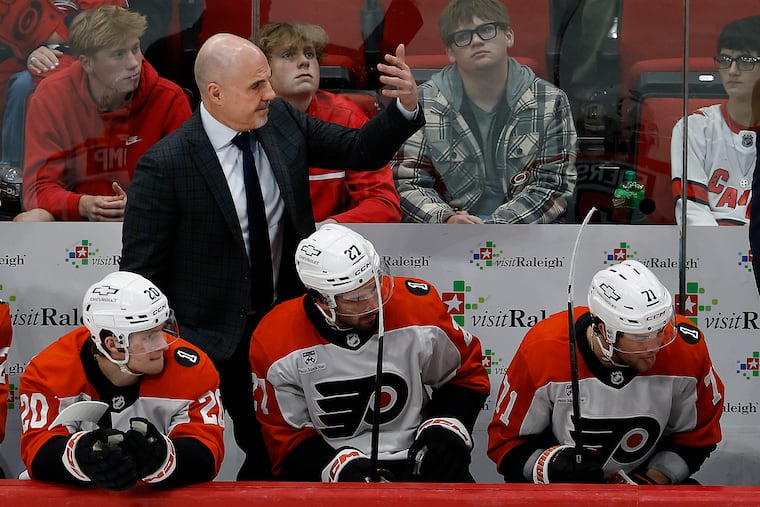
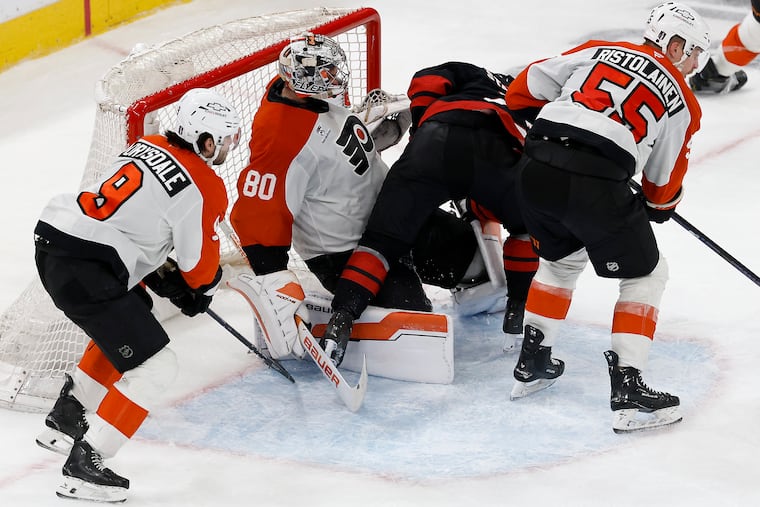
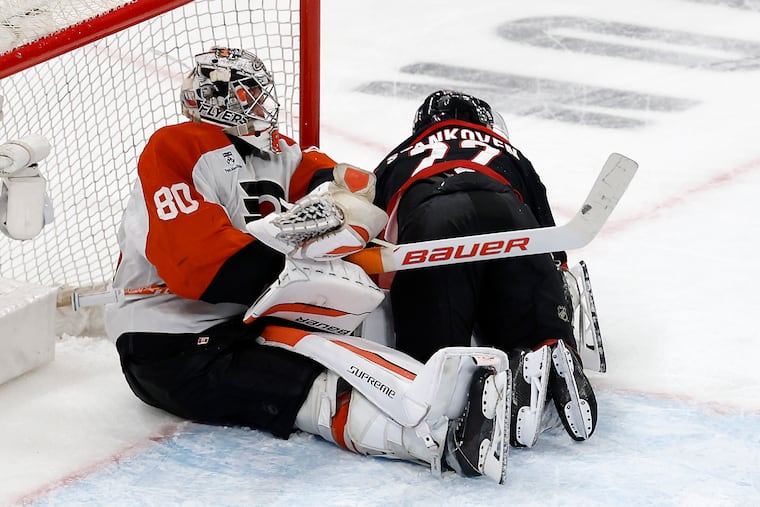
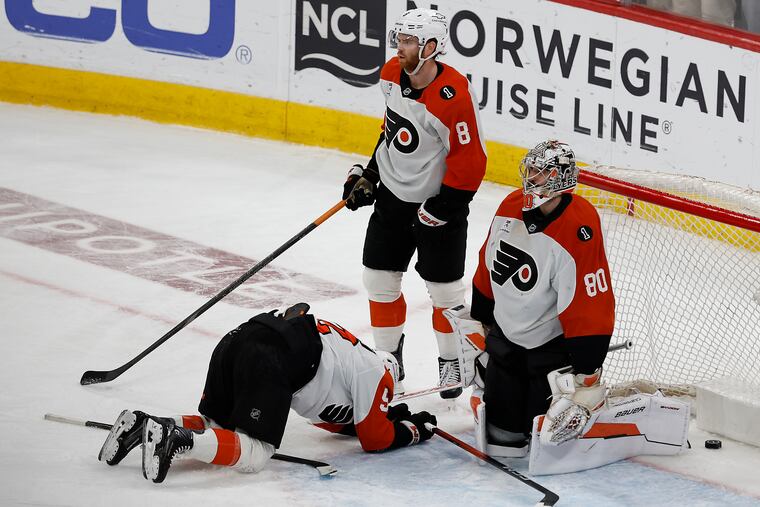
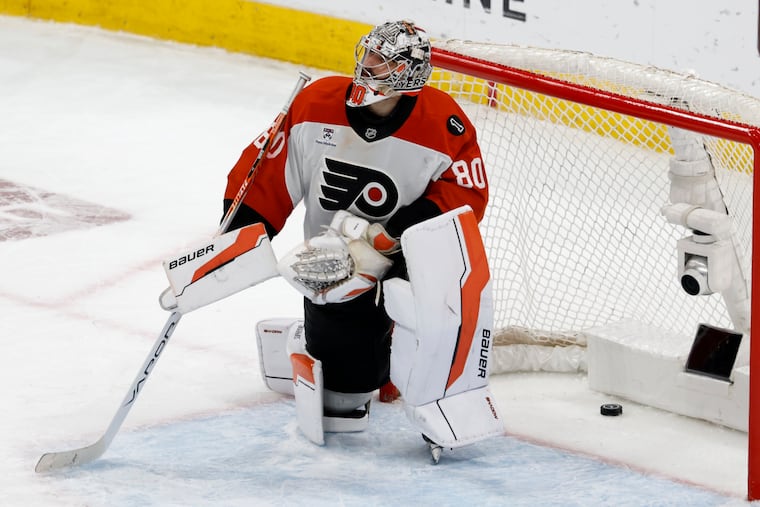
A potential NHL comparison for Barkey is Carolina’s Logan Stankoven, who, at 5-8 and 165 pounds, was initially penciled in as a winger after dominating the Western Hockey League at center. When Stankoven arrived in Carolina after a trade from Dallas, Rod Brind’Amour gave him a look at center, and he’s thrived to start the playoffs.
“Barkey had the characteristics last night of moving his feet and hounding the puck,” Tocchet said Sunday. “That’s what Stankoven does. ... He has tree trunk legs, and Barkey could eventually have bigger legs, but when it comes to moving your feet, and a dog on a bone, and all that stuff, those guys are similar.”
The Flyers are extremely deep at wing compared to center, so if Barkey is able to make a successful long-term transition to the premium position, that opens up numerous possibilities for the Flyers’ future lineup. All that starts with this series.
» READ MORE: Three key numbers for the Flyers entering a must-win Game 3
Breakaways
Owen Tippett is out for Game 3 vs. Carolina with an unspecified day-to-day injury. Tippett, who has not played in the series, did participate during Thursday’s morning skate. ... Christian Dvorak, who missed Wednesday’s skate and was considered day-to-day, was on the ice for morning skate Thursday and will play. “He’s a warrior,” Tocchet said of the centerman.