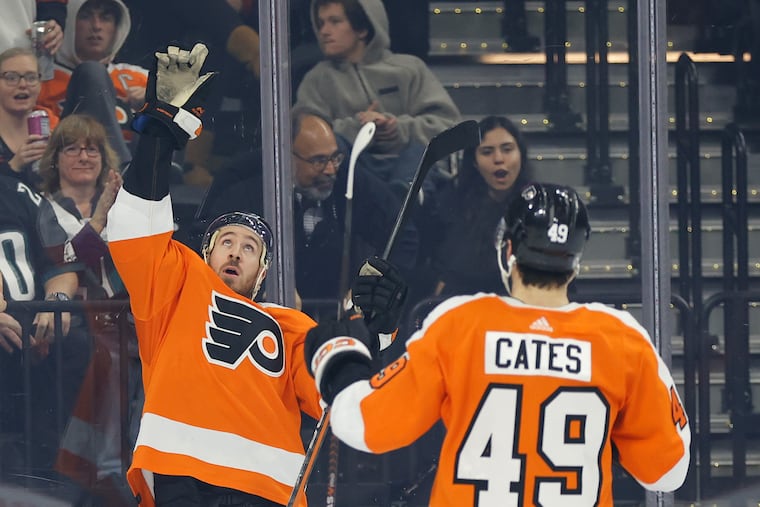
New Flyers coach Rick Tocchet begins to set the tone in the defensive zone: ‘We want to be aggressive’
Sam Ersson, who will work in partnership with Dan Vladař, doesn’t plan to be complacent with a 41-41 split at goalie: “I’m looking to grow into a goaltender who can play 65 games a year.”

During his Q&A with The Inquirer in May, Rick Tocchet broke down his defensive zone strategy, revealing he does not use man-to-man pressure in the defensive zone.
“It’s a very aggressive zone,” he said, the day he was hired. “I don’t like a run-around pressure type of system. It’s got to be calculated. There are certain parts of the D-zone, we will tweak — and I want to tweak a little bit of my system — but it’s more of an aggressive zone type, double, triple up when you can, and when you can, it’s more of a keep the puck on the outside."
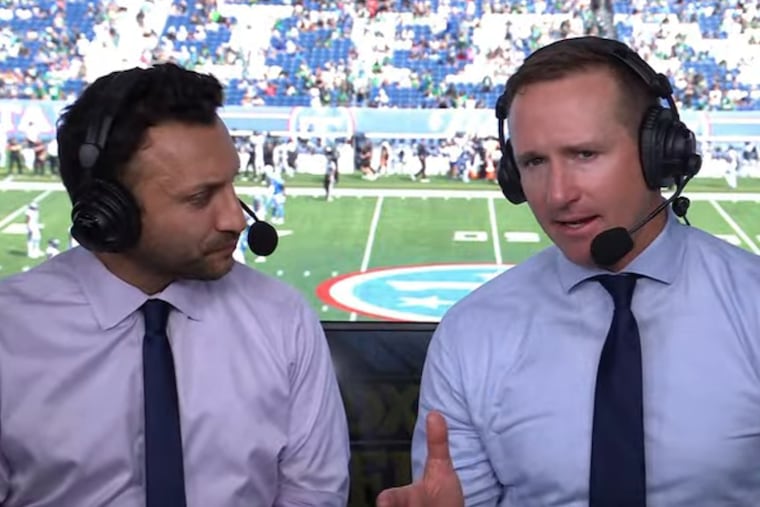
On the second day of Flyers training camp, he began implementing this with his players. And while he wished he had a whiteboard when he sat down with the media on Friday, the former TV analyst, who was known to be the breakdown guy on TNT’s broadcast, was able to convey several key aspects to his structure.
Zone defense, generally speaking, is about players covering a specific area and having to release and re-engage constantly with opponents who come into their zone. Although this was a similar style that former coach John Tortorella employed, Tocchet isn’t afraid to use the overload, shifting to the strong side of the ice — where the puck is — to out-man the other team.
» READ MORE: Danny Brière ushers in a new Flyers era, but ‘it’s not just about making the playoffs’
“If you look at all the good teams, they’re comfortable when the other team has the puck on the outside, like there’s no panic, give them the outside. They want to shoot the puck on the outside, that’s on our goalies,” said Tocchet, about what analytics calls low-danger shots.
“So that’s what we’re going to really teach a lot this year. Yeah, we want to be aggressive. We want to double up.”
The Flyers spent time Friday talking about transfers, where “the puck goes from one side to the other, who goes where.”
Tocchet said it was a little different from last year, so part of his approach is to teach why they are doing this differently. The focus is to squash plays, cut off resets, only give opponents poor quality chances, and, with the overload, push them to a side.
In summation, it’s to implement Tocchet’s key strategy of goalies only needing to play half the net because, when “the goalie, if he knows where the puck is, he’s got a better chance to stop it.”
“Just having that conversation, talking with the guys, I think is important that it definitely will make our job easier,” goalie Sam Ersson said about the idea of having to make fewer post-to-post stops. “But I think for the guys as well, to have a clear system in that way, it’s always good for everyone to know kind of what we do and simplify things.”
Added forward Owen Tippett: “It’s a five-man group whenever you’re in the D-Zone, and as long as you know your responsibility, and everyone else’s, it’s going to make it easier, and ultimately, that kind of makes it easier on the goalies. [It’s] not putting them in a position where they have to go post to post, and they can see every shot coming at them. Today was the first day we kind of touched on that stuff, and it’s going to be exciting to keep going and build on that.”
Tocchet wants the Flyers to be a puck possession team, but that means being hard to play against when you have it and when you don’t. And when you don’t, “you’ve got to know where you’re going.”
But being aggressive doesn’t necessarily mean checking, hitting, and being in someone’s face. As he remarked, it’s not always about outmuscling guys to get the puck back.
“If we can win those battles with technique ... it doesn’t have to be just always aggression and hitting something. You can use your brain,“ Tocchet said. ”I was telling Trevor Zegras today, he can use his brain to muscle guy. He’s not going to out-muscle everybody down low, but he can do it with the brain, and I think that will come with a lot of our players.”
A bit of a yapper himself, the new bench boss wants the Orange and Black to also use their words. They can also use their hands and sticks if needed, but they have to do something, because with players swapping coverages, switching areas, and moving throughout the zone, a critical element of zone defense is communication.
“Sometimes you have quiet guys on your team, and you can’t be quiet on the ice,” he said. “I don’t care if you go to dinner and you’re quiet. When [you] hit the ice, you’ve got to bark out orders. ‘I got this guy.’ All good defensive teams [have] communication. It does not always have to be verbal; it could be pointing, or something like that.”
It also helps to have veteran guys and a captain who once won a Selke Trophy as the NHL’s best defensive forward.
“You look at a [Sean] Couturier; he’s got a good hockey brain when it comes to D-Zone. I was watching today. [Matvei] Michov, he didn’t know where he was going. He kind of waits to see what he does, and then he reacts. That’s a good hockey player,” he said of Couturier, who played with the young Russian winger for the second half of last season and showed chemistry with him.
“He doesn’t just go, ‘Oh, Tocc said, I have to go?’ Well, no, I can’t go because this guy, the kid, might have made a mistake, so he covers up for him. That’s good defensive teams covering up for each other.”
Sam Ersson
Speaking of Ersson, the cool, calm goalie is focused on the future.
Last season was a bit of an up-and-down year as he battled injuries (he said “knock on wood” that he’ll be healthy this year), untimely goals, and poor play in front of him. There have been glimpses of what the 25-year-old can do, and he usually has big stretches of impressive play, but now with Dan Vladař as his goalie partner, he will be pushed to get better and more consistent.
And although he is expected to start the season lid-lifter against the two-time defending Stanley Cup champion Florida Panthers on Oct. 9, he isn’t walking into the rink expecting a handout.
“I never go into a situation, a year, taking anything for granted,” said Ersson on Friday. “It’s always a competition. It’s the best league in the world. So if you’re afraid for competition, you’re probably in the wrong spot.”
» READ MORE: New Flyers goalie Dan Vladař says he’s coming to compete. His underlying numbers are intriguing.
The thought with having Ersson and Vladař, who is a veteran backup looking to take the next step, is that the Flyers will have more of a 1A and 1B split of games, akin to what the Boston Bruins did with Jeremy Swayman and Linus Ullmark, than a sure-fire No. 1.
But that doesn’t mean Ersson is going to be complacent with a 41-41 split.
“I think in today’s NHL, you need two good goalies. I think it’s, looking at most teams, that’s kind of the way to do it. But at the same time, I’m looking to grow into a goaltender who can play 65 games a year,” he said.
Tocchet hasn’t paid too much attention to the goalies just yet. After all, he has goaltending coach Kim Dillabaugh to focus on them. However, he definitely likes what he sees in the 6-foot-3 Swede.
“He’s an intelligent goalie. He’s a big goalie, not a lot of unnecessary movement. ... I do like big goalies,” said Tocchet. “There’s not a lot of movement, and when you have those guys, they look big, and hopefully they stop those pucks that they should be stopping.”
Breakaways
Tocchet said that center Jett Luchanko, who can only play in the NHL or with his junior team in the Ontario Hockey League, Guelph, this season due to the NHL-CHL agreement regarding players under 20, is “pushing for a spot, he’s pushing for a spot, definitely” with the Flyers. ... Karsen Dorwart is out day-to-day with an upper-body injury. The forward, who stood out at development and rookies camps, was hit hard on Thursday by Owen Tippett and did not participate in his group’s second session later that day. Matthew Gard, a 2025 second-round pick, moved up from Group C, which is players signed to AHL contracts, to take his spot. ... The Flyers have assigned three players to their junior teams. Goalie Joey Costanzo, a camp invite, was sent to his OHL team in Windsor, Ontario; defenseman Austin Moline, a 2024 seventh-rounder, was assigned to Madison of the United States Hockey League; and forward Nathan Quinn, selected in the sixth round in June, was sent to Quebec of the Quebec Maritimes Junior Hockey League.