Only 23 Philly bars have been approved to stay open until 4 a.m. Many are still waiting.
They represent roughly a third of the 65 Philly businesses that applied for approval, with the majority of applications still in review.
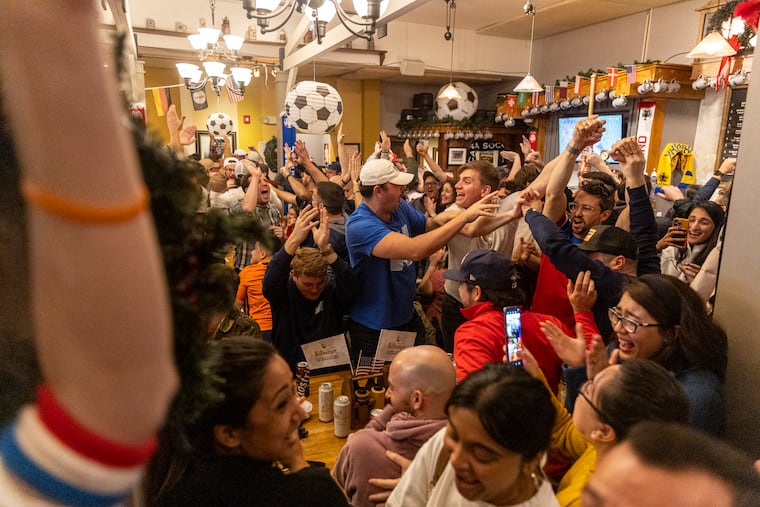
The eve of the World Cup was also the night before some Philadelphia bars could stay open until 4 a.m., according to a bill signed by Gov. Josh Shapiro in March.
But thanks to a sneaky provision in the bill, most establishments interested in a later last call weren’t yet eligible to do so — and in some instances won’t be until after July 4.
As of Wednesday evening, just 17 establishments were approved by the Pennsylvania Liquor Control Board to stay open until 4 a.m. for the duration of the World Cup, according to a list on the PLCB’s website. By Thursday morning the PLCB approved six more establishments, according to their website.
They represent roughly a third of the 65 Philly businesses that applied to the PLCB for approval, with the majority on the PLCB’s list marked as “in review” as of Thursday. The PLCB cancelled six applications due to ineligibility.
The PLCB started approving applications for extended hours on Wednesday, spokesperson Shawn Kelly told The Inquirer over email, and they will continue on a rolling basis. The last day applications will be accepted is June 19, Kelly said.
Establishments in the first wave of approvals include the strip clubs Sin City, Club Risque, and Cheerleaders; Rittenhouse Square sports bar Lucy; nightclubs Woody’s and Concourse Dance Bar; South Philly’s Live Casino! and bowling alley South Bowl, among others.
The permit process has caused confusion for some local bar owners, who said the delay in approvals have placed their World Cup plans on hold.
Rittenhouse Square jazz and billiards bar Cellar Dog applied for a permit to stay open until 4 a.m. on May 11, according to the PLCB’s records, and did not receive a permit until Thursday morning.
Owner Alfonzo Luna feared the last-minute notice would threw a wrench in the bar’s World Cup festivities. “We submitted everything right and on time, and we were just waiting,” he said on Wednesday night, prior to receiving approval. “I’m sure it’s a lot on [the PLCB’s] end, but for us it’s just frustrating to wait around because it puts a hold on any sort of marketing or operation changes that we that we need to make.”
How is this process supposed to work?
The permits are part of legislation introduced by Pennsylvania state senators Sen. Joe Picozzi and Sen. Vincent Hughes and signed into law by Gov. Josh Shapiro in March that would enable establishments in Philadelphia to stay open until 4 a.m. from June 11 to July 19, which covers all World Cup matches, Semiquincentennial celebrations, and the MLB All-Star game at Citizen’s Bank Park.
The thinking was that establishments should be able to stay open later to serve an influx of tourists looking to catch late night World Cup matches. In practice, however, many bar owners told The Inquirer that juice of late night hours isn’t worth the squeeze, between higher insurance premiums, an uncertain return on investment, and navigating bureaucracy.
Late night permits are available to all hotels, breweries, distilleries with liquor licenses in Philadelphia City limits. To initiate the application process, establishments must first have paid $250 to the City of Philadelphia’s Dept. of Commerce and completed the Liberty Bell Safe Certification Program, a one-day safety and compliance training.
Then, establishments must apply for a $500 permit from the PLCB, which would enable them to stay open until 4 a.m. through July 19. To be approved, applicants can’t have any pending licensing, inspection, or fiscal objections associated with their business. The City of Philadelphia can also protest applications filed with the PLCB, Kelly said, and can request a permit be revoked at any time.
Also baked into the process: A “30 day hold mandated by law,” Kelly said, that gives the PLCB “no discretion to approve or issue” permits less than 30 days after an application is received.
In other words, if a bar applied on June 4 to be open until 4 a.m., the earliest they could be approved would be July 4, giving them a little over two weeks to take advantage of extended hours. The PLCB decided to hold off on issuing permits earlier to prevent establishments from using them illegally, said Kelly
To be open late for the World Cup’s entirety, Kelly said, a business would’ve had to apply by May 11. “The PLCB conducts a full and complete investigation of every application it receives. There is no set timetable for that review,” said Kelly. “If an applicant submitted all required documentation — and filed in time — they will receive the Philadelphia 250 permit for the full period."
Popular sports bar Cavanaugh’s Rittenhouse applied for a permit on May 21, according to PLCB records, meaning the earliest they could stay open late is June 21. Director of Operations Mike Anderson said the delay, while frustrating, isn’t a big deal.
The bar had only planned to exercise the 4 a.m. privileges on a case-by-case basis, said Anderson, when vibes at the bar are high. “I didn’t want to be left out if everyone else was doing it,” he said. “It could be the thing you tell stories about.”
The permit process was “easy enough,” said Anderson, whose sole gripe is “the lack of guidance.”
“I am guessing that we will eventually be approved or denied,” Anderson went on. “To be honest, it doesn’t really matter if we get approved. If we get denied, I wish I could reclaim my costs.”
Some bar owners, however, are just grateful everything got done in time . Four of FCM Hospitality’s properties — Concourse, Craft Hall, Dolphin Tavern, and the sports bar Lucy’s — are among the first wave of businesses approved for extended hour. Owner Avram Hornik said the process “couldn’t have gone better than it had.”
The PLCB and the city “are building the plane as they fly it,” he said. “It’s really hard to do something new … but I think the city and the state did an excellent job to make this happen.”
This story was updated on Thursday. Staff reporter Michael Klein contributed to this article.