Old City’s latest all-day cafe doses coffee, tea, and mocktails with kava and kratom
Old City Kava Company doses mocktails with kava and kratom, two substances associated with stress relief — and health risks.
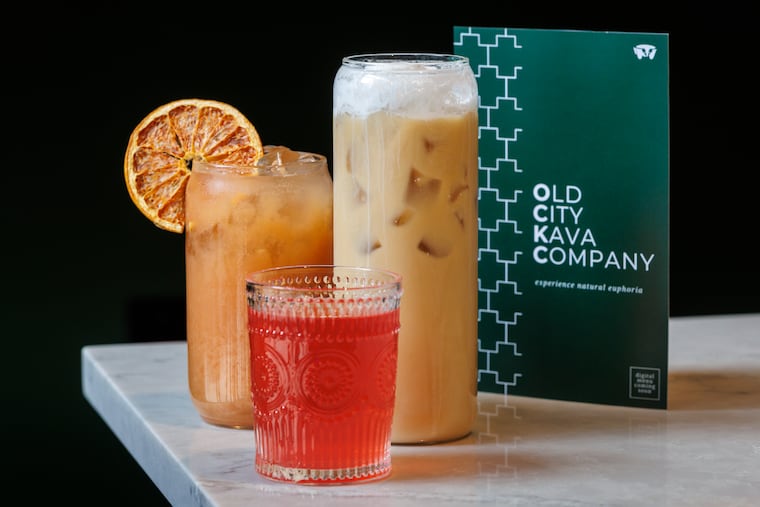
A new all-day lounge in Old City is betting on kava and kratom — two controversial psychoactive plants — to pull crowds away from bars.
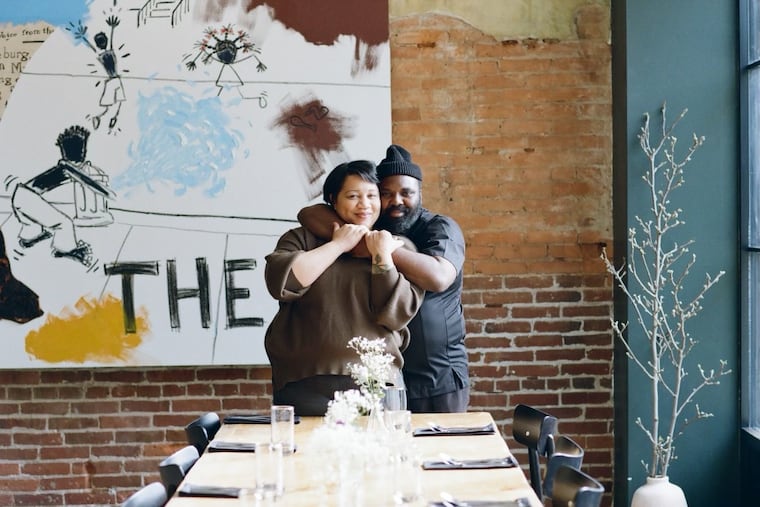
Old City Kava Company opened in December at 40 S. Second St., across from a Fine Wine & Good Spirits and a honky-tonk bar. The lounge specializes in kava and kratom mocktails intended to boost mood and lower inhibitions, not unlike knocking back a couple of drinks. The establishment’s co-owners, Luca Kobza and Adam Lagner, believe the substances can open up a new social scene in Philly — namely, one that isn’t centered on alcohol.
“We’ve had groups of people showing up who I otherwise believe would’ve been at bars ... maybe having a cocktail and then regretting it the next day,” said Kobza. Customers have told them the space is a welcome change from bars and nightclubs, Kobza said.
The 1,900-square-foot lounge is designed for lingering, with 60 seats between its bar, two-top tables, and plush jeweled-toned couches. The space has a small-yet-serviceable board game collection, plus a rotating display of contemporary art for sale from Kensington’s Vizion Gallery.
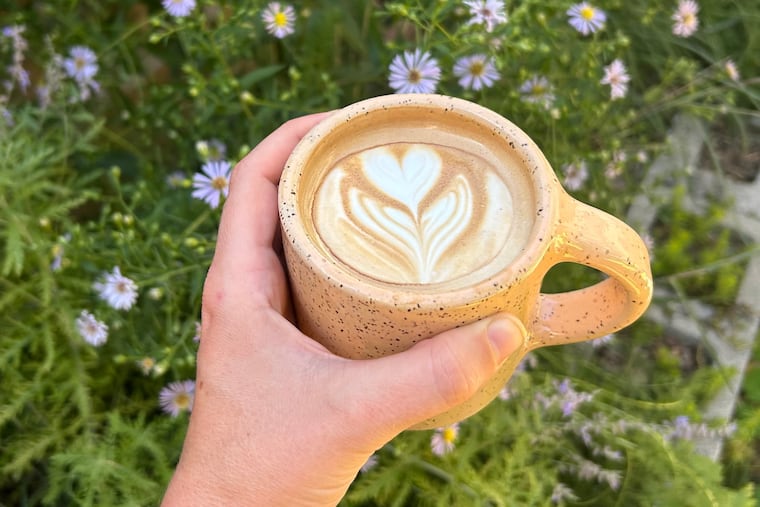
Old City Kava opens at 10 a.m. daily, serving its kava and kratom-infused mocktails alongside drip coffee from ReAnimator, teas from Random Tea Room, and a selection of pastries from wholesaler Au Fornil. By day, it largely functions as a coworking space.
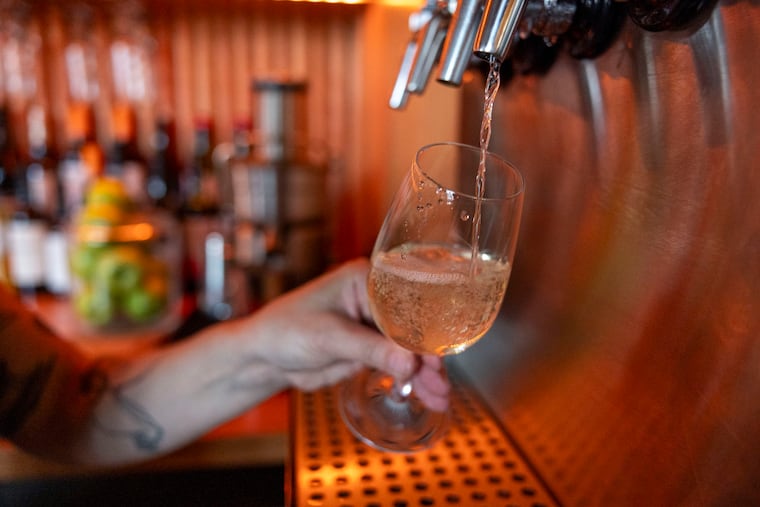
The atmosphere shifts at night. Open till midnight on weekdays and 2 a.m. on weekends, the space feels cocktail bar-adjacent, with a menu of 16 kava and kratom-infused mocktails. They range from a kava-lemongrass-and-guava paloma to a kratom-kombucha-ginger beer mule and a matcha tonic shaken with kava and kratom. Lagner and Kobza have already hosted run clubs, singles events, and book clubs to highlight the spectrum of Philly’s sober-curious scene.
What are kava and kratom?
Old City Kava sources kava — derived from the leaves of the piper methysticum, a large plant that grows in Hawaii and other South Pacific islands — from Fiji, Tonga, and Vanuatu and kratom from Vietnam, Thailand, and Malaysia. They brew both as teas, adding roughly a tenth of an ounce to each mocktail.
The lounge’s eight employees had to undergo 15 hours of in-house “kava-tending” training, which mostly involves learning how to educate first-timers. Lagner hated kava the first time he tried it.
“It’s bitter, earthy. I was very off-put,” said Lagner. At the age of 30, he now prefers drinking it straight.
Kava is traditionally brewed as a tea for religious ceremonies. Advocates say the substance can briefly reduce anxiety or stress.
Kratom, on the other hand, comes from the leaves of a Southeast Asian tree and acts like a caffeine-esque stimulant in small doses and a sedative in larger ones. Users treat it as a catchall to self-soothe pain, depression, and anxiety.
A visit to the lounge starts with a kava-tender offering samples of pure kratom or kava tea, the latter of which makes your lips tingle with a mild numbness. Despite having no real relationship with one another, kava and kratom often come as a package deal in kava bars across the U.S., which have exploded in popularity as an alternative to traditional bars during a time when fewer young people are choosing to drink.
Both substances are contentious, having raised public concerns about addiction and other risks. Neither is currently regulated by the Food & Drug Administration, but the FDA announced plans last summer to schedule kratom as a controlled substance after an uptick in reports of synthetic kratom addiction. Sold in tiny bottles at gas stations and smoke shops, synthetic kratom isolates 7-OH, a compound that can cause intense opioid-like addiction and withdrawal symptoms. Kratom is currently banned in seven states. In December, two Pennsylvania state representatives introduced a bill that would prohibit the sale of the synthetic variety.
» READ MORE: ‘It latches on and doesn’t let go’: 7-OH kratom is fueling addictions across Philly
These laws and the FDA’s plan include carve-outs for the botanic kratom from the leaf — which Old City Kava uses in its mocktails. The varieties are fundamentally different, Lagner said.
“A lot of people conflate the two ... when they hear ‘kratom,’ they think of the products you’re seeing in gas stations,” he explained. “We serve natural kratom leaf tea how it’s been consumed safely for centuries in Southeast Asia. They’re much less potent in their natural form.”
That may be true, but experts still have concerns about botanic kratom. According to Dr. Adam Scioli, chief medical officer of Wernersville, Pa.’s Caron Treatment Centers, botanic kratom is five to 20 times less potent than its synthetic counterpart. But it still carries an addiction risk, Scioli said, and can cause other health issues, such as nausea, high blood pressure, a racing heartbeat, and averse drug interactions, particularly when consumed with sedatives.
“What concerns me most clinically is that kratom is often perceived as ‘natural and therefore safe,’” said Scioli. “History has repeatedly shown us that natural substances can still carry significant addiction risk, especially once commercialized.”
A bar, but not
Lagner, a Blue Bell native and La Salle High School grad, met business partner Kobza, also 30, when they were both students at the University of Miami. The duo would study together at kava bars on South Beach, and after graduating in 2018, opened their own, called Nektar Lab, in Naples, Fla.
Lagner and Kobza sold their stakes in Nektar in 2022. They moved to Philly shortly after, where they found a far less vibrant scene than what they were used to in Florida, the kava capital of the U.S. (Philly has only one other kava bar, Queen Village’s Lightbox Cafe.)
» READ MORE: Lightbox Cafe brings kava, a relaxing South Pacific drink, to Queen Village
“Most kava bars around the country are very grungy and tiny,” said Lagner. “And there haven’t been enough concepts [in Philly] to show people that this can be a nice alternative to the social scene that revolves around alcohol and can also fill gaps in some of the daytime third-space sort of sphere.”
Old City Kava’s bestseller is the Old City Red Eye: kava and kratom tea shaken together with ReAnimator cold brew, oat milk creamer, agave, and vanilla syrup. “You would think the kava and kratom cancel each other out because, at face value, it’s an upper and a downer in the same drink,” said Kobza. “But in reality they complement each other. The kava takes the edge off the coffee ... the [kratom] just adds a mild euphoria.”
Kobza said first-timers shouldn’t have kava or kratom on an empty stomach, or try too many cocktails at once. (That’s what this Inquirer reporter did, and she ended up with a splitting headache plus lingering nausea.)
Carissa Kilbury, 24, goes to Old City Kava weekly. Sometimes, she spends full workdays at the lounge, sipping a few infused drinks while at her computer. A slow drinker, Kilbury said she doesn’t feel much other than mild relaxation.
“When I’m stressed at work, I feel a little bit less stressed, which is nice,” she said. “It feels like a bar without really being a bar. I like that vibe.”
Old City Kava Company, 40 S. Second St., 215-402-7047, oldcitykava.com. Hours: 10 a.m. - 12 a.m. Sunday through Thursday; 10 a.m. - 2 a.m. Friday and Saturday.