Fry, Eagles, fry: How Lincoln Financial Field recycles 150,000 pounds of cooking oil
From crab fries to jet fuel, this is the path canola oil takes after Eagles’ games.

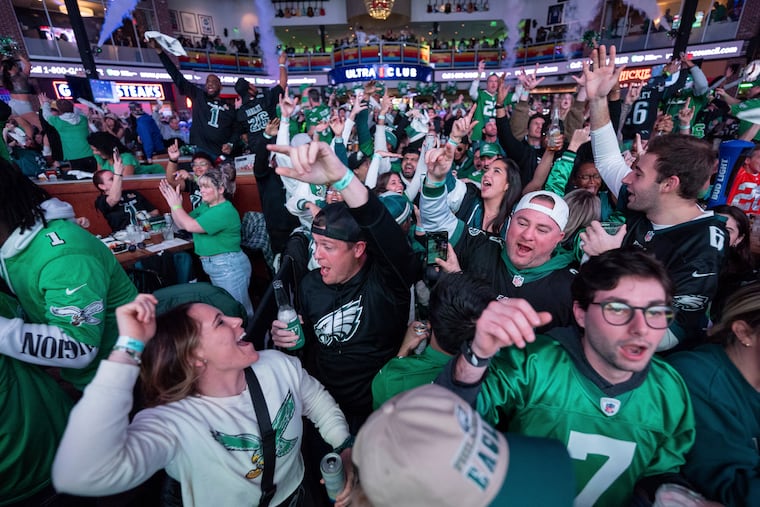
On the Monday morning after the Eagles beat the Los Angeles Rams, the seats at Lincoln Financial Field were empty, the sunlight trickled through otherwise dark stands, and crews of workers swept the stadium, collecting stray pieces of trash before power washing the chairs.
In the concourse, Filta Environmental Kitchen Solutions’ technicians weaved their way from one concession stand to the next, pushing mobile vacuum units and filters, servicing the now-cool deep fryers that, just hours before, churned out fried chicken tenders and crab fries to tens of thousands of fans.
It takes a lot of oil — hundreds of pounds per game — to make your favorite stadium foods golden brown and crispy. What happens to all that after the game? The Linc’s eventually gets turned into biodiesel to power vehicles and airplanes, but there are many steps in its transformation.
“It’s dump day,” said Derek Riebel, 49, the owner of several Filta franchises servicing the Mid-Atlantic. (The environmental services company has locations nationwide.) “We’re going to dump every fryer in the stadium.”
Last year Filta’s eight Philadelphia-based trucks, each equipped with waste oil tanks, collected 150,000 pounds of oil from Lincoln Financial Field’s 195 fryers, split between 42 concession stands.
Filta also services the fryers at the Philadelphia Zoo, Drexel University, University of Pennsylvania, Subaru Park, and local hospitals in addition to independent restaurants, which may have a single fryer. In total last year, the company collected 1,328,035 pounds of used fryer oil in the Philadelphia region.
Riebel grew up in Delaware County and is an Eagles fan. He happened to attend the Eagles-Rams game and eat a chicken cutlet fried in the same oil he was filtering the following day. “I get to serve my hometown team, and I feel good that I’m eating out of the fryers we took care of.”
If you peer into the fryers at a Philly Favorites stand before a technician draws out their vacuum hose, you’ll see crumb-filled oil the color and texture of melted dark chocolate. The basket rests are littered with stray chicken nuggets and fries. The scent of chicken tenders — the stadium’s most popular menu item — lingers in the air. During this Monday morning session alone, Filta collects 1,400 pounds of used oil. So far this year, nearly 60 tons of cooking oil have been recycled.
The oil had cooled overnight, but Filta’s equipment can filter oil as hot as 450 degrees, a necessary feature for a doubleheader or overlapping sports seasons.
Most cooking oil can get recycled, “so long as it’s not lard, which becomes a solid block, and [which] you don’t often see unless it’s a doughnut shop,” said Riebel. The type of oil is determined by the stadium, and all of the stands at Lincoln Financial Field use canola oil. Xfinity Mobile Arena uses a mix of soy and canola, while Citizens Bank Park uses soy.
Sucking out the oil from each fryer and cleaning them out in a single stand takes Filta technicians about 20 minutes; stands with up to 10 fryers can take longer. The team, which ranges from two to six staffers per dump day, performs tasks in assembly line fashion: vacuuming, wiping down grates and fryer interiors with degreaser, then refilling fryers with oil.
Technicians need to periodically wheel their vacuum units back to a parked truck to pump oil into an 850-gallon tank. Once they’re done at the stadium, they bring their waste oil to a warehouse, where it’s filtered again. Once 6,000 gallons have been collected, the spent oil is transferred to cooking-oil recycler Mahoney Environmental via truck, and eventually, transported by train to a refinery in the Gulf of Mexico, where it gets transformed into biodiesel oil.
Oil recycling is all part of a bigger green initiative that the Eagles are working toward. Lincoln Financial Field’s staff has composted almost 125 tons of food and recycled 84 tons of cardboard so far this year. Trash is sorted on-site to ensure that recyclables don’t head to the landfill.
The Eagles anticipate over 100 tons of cooking oil will be recycled this year, so next time you see a vehicle that runs on biodiesel, perhaps the crab fries you ate at the last game are helping to power it.