After a 33-year run, Metropolitan Bakery has sold. Its Rittenhouse shop closes this month, but the breads will live on.
The buyer, Pete Merzbacher of Merzbacher’s bakery in Germantown, plans to keep Metropolitan’s brand and production intact.
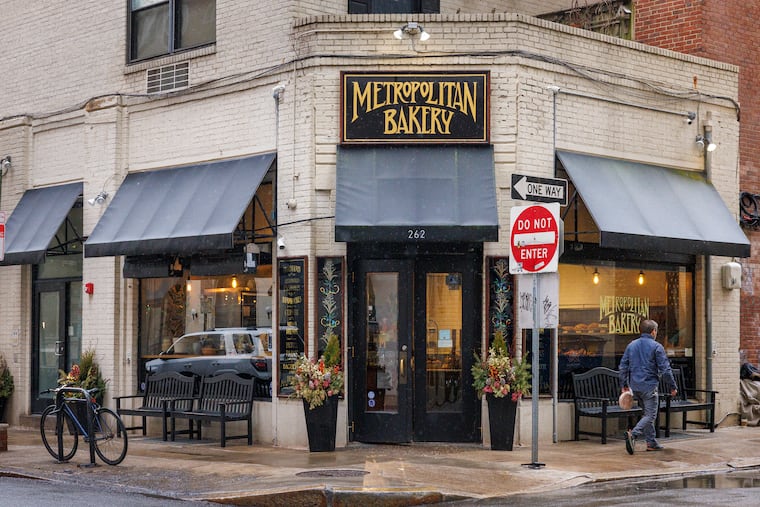
Metropolitan Bakery — one of the city’s foundational bread bakeries, introducing legions of Philadelphians to crusty sourdough boules and other European-style loaves — has been sold. Its 19th Street shop, a nearly 33-year-old icon just south of Rittenhouse Square, will close permanently on March 15.
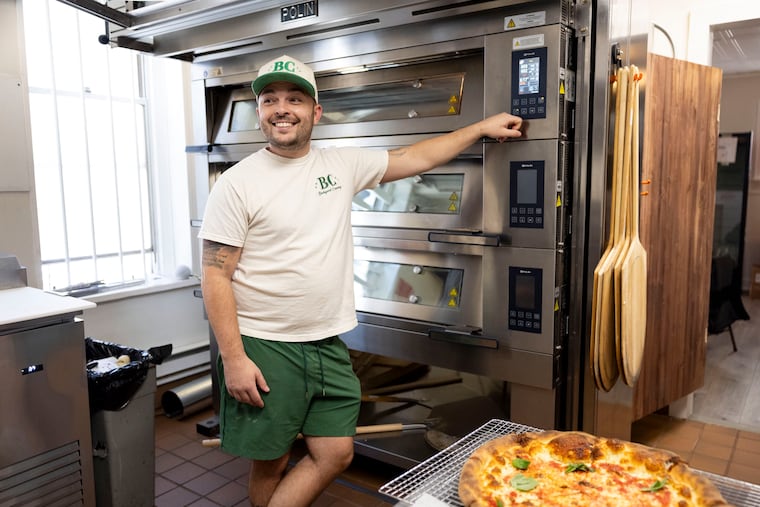
Fans of the bakery, fear not: Metropolitan founders James Barrett and Wendy Smith Born sold the brand, recipes, and equipment to Pete Merzbacher, owner of the eponymous local bread bakery best known for its “Philly muffin” (an English muffin) and sandwich breads.
Merzbacher will maintain Metropolitan’s wholesale and mail-order operations, with Merzbacher’s staff first learning the ropes at Metropolitan’s production space in Fishtown, then eventually baking its breads, granola, and many of its pastries out of Merzbacher’s own Germantown facility. Merzbacher’s will also begin selling Metropolitan products to its Rittenhouse farmers market.
Both parties declined to specify the terms of the sale.
Barrett will stay on as a consultant overseeing production during the changeover. Merzbacher hopes to hire as many of Metropolitan’s 40 employees as possible.
“We’re basically doubling our business,” Merzbacher said. “Our goal is to hire as many of their bakers, packers, drivers — I’ve been meeting with them — definitely bringing on their office staff. The idea is to really bring everyone over.”
“I’m 100% committed to help Pete successfully make the transition,” Barrett said.
Barrett and Born had been quietly looking for a buyer for about five years, but the business partners were determined to be selective, looking for a seasoned, Philadelphia-based operator with intention to uphold Metropolitan’s quality and grow the brand.
“At one point we had somebody interested in the real estate, but they didn’t really know too much — or anything — about operating a bakery. [There were] a couple people like that," Born said in an interview Monday. “We were really interested in trying to have the brand [and] this really wonderful bread not just die in the wind. It wasn’t just about real estate at all for us.”
When Merzbacher expressed interest in buying the bakery last fall, he proved an ideal candidate. Merzbacher’s, itself a 13-year-old bread bakery that scaled up to a 4,800-square-foot warehouse in Germantown in 2020, wholesales to dozens of Philadelphia-area grocery stores and restaurants. Merzbacher’s and Metropolitan have several overlapping clients.
“Honestly, I developed all of my products with Metropolitan being the elephant in the room,” Merzbacher said. “Every account I went to trying to sell a baguette, they were like, ‘I use Metropolitan, we’re happy with it.’ ‘And how about a classic sourdough?’ ‘Yeah, we got it from Metropolitan. We’re pretty happy with it.’ ‘How about a brioche bun?’ ‘Yep, Metropolitan — we’re happy with it.’”
Merzbacher intends to keep both bakeries’ brands, breads, and baked goods distinct, even as they live under the same roof. “The brand awareness is amazing,” he said of Metropolitan’s stature.
Inquirer critic Craig LaBan, a longtime Metropolitan regular, called the Rittenhouse bakery “one of the true pioneers of artisan quality for our ambitious food scene,” praising it for bringing a corner bakery to Center City Philadelphians, “just like so many in Paris get to experience,” he said. (He and wife Elizabeth LaBan had an engagement photo shot at the 19th Street shop 30 years ago, before he became the paper’s restaurant critic.)
“Wendy and James’ work has been essential to the growth of so many great restaurants over the years by providing them high-quality French bread,” LaBan said. “They provided neighbors with world-class baguettes and rustic levain boules to elevate our dinners at home. They surely inspired the next generation of local bakers that followed them.”
Metropolitan Bakery’s background
When Barrett and Born launched Metropolitan in 1993, they were establishing a Parisian-style bakery in a mostly white-bread world. Aside from Le Bus and Chestnut Hill’s Breadsmith (later renamed Baker Street), few bakeries in the area offered the sturdy, naturally fermented baguettes and loaves they dealt in, leavened with wild-yeast starters Barrett had cultivated and fed for years. (The starter is included in the sale.)
The pair met in 1987 while working at White Dog Cafe, where Barrett was pastry chef and Born was managing partner. Years later, Barrett approached Born about opening a bakery together — they were both friends and “extreme perfectionists,” according to what Barrett told Inquirer writer Elaine Tait in 1993. A business plan was born.
Outfitted with a brick oven from France, a proofing room, and a fleet of willow baskets for shaping loaves, Metropolitan’s original production facility opened on the ground floor of a Delaware Avenue office building in October 1993. The retail storefront at 262 S. 19th St. followed weeks after. The blistered, flour-dusted goods that emanated from both locations made an immediate impression on Philadelphians, drawing keen wholesale and restaurant clients along with everyday crowds that would be familiar to today’s social-media set.
“If you like bread with chewy crusts, moist and just-slightly tooth-resistant interiors, clean fresh mildly sour flavors — try this bread," wrote Inquirer columnist Jim Quinn in 1994, advising would-be buyers to arrive early. Metropolitan’s 19th Street shop “is already mobbed with Center City West neighbors; all loaves often sell out hours before closing.”
By 2007, Metropolitan had added five retail stores — in Washington Square West, Reading Terminal Market, Chestnut Hill, Old City, and University City — supplying them and a vast network of clients out of a 10,000-square-foot production space on Marlborough Street in Fishtown. But as Philadelphia rents rose along with the cost of labor, the owners realized they had to contract. “We couldn’t manage all those locations in a way and connect with our public properly,” Born said. As leases came to end, Born and Barrett let them go, preserving the 19th Street original.
“The Rittenhouse location was exceedingly, exceedingly busy,” Born said. “It was always the busiest of our locations, by quite a long shot.”
Looking back on more than three decades in business, the owners expressed gratitude to have been so entrenched in Philly’s community, and to have been “such a part of people’s lives,” Barrett said. “Now we are servicing grandchildren of our original customers and folks that have moved cross country [who] mail-order our products.”
“People just keep coming back,” Born said. “At the end of the day, after being beaten up at work, they come in and get a beautiful sour cherry-chocolate chip cookie or something. Those are the memories that stay with me.”
Two brands, one bakery
Merzbacher, Metropolitan’s new owner, said he considered keeping the 19th Street store open. “I still fantasize about it,” he said, but “I didn’t want to overpromise and underdeliver.” While Merzbacher’s has its own takeout window, open five days a week, “retail is a whole different animal — staffing, lease, front-of-house ops,” Merzbacher said. “Gotta be disciplined about what we say yes to.”
Instead, the 36-year-old baker said he was focused “at this moment, [on] learning, paying homage to the systems that they built, and not breaking anything that isn’t broken — which is a very stable customer base and a lot of employees who have been with them for a long time.”
Merzbacher’s may seem an unlikely successor to Metropolitan. The 23-employee bakery’s lineup is imminently approachable, American-inspired, even “kid friendly,” Merzbacher said. Think sweet potato buns (deployed in many of the area’s best burgers), tender-crumbed hoagie rolls, and soft loaves of white, wheat, rye, multigrain, and more.
But Merzbacher’s also exclusively uses locally milled grains and natural leavening (i.e., no commercial yeast). Like Metropolitan, it ferments its bread doughs over a long period of time; Merzbacher’s loaves proof over a 24-hour period to develop their flavor, texture, and “digestibility,” Merzbacher said. “And a lot of our recipes feature whole-food ingredients like cooked red lentils, toasted corn, polenta, and roasted sweet potatoes.”
A Boston-area native who moved to Philly when he was 22, Merzbacher started his bakery — initially named Philly Bread — as a “gypsy baker,” working out of a pizzeria in West Philadelphia before moving production to a former Tunisian bakery in Olney. (His square “Philly muffin” impressed LaBan off the bat.) The move to Germantown in 2020 has allowed for steady growth, and Merzbacher said he has the ability to expand to the second floor of the bakery, at the intersection of Germantown Avenue and Berkley Street.
That may well be necessary, as Merzbacher’s will be moving over Metropolitan’s American-made stone flour mill, deck oven, sheeter, and mixers. In addition to all of Metropolitan’s breads — including best-sellers like pain au levain, miche, multigrain, and French berry rolls — Merzbacher’s will continue to make the bakery’s granola, scones, muffins, cookies, brownies, and lemon and raspberry bars. (Eventually, both bakeries’ product lines will be available for preordered pickup at Merzbacher’s retail window, open 4 to 8 p.m. every day except Tuesdays and Saturdays.)
Merzbacher is excited for various prospects that acquiring a storied Philadelphia brand might lead to: “Expanding in Germantown, doing more pizza, doing some retail, could be growing into some other product categories — to be determined,” he said. “But one foot in front of the other.”
For now, besides learning all things Metropolitan, from its bread-baking to its bookkeeping, Merzbacher is hoping to hear from fans of the downtown bakery.
“I’d love to hear ideas for growth,” he said. “I’d just love to have a conversation with people about bread, about their experiences with Metro.”