Philly’s Polish community keeps a Christmas Eve tradition alive
Wigilia starts with a soup — or sometimes three — and continues with pierogi, stuffed cabbage, and fish before winding up with gingerbread and other desserts, plus krupnik.
Philadelphians have become increasingly familiar with the Italian American-originated celebration festa dei sette pesci, or feast of the seven fishes, thanks to a slew of restaurants hosting fish-centric holiday events in recent years. But there’s another equally cherished, if lesser-known Christmas Eve tradition that’s deeply symbolic: Wigilia, a dinner that showcases the dynamic flavors of Polish food — savory, earthy, sour, sweet, and tangy. In a city where Polish restaurants are mounting a quiet comeback, a new generation of Philadelphians, home cooks and professional chefs alike, are keeping Wigilia alive.
“Wigilia was the most lasting memory of Polish tradition for me growing up and the main reason that I wanted to open a Polish restaurant,” says Michael Brenfleck, chef and owner of Little Walter’s in Philadelphia. “The thing I remember most was the pierogi — they were perfect.”
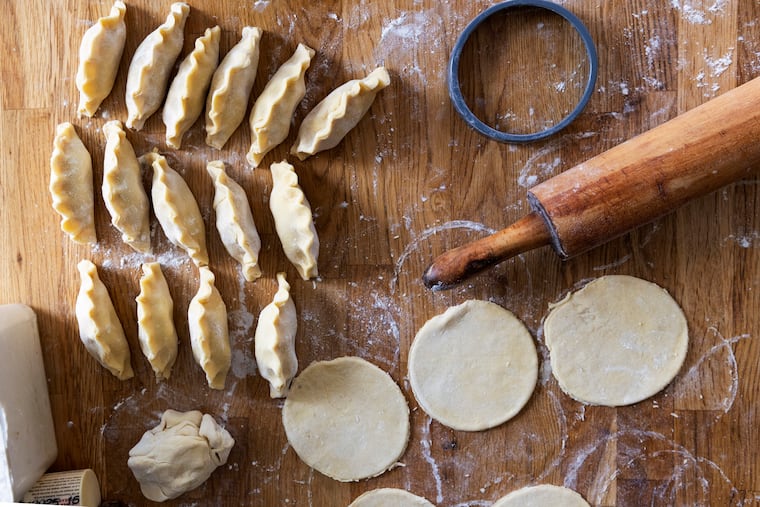
Pierogi is one of the 12 distinct dishes featured on the Wigilia table. It’s a number with deep significance, understood to symbolize either the 12 apostles or the 12 months of the year. The dinner typically begins with a soup course, often a clear red beet soup (barszcz czerwony) with small mushroom-stuffed dumplings known as uszka, or foraged mushroom soup (zupa grzybowa) depending on what region of Poland the family is from.
Some families serve multiple soups, all at the start of the meal. That’s how Olde Kensington resident Kasia Fan does it, ladling out a bowl of beet soup followed by mushroom soup, then sauerkraut soup at the start of her annual Wigilia dinner. “Everyone is full by that point, but you have to keep going,” says Fan, who is originally from Nowy Sącz, a city in southern Poland.
Pierogi generally come after soup, and fillings vary by family preference; traditionally they are filled with mushroom and cabbage, though Polish Americans have often adapted to pierogi stuffed with potato and farmers cheese. For side dishes, the meal includes cabbage and split peas, or goląbki, which is a stuffed cabbage roll (prepared vegetarian for Wigilia).
As with the Italian American Christmas Eve meal, fish is also central to the Wigilia table. Polish American families often use other mild fish such as salmon, sea bass, or halibut; the traditional choices in Poland — herring or carp — don’t have the same popularity in the U.S.
Dorota Szarlej-Lentz of Narbeth arrived in the area from Poland in 1986. She serves salmon as part of her annual Wigilia dinner, but recalls going to the market as a child to buy a live carp with her parents, a common practice in this part of Europe at the time. Her family let the fish swim in the bathtub for several days — so that it would filter the fresh water and taste less “muddy” — until it met its demise on Christmas Eve. (Live carp sales have since declined.)
Szarlej-Lentz hosts guests from many different cultures for her Wigilia. After dinner, one guest plays piano, and everyone sings Polish and English Christmas carols after the customary desserts (Polish gingerbread cookies, poppy-seed roll, and tangy Polish cheesecake called sernik). “The tradition of Wigilia is ingrained in the Polish spirit and community,” says Szarlej-Lentz.
At Little Walter’s, Brenfleck recreates this togetherness in a public setting. He hosts his second annual Wigilia dinner on Tuesday in collaboration with other Polish American Philadelphia chefs, including Pat Alferio of Heavy Metal Sausage, Ryan Elmore of Mom-Mom’s, Ian Moroney of Carl, and Patrick Czerniak of Square 1682.
All of the chefs will prepare reimagined Wigilia dishes, combining inspiration from their Polish roots with their own culinary style. The six-course meal includes barszcz with uszka, roe-topped pierogi stuffed with potato, vegetarian cabbage filled with barley and celery root, monkfish liver kielbasa, and a buckwheat custard with compote made from dried fruit as well as a Polish cookie platter.
Growing up, Brenfleck fondly remembers going to his grandfather Walter’s farm house in Lehighton, Pennsylvania, to celebrate Wigilia — a memory that inspired him to open up Little Walter’s. “Without Wigilia, there would be no Little Walter’s,” he says.
The collaborative dinner is an opportunity for the chefs (and customers) to connect over their cultural heritage. “It’s cool hearing everyone else’s stories, it brings me full circle,” says Czerniak, who recalls going to church on Christmas Eve morning, then spending the day rolling out pierogi with his mom. “I went to culinary school because I wanted to stop cooking the Polish staples like cabbage, and now in my culinary career, I went back to cooking Polish food.” Czerniak will prepare barszcz with delicate uszka dumplings, as well as gingerbread-spiced paczki (traditional yeasted doughnuts filled with plum jam).
While a restaurant setting makes the Wigilia tradition accessible to anyone — even those without Polish backgrounds — celebrations at home hold a deep significance. “I go through a lot of effort to celebrate Wigilia the Polish way for myself and my children,” says Fan, who arrived in the U.S. over a decade ago. She recalls the Polish custom of starting the Christmas Eve meal when the first star — representing the Star of Bethlehem — appears in the eastern sky. Her table always features a white tablecloth, symbolizing both modesty and where Jesus was born. An extra place setting is prepared for any unexpected guests, reflecting Polish hospitality and the belief that “a guest in the house is God in the house.”
Once Fan lights a candle at the table, the dinner begins with a wafer known as opłatek, or bread of love, that’s shared with family and guests. During the breaking of the opłatek, each individual offers blessings, forgiveness, and well wishes for the new year by breaking the wafer and eating it. It’s an essential moment of connection, Fan says. “These symbols of Wigilia have true meaning that transcend generations and make being Polish so special to my heart,” says Fan.
Patrick Iselin, a partner in the Kensington bars Starbolt and the Cormorant, isn’t Polish, but he’s an enthusiastic Wigilia celebrant. Iselin’s first introduction to Wigilia was over 15 years ago through his wife’s family (her maternal grandfather came from Poland). The sharing of the opłatek and the warming flavors of barszcz, which Iselin sometimes enjoys sipping out of a mug, sold him on the holiday.
When the usual host, his wife’s aunt, was ready to give up her Wigilia duties, Iselin took the helm — he’s a seasoned cook thanks to years in the restaurant industry. “I look forward to it every year, and I love how happy it makes my wife,” he says.
His wife, Stephanie, is surprised at how readily Iselin and others have taken to the Polish tradition. “I didn’t think it would be something we would continue over the years,” she said. “We’ve all grown to love it, and now our non-Polish friends and family are also part of the tradition.” She feels proud her husband carries Wigilia forward.
Iselin’s favorite part of the meal is making barszcz from a family recipe that yields earthy yet bright flavors from roasted beets, allspice, parsnip, celery root, and red wine. “It’s like a liquid hug,” says Iselin. “Wigilia is a very elegant dinner party, I love the warmth of it all.”
After serving barszcz and pierogi, Iselin prepares a roasted halibut dressed with a tapenade of asparagus and olives. He enjoys krupnik, a Polish honey liqueur, alongside the meal.
He hopes the couple’s children take up the Wigilia mantle when they are old enough. “I couldn’t imagine celebrating Christmas Eve any other way,” he said.