The Taming of the Stew: Penn State professor cooks from Shakespeare
Penn State Abington professor’s new book, “Shakespeare in the Kitchen,” looks at the playwright’s works with a culinary gaze.
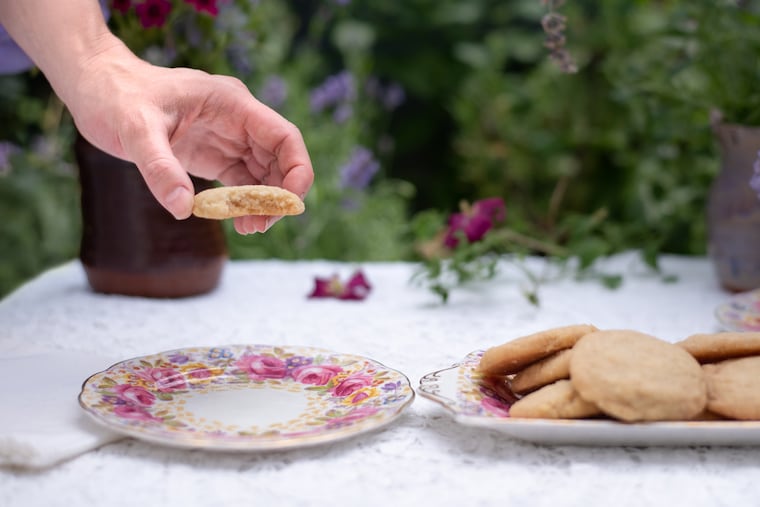
While nearly half a millennium and an entire ocean may separate Philadelphia and William Shakespeare’s England, there is one thread that binds both: we all have simultaneously global and local diets.
Marissa Nicosia, 40, associate professor of Renaissance literature at Penn State Abington, marries these two worlds together in her new book Shakespeare in the Kitchen, a hybrid scholarly work and cookbook exploring recipes in the Shakespearean era.
While people in Shakespeare’s time centered their diet upon local, seasonal produce — much like those of us who shop at the Food Trust’s farmers’ markets — they also loved imported ingredients. “They loved novelty and fish from other European markets. They were pouring Italian olive oil on salads and sprinkling cinnamon verum on sweets. They became increasingly heavy handed with sugar grown in the Caribbean,” Nicosia said. Like those of us who also shop for global staples at say, Acme or Di Bruno’s.
“Shakespeare is full of food references. Some are ominous, like Hamlet saying, ‘The funeral baked meats did coldly furnish forth the marriage tables.’ Some are ambiguous, like the ‘ill-roasted egg’ that Touchstone [in As You Like It] mentioned. And some are positive and interesting, like Falstaff talking about ‘sack,’ a fortified wine,” said Nicosia. Interpreting these dishes in the present day has given her a deeper understanding of Shakespeare.
Originally from Verona, N.J. (she is, of course, well aware of the beautiful symmetry that joins the name of her hometown and the backdrop for three of Shakespeare’s plays: Romeo and Juliet, The Taming of the Shrew, and The Two Gentlemen of Verona), Nicosia has long been in love in with Shakespeare.
“The first time I read his sonnets, I remember thinking that I had never heard language like that. I loved puzzling apart what Shakespeare was saying and how funny, weird, and philosophical he was,” she said.
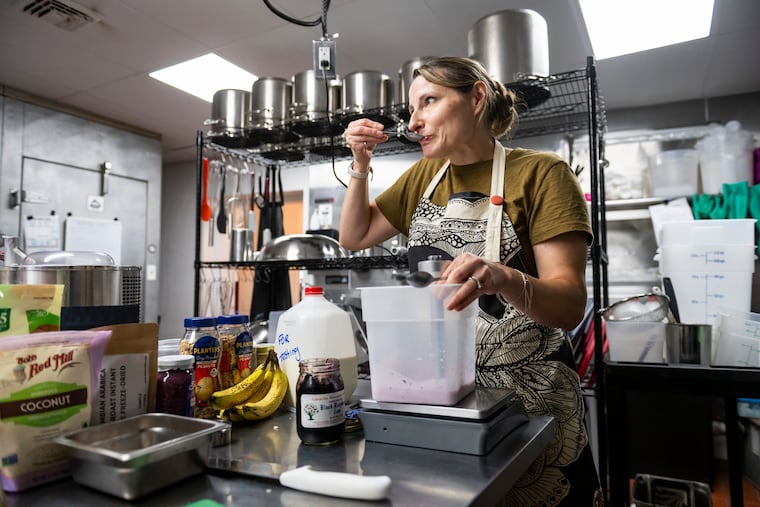
She has spent the last few years also puzzling apart the dishes mentioned in his plays, as well as those published contemporaneously in Renaissance cookbooks, and reconstructing them in her small home kitchen in Bella Vista.
“Lots did not get written down, but the [recipes] that were written down were the ones that you could only make seasonally – you needed to write them down because you weren’t using them right away. Seasonality helped preserve recipes,” she said.
Nicosia has no formal culinary training, but calls herself an “enthusiastic home cook.” All of the recipes in Shakespeare in the Kitchen, from a posset (or medicinal drink akin to modern day eggnog) to a syrup of violets to venison pasties (an enclosed pie), are rather easily executable in a standard home kitchen, provided you have access to their ingredients.
But lack of access can also draw us closer to Shakespeare, whose food supply would have been affected by storms, wars, and disruption in trade routes – similar problems that plague our own fragile food supply.
Nicosia has had to make concessions for modernity, such as using American granulated cane sugar for syrups and fruit conserves, but also using tools that did not exist in Shakespeare’s day. Her capon recipe was “really written for a spit in front of a fire and my doing this in an oven is a big adaptation.”
“But if you’re engaging with Shakespeare, whether reading his works or going to see a play, it’s a delicious addition to cook something of his, too, in order to understand his world in a new way,” said Nicosia.
“Shakespeare in the Kitchen” can be found at the bookstore Binding Agents in the Italian Market and online, wherever books are sold.
Nicosia will be in conversation with food editor Margaret Eby at Binding Agents from 6:30 to 8:30 p.m. June 4. Tickets are $10 and available through Binding Agents.