$617 million in tax-free bonds for sale of South Jersey’s Advantage Behavioral Health blur private equity, nonprofit lines
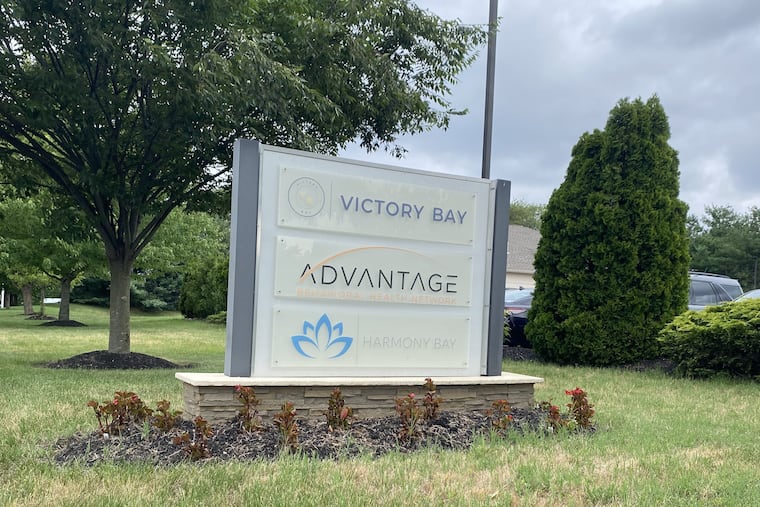
Marlton-based Advantage Behavioral Health operates through two brands, Victory Bay and Harmony Bay. Victory Bay provides intensive outpatient treatment, while Harmony Bay provides virtual therapy.
A newly created nonprofit wants to borrow $617 million through tax-free bonds to buy Advantage Behavioral Health, a fast-growing South Jersey behavioral health company.
The current owner, a Connecticut private equity firm called Clearview Capital, isn’t walking away from Advantage, which it bought 15 months ago.
Clearview Capital and current executives will continue to own the for-profit entity that manages Marlton-based Advantage, according to a preliminary bond offering statement filed late last month.
Advantage’s proposed sale to a nonprofit called QCF Advantage LLC is noteworthy for mixing for-profit and nonprofit business interests. It would make a private-equity company a key partner in a nonprofit organization with financing from the tax-exempt municipal bond market.
Advantage’s sale price is about $520 million. That price includes $80 million being held back to see if Advantage hits profit targets after the sale. The company had $141.6 million in revenue in the 12 months that ended May 31. Most of the remaining money from the bond sale will go into reserve funds.
Like many other mental health service providers, Advantage does not accept Medicare or Medicaid. Taking only private insurance and out-of-pocket payments helps Advantage register strong profit margins amid growing demand for mental health and addiction services.
The transition to nonprofit ownership creates “a structure that’s designed for long term stability, reinvestment, and patient care,” James D. Golden, CEO of QCF’s parent company, told prospective investors in a recorded presentation.
“We can provide an efficient exit to private capital,” he said in the recording, published June 30 on a website that tracks documents related to the municipal bond market. “Tax-exempt financing is really the mechanism that makes all that possible.”
That financing will leave Advantage with an extraordinarily large debt load, said Robert Q. Kreider, a former nonprofit CEO who has no ties to Advantage. He noted that debt of that size requires continued strong growth to make the debt payments and have enough money to continue growing.
“The bondholders are getting such a juicy rate, they’re willing to accept the risk,” said Kreider, a consultant and former CEO of Devereux Advanced Behavioral Health.
Officials at Clearview Capital, Advantage, and QCF Advantage did not respond to requests for interviews.
Advantage’s founding and growth
Advantage has expanded to Pennsylvania and six additional states beyond New Jersey since its founding in 2017.
It initially provided intensive outpatient therapy through a business called Victory Bay in Laurel Springs.
It launched a telehealth version of its services, called Harmony Bay, in 2020. Outside of New Jersey, Advantage uses Harmony Bay as a way to build a presence in a new state, before introducing in-person services through Victory Bay.
Advantage also operates 17 sober-living houses under its Dignity Hall brand in Blackwood, Laurel Springs, Sicklerville, and several other South Jersey towns.
The average daily census of patients at Victory Bay has soared over the last five years to 805 in the three months that ended June 30, from 81 in the first quarter of 2021, according to data in the bond disclosures. The company employs more than 700.
Despite the expansion to Massachusetts, Florida, Indiana, Maryland, Ohio, and California, the services provided in a string of buildings along Chews Landing Road in Laurel Springs accounted for 55% of revenue, most of the company’s cash flow last year.
» READ MORE: One of Advantage's founders was a former staffer for Gov. Chris Christie.
The parking lots at several of those buildings were packed last Thursday. As part of the bond financing, 20 New Jersey properties valued at $14.4 million are being mortgaged.
New projects are under development in Absecon and Pine Brook, N.J.; Scranton, Pa.; and Lancaster, Ohio, the bond prospectus said.
A nonprofit buyer as a vehicle for private equity sales
QCF Advantage was created in April to acquire Advantage.
Owner QCF/I Inc., a tax-exempt organization based in Houston, acquires healthcare facilities that can be paid for with tax-exempt financing, according to its 990 tax form. Founded in 1997, QCF stands for Quality Care Foundation.
“We’re a nonprofit focused on improving the quality of care in the behavioral health industry. We believe mental health is one of the most persistent, complex, and costly challenges in our country today,” Golden told prospective bond investors.
QCF/I’s niche is buying for-profit businesses, often from private equity firms, while giving the sellers the option to keep managing the business, he said.
In the Advantage arrangement, QCF/I will collect 2.25% of revenue for administrative services — to be paid before bondholders.
Clearview Capital, the current private equity owner, will stay involved through an existing management entity that will collect 5% of monthly revenue under an initial 15-year contract.
Golden and Richard T. Needham together form QCF’s board. They have a background in private equity at a Houston private equity firm called Domain Capital Partners that is not related to Clearview. The phone number on the 990 led to a voicemail box that was full. A voicemail at Domain Capital got no reply.
QCF’s other businesses include a psychiatric hospital in Las Vegas and an addiction treatment center in North Jersey.
Surging debt load
Advantage had about $6 million in long-term debt at the end of 2024, three months before its sale to Clearview for an undisclosed price.
A year later, the debt totaled $52.5 million, not including a $10 million line of credit.
If the bond sale happens as expected, the company’s long-term debt would skyrocket to $604 million at the end of this year, according to the bond document.
That large debt means the success of QCF Advantage depends on continued dramatic growth in revenue and profits, according to a deal summary from Stacy DiStefano, CEO of Consulting for Human Services, a Philadelphia-based advisory firm.
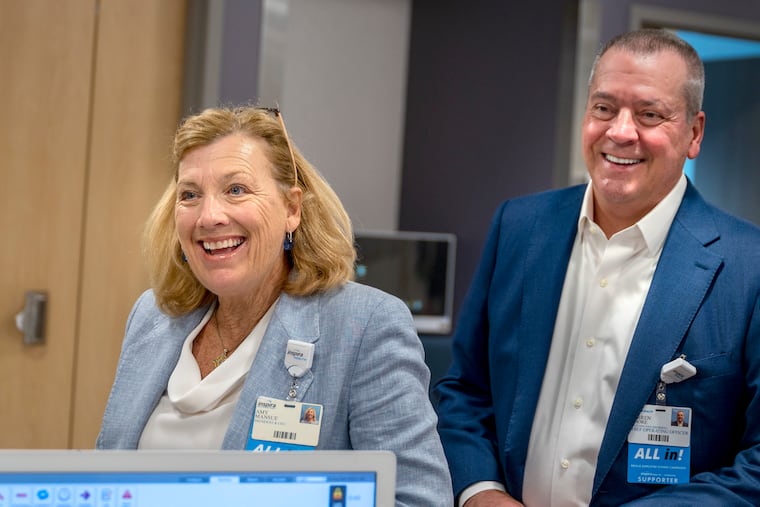
Advantage’s projected annual interest expense is $42.7 million. For context, that’s about the same as the combined $42.2 million in interest paid last year by three large unrelated health systems in the same South Jersey market, Cooper University Health Care, Inspira Health Network, and Virtua Health.
Colin Studwell, Advantage’s CEO, said during the investor presentation available on Munios.com that the company is well-positioned for strong growth. He credited the management entity, known as a management services organization, or MSO, that Clearview and executives, including Studwell, already own.
Studwell will continue to run the MSO, which handles operations support, billing, collections, human resources, information technology, and everything else it takes to run the business.
“Our MSO capabilities are the engine which allow us to continue to scale our services and treat more patients without any decay in clinical or operational efficiency,” Studwell said.