Sixteen years after the ACA changed access to healthcare, millions are expected to lose coverage
More than 85,000 people who bought ACA marketplace plans through Pennie last year have dropped their coverage due to rising costs.
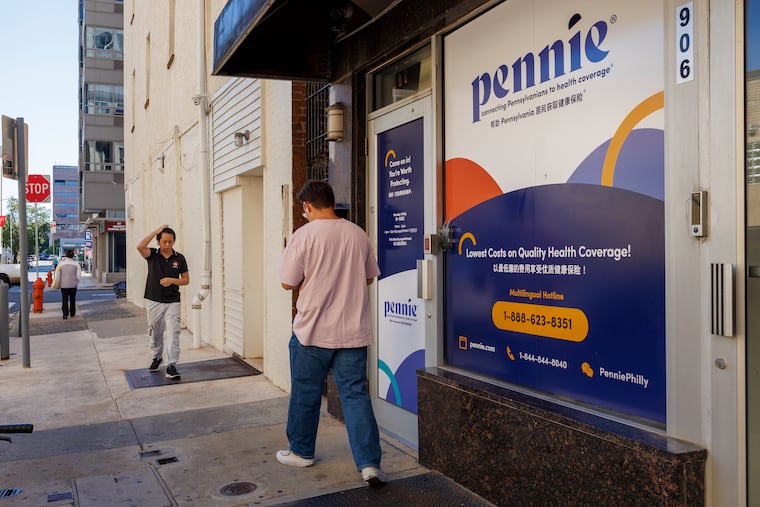
Sixteen years after the Affordable Care Act expanded access to healthcare for millions of Pennsylvanians, Democratic lawmakers and advocates are pushing back against recent federal cuts that could leave many uninsured and unable to get the care they need.
More than 98,000 Pennsylvania residents have dropped out of ACA marketplace health plans this year after Congress failed to renew a critical financial incentive program and insurance prices doubled, on average.
Another 300,000 are at risk of losing Medicaid, the publicly funded health program for low-income individuals and people with disabilities, when new rules and cuts approved as part of a massive Republican-backed spending package taking effect next year.
Medicaid expansion and the ACA marketplaces were among the major pieces of President Barack Obama’s landmark health law passed when Democrats controlled Washington.
This month marked the 16th anniversary of the ACA, which aimed to make healthcare more affordable and accessible. The law banned insurers from denying coverage to people with preexisting medical conditions or charging them exorbitant rates, required health plans to cover basic preventive health services, and allowed young adults to remain under their parents’ health insurance until age 26. These provisions remain in effect.
“It’s an important reminder of all the great things the Affordable Care Act has done,” said Antoinette Kraus, executive director of Pennsylvania Health Access Network, a nonprofit advocacy organization that helps people enroll in health coverage. “It’s also a great time to remind folks that the Affordable Care Act is still very much under attack.”
The Inquirer spoke with Kraus about how Medicaid and ACA marketplace cuts will affect Pennsylvania residents, and how the law changed access to healthcare in an interview lightly edited for length and clarity.
How are Pennie customers handling cost increases?
Folks have struggled with double, triple the cost. We’ve seen individuals drop coverage because it’s just not affordable, and individuals are having to make those tough choices between health insurance, paying their rent, and putting food on the table.
We have some folks who don’t have a choice — they have to have health insurance because they have a critical illness and need to maintain care. So they’re cutting from other places.
We’re also seeing people change their plan to have a higher deductible plan, because that monthly out-of-pocket cost is less, but then they have to pay for a lot of out-of-pocket care.
We’re hearing folks start to think about, “Do I delay care? Do I forgo care?” We’re worried that, eventually, people will drop coverage altogether.
Who is most affected by the price increases?
We are worried that without the enhanced subsidies, we’re seeing young folks drop out of Pennie. The Affordable Care Act allowed young adults up to the age of 26 to stay on their parents’ plan. It’s been a lifeline for a lot of those individuals. Pennie is an important coverage option for individuals who may not be able to stay on their parents’ plan, or they aged off of their parents’ plan.
» READ MORE: Pennie cost hikes hit low-income families and older adults the hardest
We see older Americans — those individuals who are not quite eligible for Medicare — as a population that’s really been hit hard. They saw some of the biggest price increases, and because of their age, coverage is often more expensive. That’s a population that really is making those tough choices because a lot of them have ongoing healthcare needs that they need to cover.
How will cuts to Medicaid and the ACA marketplaces affect people who have other types of insurance?
If people put off care because they can’t afford it, they get sicker and they end up in the emergency room. Wait times for everyone get longer.
It’s going to put more financial strain on our health systems, especially in rural areas. Eventually, it impacts all of us in the form of premium rates. If the whole population is sick, that forces up the cost of health insurance altogether for everyone.
How did people without employer-sponsored health insurance or Medicaid get insurance before the ACA?
Prior to the ACA, working Pennsylvanians really had a hard time finding affordable health insurance coverage if it wasn’t offered through their employer. Both Medicaid and Pennie have really opened up paths to coverage for people.
I think the big thing that people forget is that because of the ACA, insurance companies can no longer deny you coverage for a preexisting condition. We kind of take that for granted now.
A lot of folks, if they had a preexisting condition, [previously] couldn’t get coverage at all. There were also lifetime and annual limits. So if you had a serious illness, you could reach in a year your maximum allotment, and therefore be uninsured.
