A South Jersey man sued CBD Kratom stores over his addiction to kratom beverages
Evan Eichhorn's proposed class action lawsuit accuses CBD Kratom of failing to adequately warn consumers about the dangers of its products.
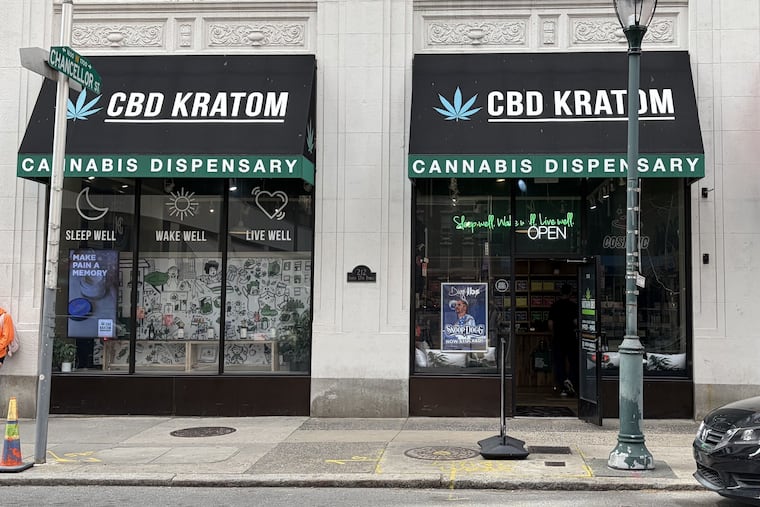
Enticed by a sign outside a Center City store, Evan Eichhorn bought kratom drinks for the first time in spring 2024.
The 34-year-old from Camden County cracked open a 16-ounce can of tea-flavored seltzer that promised to boost mood, focus, and energy. Euphoria kicked in shortly after the last drop. A month later, Eichhorn was drinking six to eight cans a day.
“It just gradually got out of control where I needed it to function, to go to work, to wake up, to do anything,” the construction engineer said. “That’s all I was drinking.”
Addiction took over Eichhorn’s life, he said. He stopped seeing his family and friends and spent roughly $60,000 on kratom drinks in a year.
Now, after successful rehab using medications that treat opioid addiction, he is suing CBD Kratom — the store chain and kratom seltzers manufacturer that served as his supplier.
The proposed federal class-action lawsuit suit, filed last month in the Eastern District of Pennsylvania, accuses CBD Kratom of “dangerous and misleading marketing and labeling” of beverages containing kratom.
The lawsuit seeks to represent all Pennsylvania and New Jersey residents who bought a beverage at a Philadelphia CBD Kratom store over the past two years.
The attorney for CBD Kratom, which has four stores in Philadelphia, did not respond to a request for comment.
Kratom is sold over the counter and often advertised as a herbal supplement that can increase focus, boost energy, and relieve pain. But the unregulated products — which in addition to seltzers come as powders, pressed pills, and liquid shots — are addictive and often thousands of times more potent than the plant they are derived from, experts say. And kratom acts on the same brain receptors as opioids like heroin and fentanyl.
And while initial kratom use can provide euphoria, the drug leads to painful withdrawal symptoms that include nausea, agitation, and sleeplessness. Just weeks after drinking kratom for the first time, Eichhorn no longer chased the high; he would crack one can after another just to make the pain of withdrawal go away.
“I was constantly in a state of withdrawal,” he said. “I would wake up in the middle of the night.”
Eichhorn is among a growing number of Philadelphia-area people who sought addiction treatment following kratom use in recent years.
CBD Kratom’s advertising minimizes the risk of addiction, the suit says, comparing kratom to sugar or caffeine. And the label on the chain’s house brand, Korthals’ Collection, does not include an explicit warning that the beverage is “addictive, dangerous, and unhealthy,” according to the complaint.
“The label should adequately inform the consumer,” said Aarthi Manohar, a Kohn Swift & Graf attorney who represents Eichhorn.
A handful of states ban kratom, including Connecticut, where the prohibition took effect last month. Similar bills have been proposed in Pennsylvania and New Jersey.
But what Eichhorn hopes to see is adequate warnings on kratom products and public education around kratom addiction.
“There is not a lot of support out there. Everyone knows what’s heroin and fentanyl,” he said. “You see someone drinking kratom, nobody is going to say, ‘Don’t do that.’”