The CDC will no longer recommend COVID vaccines for healthy children and pregnant women
The change could strip insurance coverage for the shots from both groups. A CHOP expert decried the move.
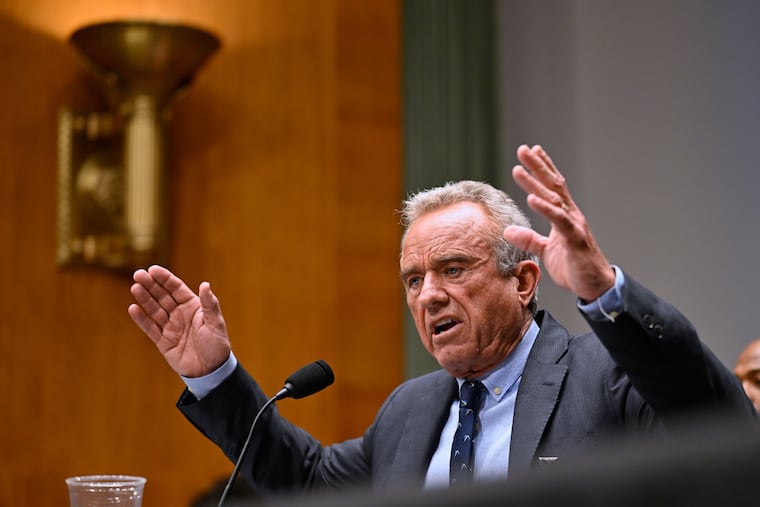
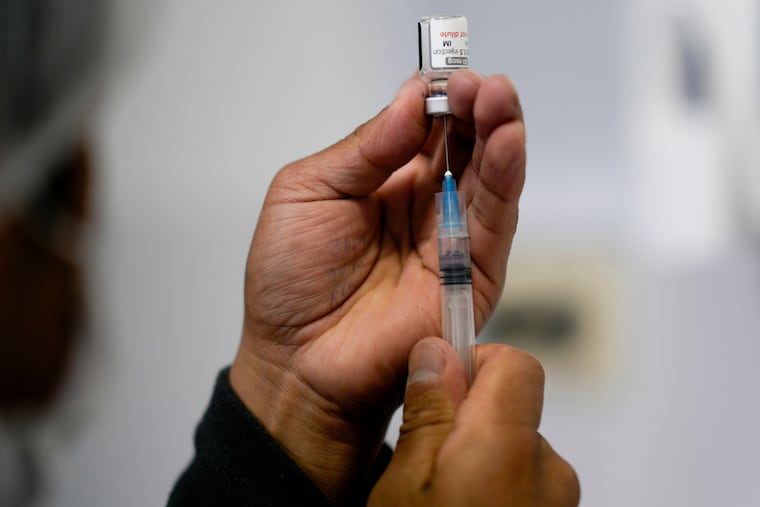
The Centers for Disease Control and Prevention will no longer include COVID-19 vaccines on its recommended schedule of immunizations for “healthy children and healthy pregnant women,” Health and Human Services Secretary Robert F. Kennedy Jr. said Tuesday in a video statement posted to X.
Food and Drug Administration Commissioner Marty Makary said there was “no evidence” that “healthy children” need the COVID vaccine.
But Paul Offit, the director of the Vaccine Education Center at Children’s Hospital of Philadelphia and a member of the FDA’s Vaccines and Related Biological Products Advisory Committee, said COVID remains dangerous for both groups.
“It’s an uninformed decision. RFK Jr. said he would not take away anyone’s vaccines. He lied: That’s exactly what he’s doing,” Offit said.
Kennedy for decades has engaged in advocacy against vaccines, spreading misinformation that measles vaccines cause autism. He also has falsely called the COVID vaccine the “deadliest vaccine ever made.”
In a statement, the Philadelphia Department of Public Health said health officials here were working to alert healthcare providers about the CDC’s change in policy.
“At this time, we have not received specific guidance from the CDC regarding implementation of this policy change,” a spokesperson for the department wrote.
Georges C. Benjamin, longtime executive director of the American Public Health Association, told the Washington Post the administration had been telegraphing this move for some time, but he wondered about the data to support the conclusion that those vaccines might pose health risks for children and pregnant people.
“Are they making this decision without going to any of their advisory committees?” Benjamin said. “Show us the evidence, the studies that have been done. … I don’t know of any.”
Typically, once a vaccine is approved or authorized by the FDA, the CDC’s independent vaccine advisory panel holds hearings to determine who should receive the vaccine, when, and how often.
The panel — the Advisory Committee on Immunization Practices — sends its recommendations to the CDC director. Once the director signs off, the recommendations become official policy, and insurance companies are required to cover the vaccines with no out-of-pocket costs to consumers.
The new recommendation for COVID vaccines comes a week after Makary wrote in the New England Journal of Medicine that the FDA would not license new COVID vaccines for healthy Americans under the age of 65 without additional clinical trials.
People over 65 or who have conditions that put them at risk for severe COVID complications still will be able to receive vaccines, Makary wrote.
But one of the preexisting conditions he listed was pregnancy, contradicting Tuesday’s announcement on the CDC’s new recommendations for COVID vaccines.
Pregnant people, in particular, have a higher risk of dying from COVID because their blood volume is higher and their immune systems slightly suppressed during pregnancy, Offit said. And CHOP still sees children in its emergency department with severe COVID, he said.
Because the COVID vaccine will no longer be recommended for children, Offit added, it is likely that Vaccines for Children, a federal program that funds free immunizations for children, will not pay for COVID vaccines.
HHS representatives did not respond to a request for comment on whether the program would continue to cover COVID vaccines.
“You don’t have to be in a high-risk group to die of COVID,” Offit said. “What will happen now is that there are people who would clearly benefit from the vaccine who will not be able to get it. It will increase suffering and hospitalizations.”
Insurance companies may also balk at covering vaccines for anyone under 65 without preexisting conditions, he said.
Offit said that the FDA’s expert advisory committee was not consulted on the licensing decision, nor was there a period of public comment. He said people concerned with the decision should consider writing to the FDA to express their disapproval.
“They made a unilateral decision behind closed doors,” he said.
This article contains information from the Washington Post.