Cooper’s ER ‘Fast Track’ helps get patients in and out of the hospital quickly
Cooper is one of the few hospitals in the Philadelphia region where emergency visits are getting shorter.
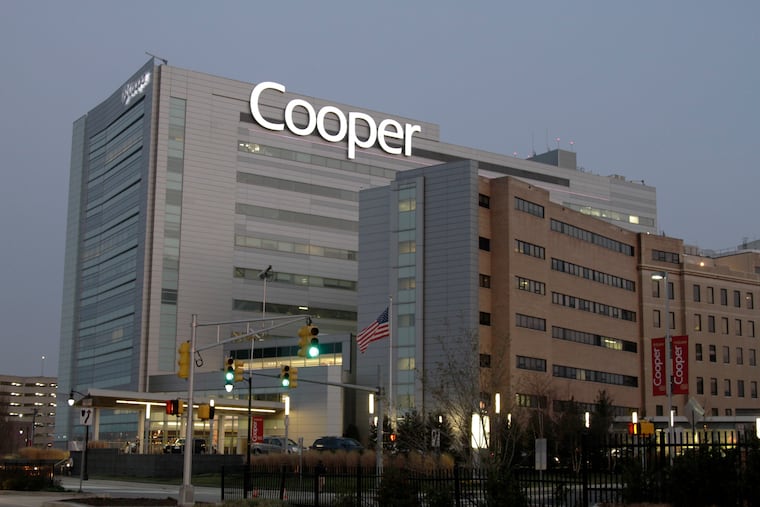
Patients who arrive at Cooper University Hospital’s emergency department are quickly evaluated and assigned one of three tracks: Critically ill patients get immediate care, people with serious but not life-threatening medical needs begin lab work and diagnostic tests, and everyone else takes a seat in the general waiting area.
The approach has helped the Camden hospital shave 13 minutes off its average emergency department visit over the past few years, at a time when emergency department visits are getting longer at most hospitals in the region.
Emergency department visits are getting longer at three out of four hospitals in the Philadelphia region, averaging 3.5 hours, according to an Inquirer analysis of CMS data for 33 hospitals in Philadelphia and the surrounding Pennsylvania and New Jersey counties.
» READ MORE: ER visits take over three hours on average across Philly. See how your hospital ranks.
Emergency patients spent an average of three hours and 22 minutes at Cooper in 2024.
Virtua Voorhees Hospital, in Camden County, had the shortest emergency department visits, at an average of two hours and 25 minutes, according to CMS data.
The longest visits in the region clocked in at four hours and 49 minutes at Jefferson Einstein Montgomery Hospital.
But Cooper is one of eight in the region where visits are getting shorter, even as the hospital gets busier. The emergency department saw almost 85,000 patients in 2024, up from about 81,000 the year before.
Cooper emergency department leaders attributed the improvement to making patient flow through the emergency department a hospital-wide priority.
“Nothing is more of a team sport than emergency medicine,” said Michael Chansky, chair of the department of emergency medicine at Cooper.
Cross-department coordination
Cooper is a Level 1 trauma center, meaning it is equipped to handle the most serious injuries, and a Level 2 pediatric trauma center.
The emergency department coordinates closely with “stakeholders,” such as lab services, radiology, security, and transportation to minimize delays that can occur when patients in the emergency department need a service that is inside the hospital.
“We can order the X-ray, but if it takes two hours to get the patient from point A to B, we’re never going to see as many patients,” said Andrew Nyce, the emergency department’s vice chair.
Patient ambassadors help bridge communication between patients and providers working behind the scenes. Keeping patients and their families updated on what’s being done to get them the care they need, even if they are still waiting to see a doctor, helps families stay calm and better understand the process.
Improving emergency triage
In 2019, Cooper attempted to tackle an age-old emergency department problem: Patients with varying degrees of medical problems may wait hours to be seen by a doctor, while only the most serious trauma patients — gunshot wounds, car crash injuries, stroke — are taken back immediately.
The hospital introduced a “Fast Track” program to get faster medical care for patients who have serious medical needs, such as patients with sprained ankles, eye injuries, or bleeding during the first trimester of pregnancy.
Instead of sitting in the general waiting area, these patients are taken to a separate, semi-private waiting area where they can be evaluated by a provider and monitored until a room is available.
About a third of Cooper’s emergency department patients are now treated through the Fast Track.
“At many large academic hospitals, when a trauma comes in, everything stops because all the resources go to them. Here, a trauma goes into a trauma area and everything else keeps going,” Nyce said.
Cooper’s emergency department has designated doctors and support staff for each unit within its emergency department.
The department also staffs “flex” providers, who can move to whichever area they’re needed, which helps reduce the amount of time patients are waiting to be seen.
Staff writer Lizzie Mulvey contributed reporting.
