CDC, Pa. health officials tracking an intestinal parasite that causes ‘explosive’ bowel movements
Cyclosporiasis is caused by the parasite Cyclospora caytanensis and spreads through contaminated food and water. Pennsylvanians experiencing symptoms should call their doctors, officials advise.
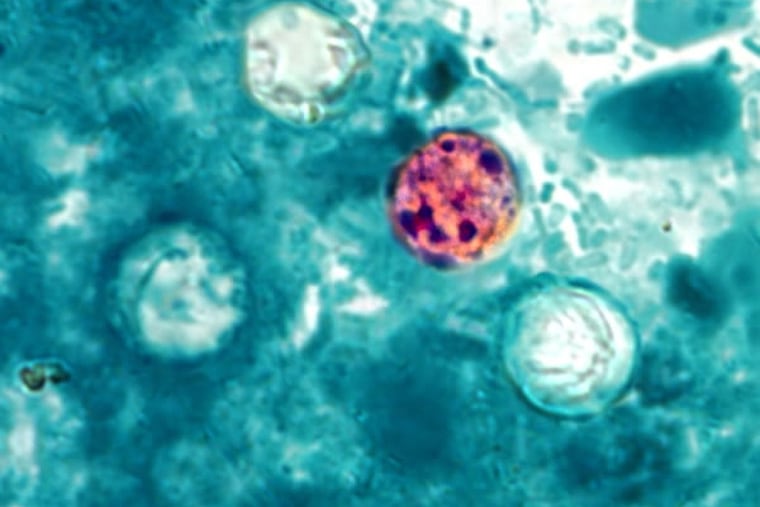
State and local health officials are tracking dozens of cases of an illness caused by an intestinal parasite with symptoms including “explosive” bowel movements.
Cyclosporiasis, caused by the parasite Cyclospora caytanensis, spreads through contaminated food and water.
Pennsylvania had recorded 28 cases this year as of last week, including 14 in Southeastern Pennsylvania. The state identified 40 cases in 2025.
People sometimes contract cyclosporiasis when traveling in tropical or subtropical regions of the world where Cyclospora is endemic, but outbreaks also occur in the United States.
Cases of cyclosporiasis can occur any time of year but tend to rise in the spring and summer months.
Nationwide, the Centers for Disease Control and Prevention’s website says it has tracked 145 cases in 17 states between May 1 and June 16, including between 1 and 10 people sickened in both Pennsylvania and New Jersey during that time. All those cases were acquired in the United States.
The agency is also tracking an additional 45 cases reported in people who contracted the parasite while traveling outside the country.
Nationwide, 23 people have been hospitalized for cyclosporiasis since May 1.
The CDC warned that the true number of cyclosporiasis cases is likely higher, as some people recover without seeing a doctor or getting tested.
The disease infects the small intestine and causes frequent, watery diarrhea, including “sometimes explosive” bowel movements, the CDC said.
It is not typically life-threatening, state health officials said, but can last more than a month if not treated.
The CDC said it is working with state and local health departments around the country to learn how cyclosporiasis cases have spread, but there is no evidence that the 145 cases reported since May are linked.
“Investigations to identify potential clusters and potential sources of illness are ongoing,” the agency said.
Pennsylvanians experiencing symptoms of cyclosporiasis should call their doctors, state health officials said.
Unlike most states, Pennsylvania health providers are not required to report cyclosporiasis cases to health authorities, but the state health department still collects reports on confirmed cases and notifies federal health officials weekly.