How primary care offices are looking into eyes to screen for preventable disease
Retinal screening has become more common in primary care settings, making it easier to catch vision problems early.
I called to check on one of my patients recently after a preventive screening test showed that he had the beginnings of diabetic eye disease.
If untreated, this can cause severe visual impairment or blindness. Our office staff arranged an expedited appointment with an ophthalmologist for evaluation and treatment to slow the progression and preserve his eyesight.
Such screening for preventable disease has long been crucial to my work in primary care. In the clinic, we typically offer counseling and discussion, and then send patients elsewhere for a screening test. For example, we tell patients to visit a lab for blood work, a radiology office for mammography, to see specialists for gynecologic, colon screening and eye exams, and to get many vaccines at the pharmacy.
The most important screenings that we have traditionally performed in the office are measuring blood pressure, listening to patients, and physical examinations.
Until now. My patient was diagnosed with diabetic retinopathy based on a retinal screening completed before he left my medical office.
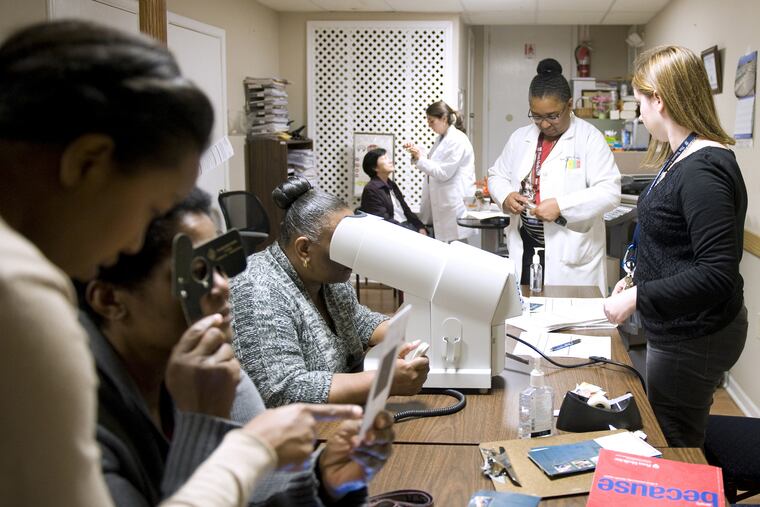
One of our nurses performed the noninvasive exam using a machine that takes a photo of the retina, the part of the eye that processes or “develops” images we see to send through nerve pathways into the brain where we can make sense of them.
The patient sat in a chair and looked into the machine’s eye pieces, which resemble a pair of binoculars. The retinal photos are then analyzed by an artificial intelligence assisted program that can accurately detect diabetic retinal disease. The screening is safe, takes only about 10 minutes, with results immediately available.
Like high blood pressure, diabetic retinal disease is best treated early on, usually before a patient experiences warning symptoms.
The primary care-based screening is not meant to take the place of regular yearly visits to the eye doctor. Rather, it helps to prioritize eye care for high-risk patients with diabetes, who are often juggling many medical appointments. The ophthalmology visit can easily drop down, on or fall off, their to-do list, especially when they have not noticed new vision issues.
This type of retinal screening is becoming more common in primary care offices, with most insurances offering coverage for patients with diabetes.
That’s not to say that more screening is always better. In healthcare, over screening can become an issue in its own right — when unnecessary, screening can add to the cost of care and may distract from the reason for your office visit. Your concerns should always be first priority, and it’s reasonable to ask your provider to explain the clear health benefit for any screening.
» READ MORE: Why don’t doctors just order tests for everything?
Retinal screening is quick, accurate, and may help save your vision. If you are offered the opportunity to have one next time you see your primary care clinician and it fits into your visit agenda, I recommend you go for it. I think the patient whom I called this week would agree.
Jeffrey Millstein is an internist and regional medical director for Penn Primary and Specialty Care.