My transgender patient just wanted his acne treated. The rules he faced were dehumanizing. | Opinion
This new acne flare occurred a few years after puberty, and was part of a bigger transition — and the hormones he started to take to confirm his identity as a man.
Imagine a man seeking treatment for severe acne and, in order to get access to a powerful antiacne therapy, he had to take a pregnancy test each month. Sounds crazy, right?
Yet that’s exactly what my patient, a college student majoring in film, had to do.
His acne outbreak, which he likened to “lava scarring Anakin Skywalker’s face in Star Wars” occurred a few years after puberty, his first one that is. This new acne flare was part of a bigger transition — and the hormones he started to take to confirm his identity as a man.
Transitioning is a particularly vulnerable time. Those in transition have typically slogged through a lengthy process before ever reaching out to doctors to help with their gender identity. They have faced years of frustration over not being in the right “skin.” And for those who pursue the big step of starting hormone therapy, their bodies often respond in a manner that seems like punishment. Regardless of age, their bodies may react like a teenager’s — a second puberty takes hold. Though the body usually adapts with time, it can be quite difficult to get through it.
As the director of an LGBTQ- and HIV-focused dermatology clinic at the University of Pennsylvania (called PRIDE clinic, for PRoviding Integrated Dermatology for Everyone), I’ve often seen this scenario in my transgender patients — acne flaring from the initiation of testosterone.
We tried the standard acne regimens — topical and systemic antibiotics — but they weren’t effective. The testosterone, for which my patient was paying upward of $300 a month out of pocket since he didn’t have financial support for his transition, was clearly driving his acne. But if he stopped taking testosterone, then his physical transition would come to a halt or reverse.
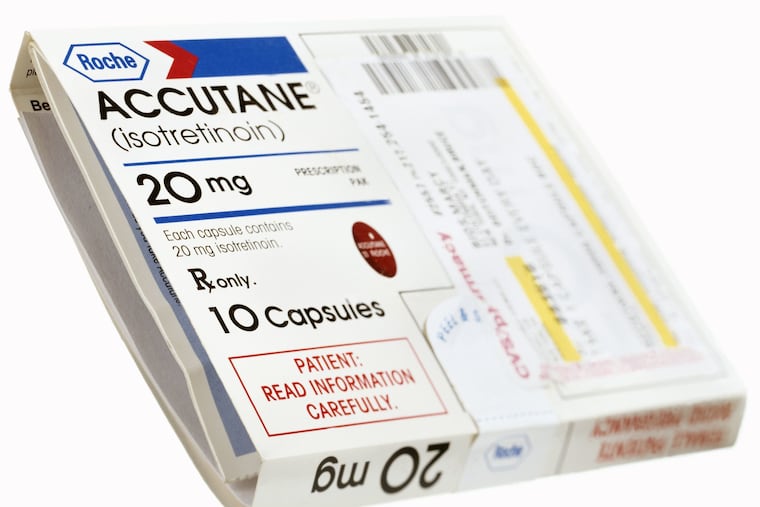
He decided to taper off his testosterone, a fraught and emotional decision because it meant his external appearance would start to become more feminine. In addition, we decided to start isotretinoin, a strong antiacne medicine better known as Accutane. Though some on internet forums discuss the controversies around it in great detail (the popular subreddit r/Accutane is one example), dermatologists have a broad consensus that Accutane, a derivative of vitamin A, is one of the most powerful and effective tools we have for fighting acne.
But just trying to acquire the medication added to his problems.
One major concern and side effect from Accutane is a significant risk for birth defects if an individual using it becomes pregnant. As a result, the FDA has mandated a risk management program called iPledge for all patients taking Accutane to confirm their understanding of the pregnancy risks while on the medication (“I pledge not to get pregnant,” more or less). To “pledge,” you have to register in one of three categories: male, female without pregnancy potential, or female with pregnancy potential.
But what if you don’t fit in one of these categories? Does lab monitoring in the context of relationships without pregnancy potential make sense?
To be clear, a transgender man with a uterus who has vaginal sex still can get pregnant, and it is important to prevent birth defects. But, regardless, despite all the cumbersome hoops, nosy questions, and antiquated gender norms, this program has not actually reduced the incidence of pregnancies among any people taking Accutane. Curiously, other medications with similar risks for birth defects, like methotrexate and lithium, have no such required program.
Not only did my patient legally have to register as a woman to get Accutane, he also had to use his birth name and get monthly pregnancy tests. He repeatedly called this experience “dehumanizing.”
The Accutane greatly improved his acne, and the hope is to eventually get him back on testosterone without this side effect.
It’s unfortunate that a well-intentioned program for access to a medication not only doesn’t achieve its stated goal of preventing pregnancies but also causes real barriers and stigmatizes the transgender population.
Transgender patients are a vulnerable and underserved population, which is why we founded our LGBT-focused dermatology clinic, partnering with centers such as the Children’s Hospital of Philadelphia’s Gender and Sexuality Development clinic and the Mazzoni Center. The simple act of treating acne in this population can quickly become a big to-do. Besides facing numerous obstacles, many related to dermatology, we know serious health risks also remain, such as depression and anxiety. Further, transgender women, for example, may be especially at risk for HIV and the use of illicit injectable silicone, which can be lethal.
Health care is striving to learn to accommodate the needs of the transgender population, estimated at about 0.6% of all Americans. But much like puberty (and second puberty), there are still many growing pains. A 2015 survey of transgender people showed that 15% reported being asked unnecessary or invasive questions. Abhorrently, 1% even reported being sexually assaulted in the health-care setting.
In a time with increasing proposed bans to limit transgender youth’s access to school sports and gender-affirming care, it is imperative to improve our health-care system to make everyone feel welcome, so that my patient and others like him cannot only reconcile their gender identities, but also feel respected in doctors’ offices.
Jules Lipoff is an assistant professor of dermatology at the University of Pennsylvania Perelman School of Medicine.