Inside a cell therapy manufacturing facility: How Iovance turns a patient’s immune cells into treatment
Iovance chose Philadelphia for its manufacturing operations because of the region's proximity to airports and history of pioneering CAR-T and other novel cell therapies.
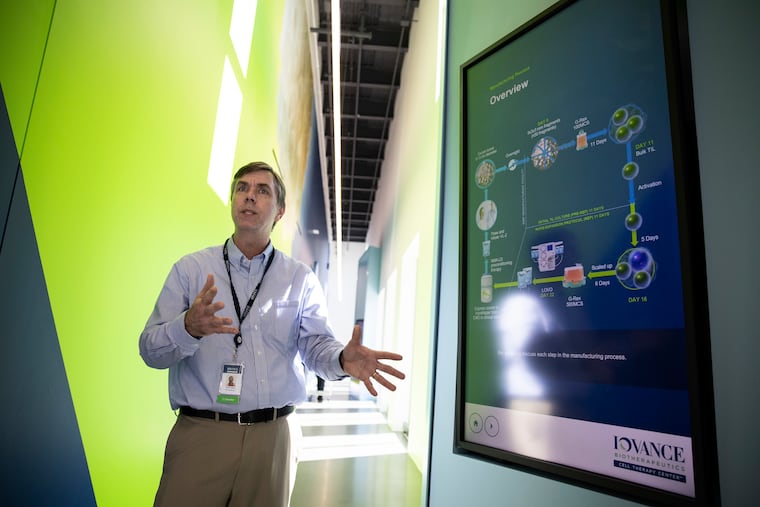
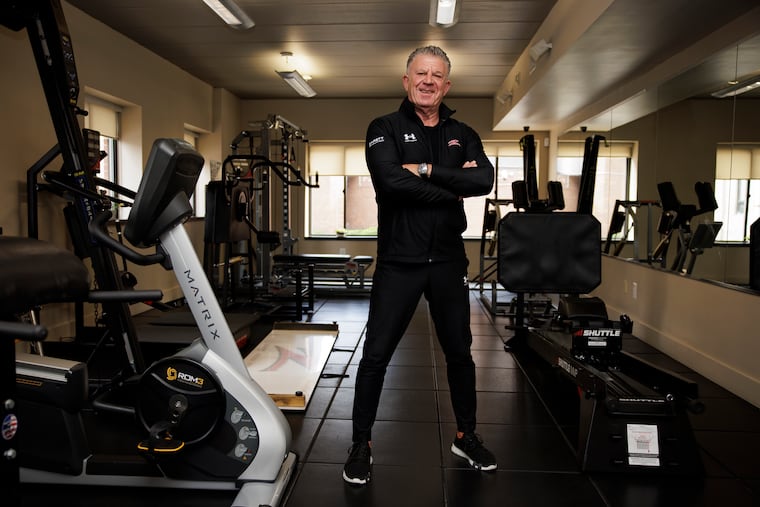
Rusty Konkol wanted to hug everyone he saw during his tour of Iovance Biotherapeutics’ Navy Yard manufacturing facility.
The 71-year-old grandfather with metastatic melanoma had flown in from Wisconsin to see the lab where his cell therapy, named Amtagvi, was made.
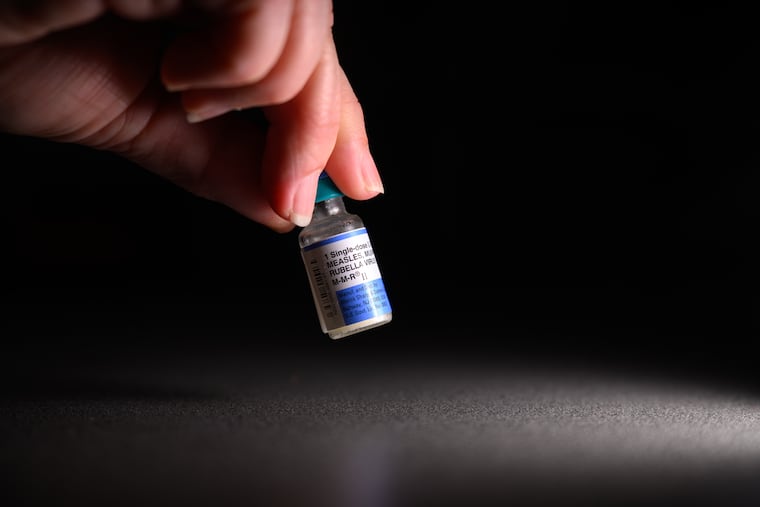
The first of its kind to be approved by the Food and Drug Administration back in 2024, Iovance’s therapy is what’s known as a tumor-infiltrating lymphocyte (TIL) therapy. It amplifies a patient’s own immune cells to fight advanced cases of melanoma that can’t be removed surgically.
Konkol isn’t yet cancer-free, but the cell therapy has bought him more time with his 17 grandchildren after a grim diagnosis in May 2024.
“I would have tried anything,” he said in an interview last week. “I didn’t want to miss seeing my grandchildren grow up.”
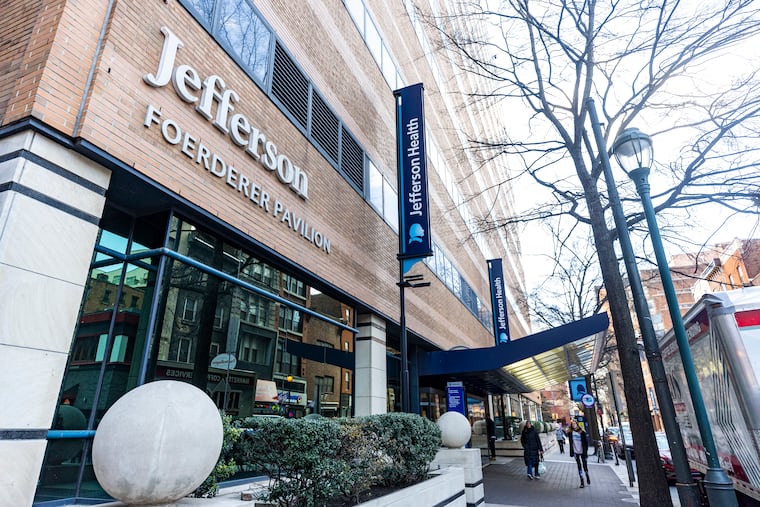
Though Iovance is headquartered in California, the company chose Philadelphia for its manufacturing facility, which opened in 2021 and employs 600.
Philadelphia’s local talent and history of pioneering cell therapy advances led to the decision, said Jen Saunders, senior director of investor relations & public relations. (The region has been nicknamed “Cellicon Valley” due to its role in pioneering CAR-T and other novel cell therapies.)
Many other life sciences companies have come to the same decision in recent times, making the region a growing hub for manufacturing.
In February, pharmaceutical giant Johnson & Johnson announced it was spending $1 billion on a cell therapy manufacturing plant in Montgomery County. The plant plans to employ 500 people once fully operational in 2031.
Individualized cell therapies tend to be expensive to manufacture due to their complex, highly personalized nature — posing potential financial barriers for patients outside of clinical trials. (Iovance said it could not disclose how much it costs to manufacture the product.)
When Amtagvi was approved in 2024, its list price in the U.S. was $515,000. Its most recent cost was $563,000.
This is in line with other one-time, personalized cell therapies in the U.S., Saunders said.
Cell therapies are among the most expensive cancer treatments. The average cost of a CAR-T product (a cell therapy that has transformed blood cancer care) was more than $400,000 in one 2024 study looking at 271 commercially insured patients. And when all costs of care during the CAR-T therapy period were combined, 8.5% of patients in the study sample had total costs exceeding $1 million.
Actual out-of-pocket costs for Amtagvi can vary widely depending on insurance, Saunders said.
Today, tumor samples from around the world are flown into Philadelphia International Airport to be transformed into Iovance’s novel cell therapy for both clinical trial and commercial uses.
The region’s proximity to multiple airports was another reason for choosing the Navy Yard.
“Because our patients just don’t have that much time to wait,” said Andrea Karpinecz, vice president of quality control at Iovance.
Inside the process
Amtagvi is a one-time therapy created from a patient’s own immune cells.
It’s designed specifically for solid cancers, as opposed to blood cancers such as leukemia.
Solid tumors account for roughly 90% of all cancer deaths in the U.S. The therapy is approved to treat melanoma, though the company hopes to eventually move into lung cancer and other cancer types.
Iovance doesn’t genetically modify immune cells to make Amtagvi. Instead, they select the cancer-fighting immune cells a patient already has and grow them up to levels the body wouldn’t normally be able to reach.
These cells are infused back into the patient, where they return to fight the cancer, ideally “in such greater numbers that it overwhelms and destroys the tumor,” said Brian Gastman, Iovance’s executive vice president of translational medicine and research.
The process to make Amtagvi takes about 34 days, from start to finish.
During the first step, a surgeon removes part of the patient’s tumor to collect a sample of cells. They aim to get the sample transported within a day to Iovance’s Navy Yard facility, where labs are staffed around the clock, seven days a week.
Workers verify that the sample has traveled in the right conditions, refrigerated between 2 and 8 degrees Celsius without exposure to high temperatures, explained Patrick Hearn, director of manufacturing operations at Iovance.
Then they cut the tumor into tiny pieces to help the patient’s cancer-fighting immune cells — the “good cells that reside within the tumor” — grow, he said.
Workstations have to be extra clean to prevent contamination. Personnel at this stage are required to wear a sterile hood, goggles, mask, overalls, boots, and gloves.
The tumor fragments spend the next 11 days in a flask filled with nutrient-rich liquid (called “media”), in an incubator set at body temperature.
Afterward, scientists collect the cells at the bottom of the flask, leaving the rest of the tumor tissue behind. They increase the size of the flask and freshen up with more media to enable the cells to grow at a faster pace.
That’s the start of the rapid expansion protocol.
At day 16 of manufacturing, they scale up to multiple flasks.
By day 22, the therapy is ready to harvest.
Iovance aims to multiply the number of tumor-fighting immune cells into the billions. That’s compared to the thousands or millions the body may normally have, Hearn said.
Testing the product
The next roughly eight days involve testing the quality of the therapy, said Karpinecz, Iovance’s head of quality control.
Scientists assess the health of the cells and whether they will be able to fight against cancer.
They also run samples through machines to make sure there are no cancer cells or contaminants in the therapy.
Historically, a major limitation of personalized cell therapies has been how long they take to manufacture.
Iovance has found ways to quicken the process by using rapid sterility tests and running multiple samples simultaneously.
Their patients are typically “so sick they can’t wait for their treatment,” Karpinecz said.
“We are on a very quick timeline, and our overall goal is to get the product to the patient as soon as possible,” she said.
More time
When Konkol was diagnosed with stage 4 melanoma in mid-2024, his six kids, five of whom are pharmacists, held weekly Zoom calls to strategize.
His doctor told him he would have a year to a year and a half left to live if he did nothing.
Immunotherapy had already failed to work.
One of his sons, a pharmacist in Milwaukee, said, “Dad, I want you to come down here. We got this new thing that they’re trying,” Konkol recalled.
Iovance’s Amtagvi had been approved by the Food and Drug Administration just months earlier, based on results from a trial involving 73 patients with advanced melanoma. Nearly a third saw tumor shrinkage, and three patients had a complete response, meaning their tumors could no longer be detected.
Konkol was willing to try anything to survive for his family.
He first received a short course of chemotherapy to knock down his immune system, followed by Amtagvi in January 2025.
Konkol thought the therapy might be working, since he could no longer feel the lumps in his neck or legs. But he didn’t know for sure until his first CT scans six weeks after treatment.
They showed tumors in his body were either getting smaller or disappearing.
“Every six weeks, you just kind of pray,” said Konkol’s wife of almost 50 years, Linda, who came to Philadelphia with him.
Now he’s on a three-month scan schedule, hoping he will continue to see improvement.
Physically, Konkol feels better. He has more energy. He’s able to cut and split wood. He didn’t recall feeling any symptoms from the therapy.
He and his wife babysit their 10-month-old grandchild, who is just learning how to walk.
“I wouldn’t have seen that otherwise if I didn’t take that treatment,” said Konkol, with tears in his eyes.