Baby KJ’s gene-editing treatment lands him on Nature’s top 10 list
CHOP and Penn are continuing to research how to make the bespoke treatment available to more patients.
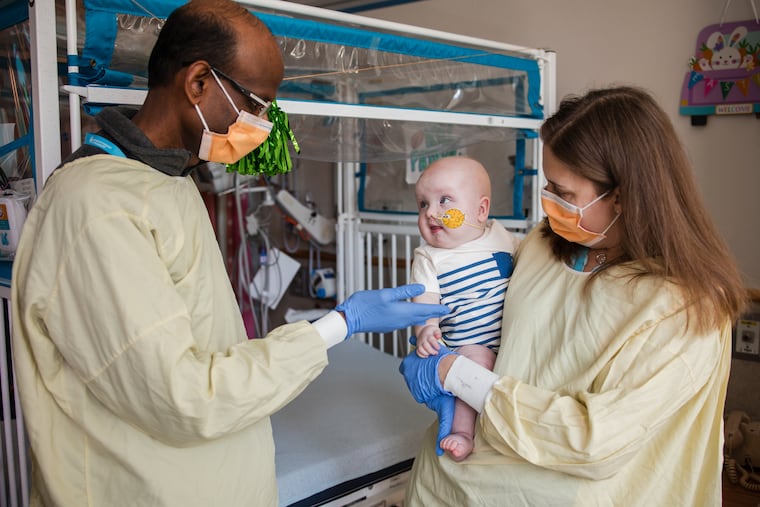
A Philadelphia-area infant named Baby KJ made international headlines after doctors at Children’s Hospital of Philadelphia and Penn Medicine successfully treated his rare, life-threatening liver condition with a gene-editing drug earlier this year.
Now back home with his family in Drexel Hill after more than 300 days in the hospital, KJ Muldoon has been named one of 10 people who helped shape medicine in 2025 by Nature, a British scientific journal.
» READ MORE: CHOP and Penn treated an infant with a rare disease by editing his genes
Nature’s 10 is rounded out by career scientists and public health champions, including a neurologist treating brain disorders, an entomologist unearthing new details about mosquito-borne illnesses, and a data researcher who drew attention to troubling patterns in research retractions. The publication honored Baby KJ as a “trailblazing baby.”
KJ was born with a rare disorder that prevented his liver from processing protein. He was at risk of dangerous levels of ammonia, a byproduct of protein, building up in his bloodstream, traveling to his brain, and causing irreparable damage. The condition, called severe carbamoyl phosphate synthetase 1 (CPS1) deficiency, is deadly in more than half of cases.
With few treatment options and limited time, KJ’s doctors proposed a novel treatment using experimental gene-editing technology: They would analyze KJ’s genetic profile to find the genetic mutation that prevented his body from producing a key enzyme that breaks down protein. Then they would infuse a medication laced with bits of genetic code to find the misspelling and fix it, dramatically improving his chances of recovery.
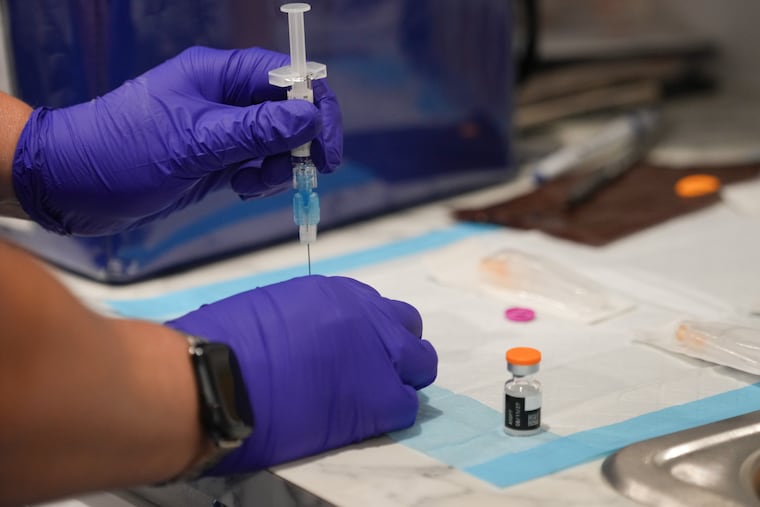
Within six months, researchers at CHOP and Penn had developed a customized drug specifically for KJ using CRISPR, the buzzy shorthand for a scientific tool that works like a find-and-replace command. It is named after a stretch of genetic code utilized — clustered regularly interspaced short palindromic repeats.
KJ received three doses of the medication, and in June, he returned home after 307 days in the hospital. He will need ongoing care, but doctors say the treatment has dramatically improved his liver function.
“This is the future of medicine, a step toward using gene-editing for diseases for which there are few treatments,” Kiran Musunuru, director of the Penn Cardiovascular Institute’s Genetic and Epigenetic Origins of Disease Program and one of the lead doctors on KJ’s case, said during a call with reporters in May.
Baby KJ’s treatment was a first-of-its-kind drug customized to a unique genetic mutation. It will never be used for another patient, but Philadelphia researchers believe the CRISPR framework could be used to customize drugs for other patients.
» READ MORE: Penn and CHOP will test gene therapy for rare diseases with a new FDA trial protocol
Musunuru and Rebecca Ahrens-Nicklas, the director of CHOP’s Gene Therapy for Inherited Metabolic Disorders Frontier Program, are developing a new clinical trial to test the CRISPR framework for treating customized gene therapies for urea cycle disorders related to any one of seven genes.
The mechanism will remain the same, but the injection each patient receives will be customized to target their unique genetic mutation.
They are hopeful that their work will make bespoke treatments available to more people with rare diseases, Ahrens-Nicklas told Nature.
“Everyone saw the possibility and thought, ‘Why isn’t this available for my child?’”