Feds award $22 million to Penn spinout Linnaeus Therapeutics to advance anti-aging drug
The company seeks to leverage the benefits of estrogen signaling to prevent age-related diseases and improve the “healthspan" as part of a new ARPA-H program.

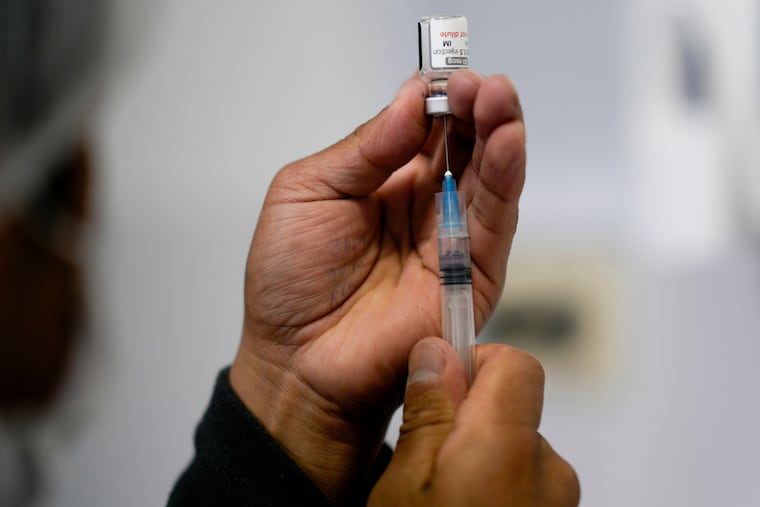
University of Pennsylvania spinout Linnaeus Therapeutics has secured $22 million in federal funding to test whether its once-a-day pill can help Americans reap the benefits of estrogen without actually using the hormone.
The Haddonfield-based biotech is one of seven research teams nationwide awarded funding under a new program of the Advanced Research Projects Agency for Health (ARPA-H). The agency is investing up to $144 million with the goal of preventing age-related diseases and improving the “healthspan” — the number of years people live in good health.
Linnaeus’ pill, called LNS8801, works by binding to a target in the body known as G protein-coupled estrogen receptor, or GPER. Estrogen would usually be responsible for activating GPERs, but the small molecule drug is able to take its place.
The ARPA-H funding will help the company explore the broad potential of its drug against cancer, cardiometabolic diseases, and diseases of aging.
With its five years of ARPA-H funding, Linnaeus will launch clinical trials to test the drug’s ability to preserve physical and mental abilities in older adults.
Aging is a new frontier for the company, which has tested its drug in clinical trials against melanoma since 2019.
Both men and women can use Linnaeus’ drug, since GPER is present in a variety of normal tissues in both sexes. Early clinical trials involving about 100 cancer patients found no serious adverse events.
The drug has received Orphan Drug and Fast Track designations for melanoma, but is not yet FDA-approved.
Some trial participants also saw improvement in their cholesterol levels after receiving the drug for cancer, as did patients with elevated hemoglobin A1C levels (related to diabetes), and high blood pressure.
That signaled to company CEO Patrick Mooney that the drug was “potentially much bigger than cancer and could benefit people with diseases of aging, writ large,” Mooney said.
ARPA-H was created in 2022 to fund promising research that falls outside of the traditional model for scientific and commercial investment. The program’s expansive mission looks to make an impact across wide-ranging diseases at a time when more than 90% of adults over 65 have a chronic condition, and nearly 80% have two or more, according to the Centers for Disease Control and Prevention.
Inspired by sex differences
Linnaeus co-founder and chief scientific officer Christopher Natale became interested in why women with melanoma tended to have better outcomes than their male counterparts as a doctoral student at the University of Pennsylvania.
Research had shown that women with the skin cancer had lower mortality and recurrence rates than men, as well as a lower lifetime incidence. Men diagnosed with melanoma between ages 15 and 39 were 55% more likely to die of melanoma than women in the same age group, according to one study in JAMA Dermatology.
Those sex differences inspired him to try treating cells in the lab with estrogen, a sex hormone generally seen at higher levels in women than men.
The hormone inhibited growth of melanoma cells, he found, due to estrogen activating GPERs.
GPER was “a fairly novel estrogen receptor at the time,” Natale said.
Natale said he thought the project had potential to be “more than an academic project.” He co-founded Linnaeus in 2016 with his mentor Todd Ridky, a Penn dermatologist and scientist.
Within a year of Natale’s graduation from Penn, the company designed a drug that could activate GPER.
The drug’s design can target this particular estrogen receptor without activating other processes that estrogen plays a hand in.
If you think of hormones as the body’s mail service, carrying messages to cells throughout the body, receptors are like the mailboxes that receive them. Estrogen happens to have multiple mailboxes it can go to, so they had to make sure their drug didn’t end up with the wrong recipient.
For example, it wouldn’t bind to estrogen receptor alpha or beta, which play key roles in the reproductive system.
That means patients avoid traditional estrogen-related effects, Natale said, such as feminizing changes like breast development.
Testing in cancer and beyond
Medical guidance around the use of estrogen therapy has shifted in recent years. Use in aging women was long controversial, in part due to outdated research on hormone therapies in women that overstated risks of cancer and heart disease. The Food and Drug Administration recently removed black box warnings on hormone therapies for menopausal women after more robust reviews found them to be safe and effective.
In recent years, research has suggested that estrogen could reduce the risk of breast cancer, cardiovascular disease, bone fractures, and cognitive decline. Estrogen also appears to help protect women against heart disease before menopause.
The same is true for “a lot of these conditions that are considered under the umbrella of diseases of aging,” Natale said.
These are the benefits they hope to leverage against aging.
“New drugs that allow us to tease apart the potential benefits of these hormones that are so important for our life and longevity have a lot of excitement and potential,” said Deborah Clegg, the vice president for research at Texas Tech University Health Sciences Center El Paso.
Her one word of caution for scientists was to be careful when activating GPER widely throughout the body.
“It’s not just a light switch,” she said. “I like to think of it as much more nuanced.”
She previously studied GPER’s role in metabolism and throughout the nervous system.
The company will want to make sure they activate the right cell type at the right amount to maximize the potential benefit. Dosing may depend on the individual and where they are “in the spectrum of aging,” Clegg said.
Sarah Lindsey, a professor in pharmacology at Tulane University, received Linnaeus’ drug free-of-charge to test in experiments of vascular health in mice. (She has been listed as a collaborator on a study but was not paid by the company.)
She found the drug reduced stiffness of the arteries in mice experiencing the equivalent of menopause.
Results in animal studies do not necessarily translate to humans. Still, she thought the drug’s potential in aging was “not that far-fetched.”
“We know that estrogen has a lot of anti-aging properties in general,” said Lindsey, who has studied GPER since 2008.