Philly doctors decry hepatitis B vaccine decision by CDC advisory committee
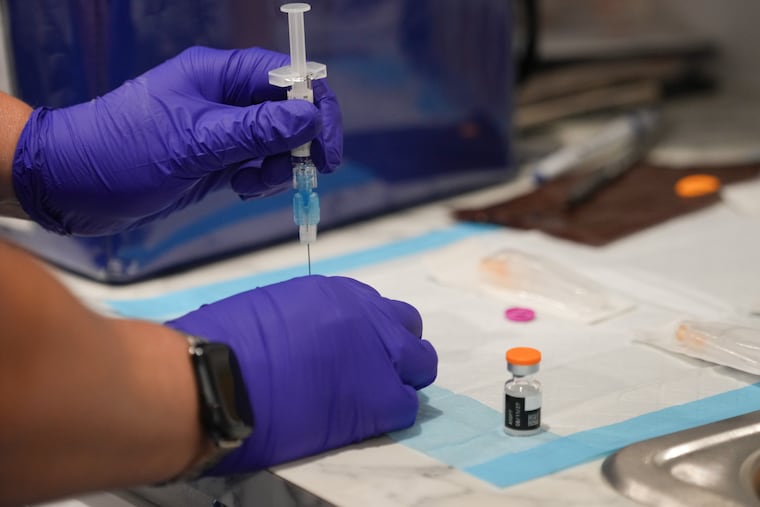
The Advisory Committee on Immunization Practices will now recommend that infants receive a hepatitis B shot at birth only if their mother was not tested or tests positive.
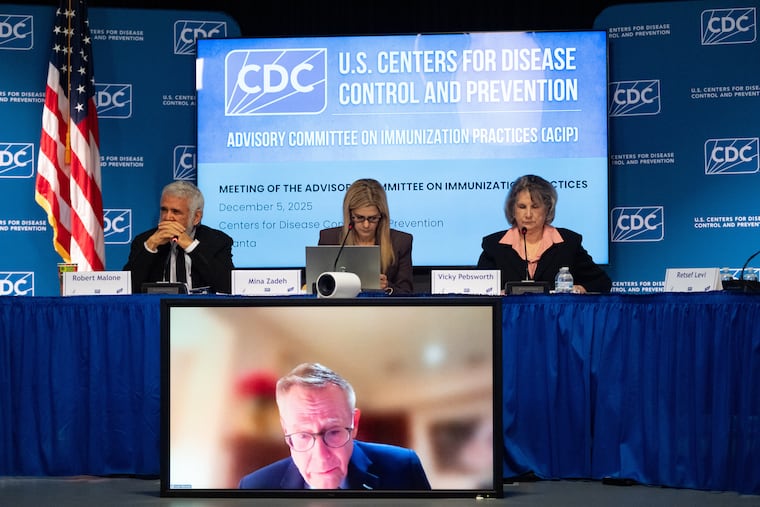
In Philadelphia, the city where the hepatitis B vaccine was discovered, experts sharply criticized a decision on Friday by the nation’s leading vaccine advisory panel to end a longstanding recommendation that all infants be immunized at birth against the serious liver disease.
The Advisory Committee on Immunization Practices, a committee that makes recommendations to the Centers for Disease Control and Prevention on the vaccines that Americans should receive, voted 8-3 to change its guidance on when and to whom the hepatitis B vaccine should be administered.
National medical professional societies have opposed changes to the administration of a vaccine proven to be safe and effective, crediting it with all but eliminating the spread of the virus in young children.
The hepatitis B vaccine revisions underscored growing concern that the federal government’s vaccine guidance is no longer credible under President Donald Trump’s administration.
“Cases will go up,” said Sarah Long, an infectious disease pediatrician and a professor of pediatrics at Drexel University’s College of Medicine.
She called the vote “outrageous,” saying it’s much safer to ensure every child gets protection as soon as possible from a virus that can have lifelong effects, causing in some people cirrhosis and liver cancer.
“Why wouldn’t you want to apply a cancer-preventing vaccine to every potential susceptible child?” Long said.
Long is herself a former member of the committee of independent experts. Her term ended in July 2024, about a year before Health and Human Services Secretary Robert F. Kennedy Jr. fired all of ACIP’s 17 members and reappointed handpicked members that included some who, like Kennedy, have advocated against vaccines.
At meetings on Thursday and Friday, the committee reviewed a recommendation in place since 1991: that, shortly after birth, infants receive the first in a series of hepatitis B vaccinations.
ACIP will now recommend that infants receive a hepatitis B shot at birth only if their mother was not tested or tests positive for hepatitis B.
Parents can still decide with their doctors to give a dose at birth if the baby’s mother tests negative.
The committee recommended delaying the shot, recommending that babies should get their first hepatitis dose at “no earlier” than two months if they do not receive a birth dose.
Parents who test negative for the virus should discuss “vaccine benefits, vaccine risks, and infection risks” with their doctors to decide “when or if their child will begin the hepatitis B vaccine series,” HHS officials wrote in a statement.
Some committee members said most babies are not at high risk for infection and questioned whether there’s adequate research to support the shots for infants, The Associated Press reported. But two others said there was no evidence that birth doses harm babies. The CDC’s own website cites decades of studies showing few risks from the vaccine.
‘Why wait until two months?’
The decision makes little sense, said Paul Offit, a nationally renowned vaccine expert and physician who leads Children’s Hospital of Philadelphia’s Vaccine Education Center and has often clashed with Kennedy.
“I don’t think this RFK Jr.-appointed anti-vaccine group calling itself the ACIP understands critical aspects of this virus,” he said. “This vaccine is as safe at two months as it is at birth. Why wait until two months?”
It’s dangerous to wait to vaccinate babies against hepatitis B because the virus is highly contagious and can spread from a mother to a child at birth, and through actions as seemingly innocuous as sharing a toothbrush, a washcloth, or a razor.
Pennsylvania has seen a 95% reduction in acute hepatitis B cases since the birth dose was implemented, health officials said in a news release earlier this week, calling transmission to newborns, infants, and toddlers “nearly eliminated.”
Across the state, no mothers have passed the disease to their children at birth since 2019, and no cases have been detected in children under 4 since 2007.
State health officials had urged the committee to keep the birth dose recommendation.
Public perceptions of the vaccine
Most Americans support hepatitis B vaccinations for newborns, a recent study from the University of Pennsylvania’s Annenberg Public Policy Center found.
The center surveyed 1,637 Americans last month, noting that the CDC recommended that all children be vaccinated for hepatitis B at birth, and three-fourths of respondents said they were very likely or somewhat likely to recommend the vaccine for a newborn in their household.
Though a majority of survey respondents across political parties said they were likely to recommend the vaccine, Republicans were least likely to recommend it.
About 40% of respondents correctly answered a question about the disease the hepatitis B vaccine prevents. One-third said they were not sure what disease it prevents.
Next steps
ACIP’s recommendations must be adopted by the CDC director. The White House fired former CDC director Susan Monarez this summer, in part because she had refused to unquestioningly sign off on ACIP recommendations.
In her place, the acting director, Jim O’Neill, will decide whether to adopt the new recommendations.
Pennsylvania and New Jersey are among the states that have moved this year to ensure residents can continue to access vaccines amid the reconstituted panel’s earlier controversial changes to the vaccine schedule.
In Pennsylvania, Gov. Josh Shapiro signed an executive order in October aimed at protecting access to vaccines. One of its directives asks the state Department of Insurance to require that insurance companies cover vaccines recommended by leading national medical associations, including the American Academy of Pediatrics, which continues to recommend hepatitis B vaccines at birth.
In a statement after Friday’s vote, Pennsylvania’s Secretary of Human Services, Val Arkoosh, urged doctors and parents to follow AAP recommendations when vaccinating infants.
And the state’s insurance commissioner, Michael Humphreys, said that insurers in the state will continue to cover the vaccine for newborns, “full stop.” He added insurers have already committed to covering birth doses through at least 2026, and that the department expects insurers to continue their coverage beyond that date.
In a post on X, the social media platform formerly known as Twitter, Shapiro criticized Friday’s decision as “threatening access to safe, effective Hepatitis B vaccines for newborns, putting them at risk of getting a serious infection with lifelong consequences.”
In New Jersey, insurance companies are expected to continue to cover all immunizations recommended by the state health department, which includes birth doses of the hepatitis B vaccine, the state Department of Banking and Insurance said in a statement after the committee’s vote.
The department’s commissioner, Justin Zimmerman, said the federal government is “taking actions that threaten the health of residents.”
CHOP’s Offit said he believed most doctors will continue to recommend the birth dose.
“Doctors will know this is a bad idea and will do what they’re always doing — recommend the birth dose,” he said.
But he and Drexel’s Long are among the experts increasingly concerned about the confusion ACIP’s decision could sow.
And the decision from one of the nation’s highest-profile public health authorities could push more people to forgo the vaccine, Offit said.
“I think people will feel empowered to say, ‘I don’t want this vaccine because ACIP said I don’t have to get it,” he said.