Delaware County firm helps process health insurance claims for 190 million Americans
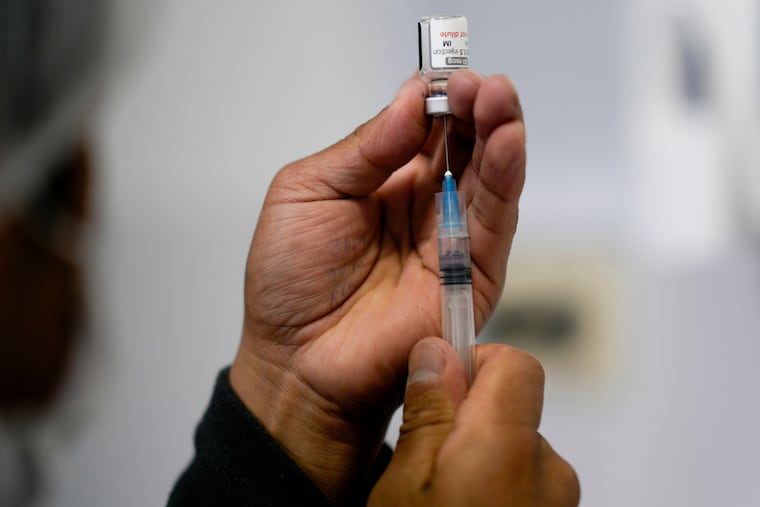
Lyric.ai helps process insurance claims for 190 million Americans. The process is called claims editing.

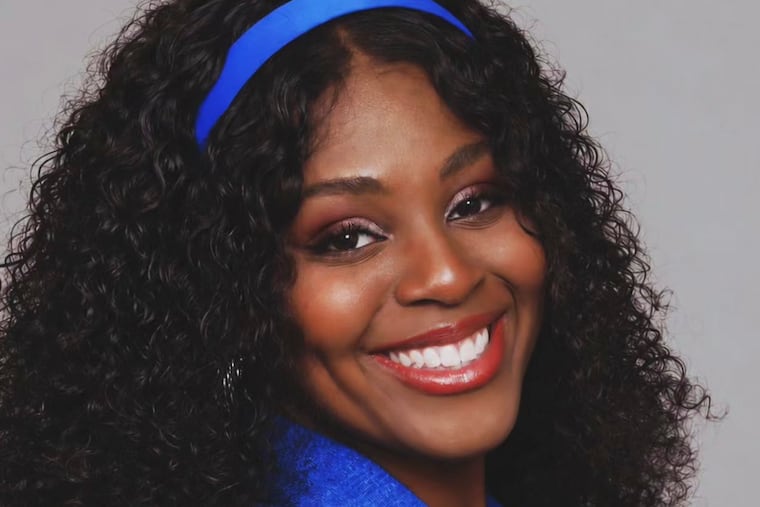
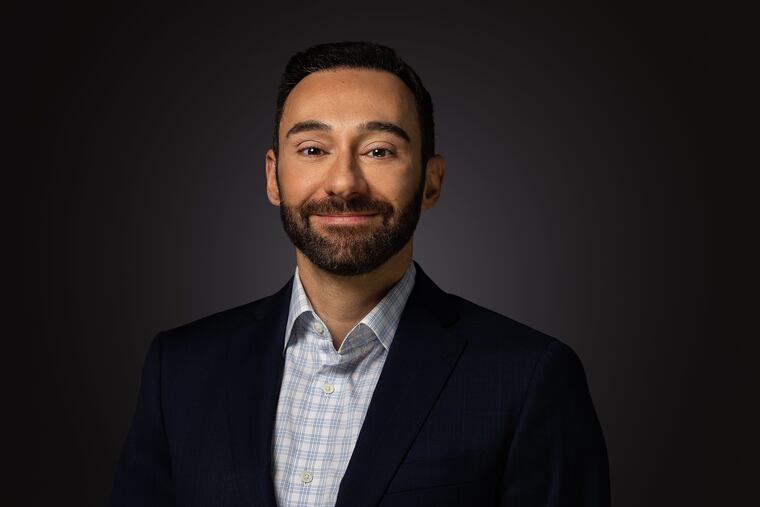
Carolyn J. Wukitch has a long view on how technology supports payments that are vital to U.S. healthcare.
For 35 years, Wukitch has worked at a Newtown Square company now called Lyric.ai that helps process insurance claims for 190 million Americans. Nine of the 10 biggest U.S. health insurers are customers. She started at the company in an era of mainframe computers and is now navigating the introduction of AI.
“Our core function hasn’t changed,” Wukitch said.
Currently Lyric’s chief operating officer, she has been through four ownership changes at the company. Since its founding in the late 1980s, a series of ever-larger owners introduced increasingly broader mixes of healthcare services. This included a few years as part of Change Healthcare, before it became independent again in 2022.
“I kind of feel like we’ve gone back to our roots,” said Wukitch, who started in 1990 at what was then called Gabrieli Medical Information Systems Inc.
In her time there, the company has grown from 40 employees to more than 500. “We’re back to being solely focused on helping health plans pay claims accurately,” she said.
In recent years, the company changed its name from ClaimsXten to Lyric after TPG Capital, a large private equity firm, bought it in 2022 for $2.2 billion. UnitedHealth Group sold the business to gain regulatory approval for its purchase of Change Healthcare.
TPG pushed a re-engineering of Lyric’s core claims-editing system, made an acquisition that expanded Lyric’s product offering for insurers, and added AI experts to Lyric’s staff. In addition to offices in Newtown Square, Lyric has centers in the Philippines and India.
Wukitch spoke to The Inquirer last month about Lyric’s history and the role it plays in U.S. healthcare in an interview edited for brevity and clarity.
What is Lyric’s origin?
A pathologist originally from Hungary had a vision to be able to take a discharge summary from an inpatient stay, feed it into a computer, and get the right diagnosis codes. If you think about having that vision in the mid-’80s, he was brilliant.
The technology leadership of the company when I joined in 1990 were people from Shared Medical Systems, which was the large hospital information systems company based in Malvern. [Shared Medical, started in 1969, has gone through a chain of owners since 2000, first Siemens, then Cerner, and now Oracle.]
You’ve been through four ownership changes during your time at the company. What’s that like?
Our core function hasn’t changed. Certainly, we’ve made advancements, and we now leverage AI and newer technologies. But in the end, our mission has been: How do we help a health plan pay a claim correctly, with automation, with speed and agility, with the ability to configure for their specific needs?
Why is it important to pay claims accurately?
Accurate payment benefits all healthcare stakeholders. If you pay a claim accurately, then you’re serving the health plan. They have a fiduciary responsibility to pay the claim accurately. The provider is getting paid what they should get paid. As a member, you’re only paying on what you should be paying.
So much friction in healthcare is around money, and if you are anchored to paying it accurately, it really serves all the stakeholders, the consumer, the provider, the purchaser, and then the plan.
Why is paying claims so complicated?
There’s thousands upon thousands of codes that describe procedures. Coding systems were set up more from a research perspective: I want to understand what happened to that particular patient. We then, in the American system, took those codes and used them for reimbursement.
So you’ve taken a system that was built for one thing, and now we’re using it for a different thing. And I would say most of what happens in healthcare is really just errors and mistakes based upon just the complexity of the number of codes.
Who are Lyric.ai’s customers?
We have about 100 clients, and 65% of them have been clients for more than 20 years. I don’t take that for granted. They have options, but if they stay for this long, that means we’re delivering value and meeting their needs. But from a contractual perspective, we can’t share names.
How is your company approaching the use of AI?
Every innovation requires us to understand: How’s the right way to use it, what are the right guardrails to put around it, and having the right expertise? We’ve been really thoughtful about adding some really smart people around AI. I marry them up with the clinical team.
» READ MORE: At some Philly doctors’ offices, AI is listening in the exam room
Fundamentally, the job of AI is to make the work of clinicians — either nurses, or coders, or even pharmacists — easier. Instead of spending hours looking at a website to pull down data about the regulations for the state of California, as an example, the AI tool is helping synthesize that data and present it back to that coder to then think about, what do we put into the product?
It’s really helped with job satisfaction. I have a team now that instead of spending their time doing things that took a lot of effort and research gets teed up to spend their time on the critical thinking part.