Pennsylvania is among 25 states suing over federal Medicaid rules they say ‘overstep’ the law
People who are "medically frail" will need to prove they are too sick to work to qualify for an exemption from new Medicaid work requirements.
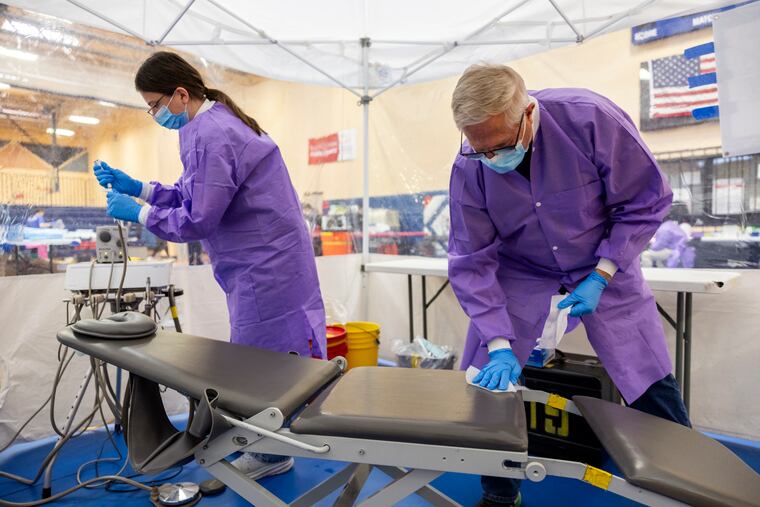
Felix White worries his ability to keep working — and avoid a health crisis — could be at risk.
The 62-year-old Montgomery County resident relies on Medicaid to afford the insulin he needs to manage his type 1 diabetes.
Beginning in January, people with Medicaid will be required to provide proof that they are working 80 hours a month, unless they are considered too sick to work and qualify for an exemption.
If White fails to submit enough evidence, he could lose Medicaid. Yet without the government-funded coverage, he won’t be able to get the medications and care he needs to stay healthy enough to keep working.
“It would be a death sentence for me,” White said.
A few years ago, White lost his job in computer science — and the private health insurance that once covered the medications, glucose monitor, and specialists he needs to manage type 1 diabetes.
Finding work in his field has been challenging at his age, White said. So instead, he’s relied on a string of odd jobs, such as mowing lawns, for income and Medicaid for healthcare.
Pennsylvania expects 310,000 residents to lose Medicaid when the new rules take effect, and White fears he could be among them.
The work requirements are part of Republicans’ 2025 spending and tax cut bill, which is expected to cut more than $900 billion in Medicaid spending over the next 10 years.
The legislation passed by Congress allowed exemptions for Medicaid recipients considered “medically frail.” The law loosely defined categories of exemptions, such as for people with a substance use disorder, a disabling mental disorder, a “serious or complex” medical condition, and disabilities that limit their daily activities.
White’s Type 1 diabetes is considered a disability that could hinder a person’s ability to work.
But in June, the Centers for Medicare and Medicaid Services provided additional details: To be exempt from the work requirement, people will need to prove not only that they are “medically frail,” but also that their illness is so severe they are unable to work.
Republicans who pushed the legislation argue that work requirements ensure only people with the greatest needs receive the safety-net support, while helping people who have been sick reintegrate into society.
Pennsylvania is among 25 Democrat-led states suing over the interim final CMS rule, which they say oversteps the law, HR 1. The June rule “differed significantly” from initial guidance and “undermines months of work and human and financial resources” Pennsylvania has spent to meet the new requirements outlined in HR 1, the Pennsylvania Department of Human Services said in a statement.
“This redirection poses an even greater threat to health and well-being for Medicaid recipients and the stability of our entire healthcare system,” said Brandon Cwalina, a spokesperson for DHS.
Shifting Medicaid rules
Implementing the new Medicaid rules represents a massive undertaking for states. The law calls for many people to prove on a monthly basis that they are working, and reapply for coverage every six months, instead of once a year. Certain groups of immigrants will no longer be eligible.
These changes have required Pennsylvania and other states to overhaul the type of information they document about Medicaid applicants. Processing renewals twice as often will require more staff.
States also had to devise strategies for alerting people of the changes, for fear they will be dropped from coverage they didn’t know they were at risk of losing.
Pennsylvania DHS “has worked in good faith” to make these changes, sharing designs and plans with CMS leadership, Cwalina said.
The June rules from CMS will require “a more complex, costly, and labor-intensive approach,” he said.
Administrative hurdles for vulnerable patients
The new rules will make it harder for people to get the care they need, patient advocates and health analysts warn, saying it will drive more people to rely on emergency care, further straining the health system.
“What the administration is calling work requirements are really just hurdles for people who deserve Medicaid and access to the care they need,” said Michael Berman, director of Protect Our Care PA, a healthcare advocacy group, who spoke at a virtual press conference Wednesday with stakeholders and patients, including White.
Under the June rules, states are responsible for developing a list of diagnosis codes that qualify for an exemption, and devising a system to determine how a person can prove their diagnosis prevents them from working.
The CMS guidance provides some specific limitations.
People with substance abuse disorder, for instance, will not be eligible for a work requirement exemption if they have been in recovery for at least five years.
Behavioral health workers worry that will lead to more people relapsing.
“We know recovery works, but only when people can consistently access care,” said Jeannine L. Lisitski, CEO of Mental Health Partnerships, which provides mental health and substance abuse services in Pennsylvania.
People with HIV/AIDS and cancer, also considered serious medical conditions, will only be exempt from the work requirement rules if they prove they are too sick to maintain a job.
Gathering the documentation could be especially burdensome for people who are seriously ill.
“For someone who’s in cancer treatment, to go back to a doctor and get another piece of paper filled out is just going to make it harder and less likely they’re able to get the care they need to survive,” Berman said.