N.J. dermatologist, investigated for missing payroll, led the nation in billing for a cancer treatment targeted for Medicare cuts
It’s unclear whether the Medicare changes led to Coyle Connolly’s financial troubles. Employees complained to the N.J. Department of Labor about payroll lapses this year.
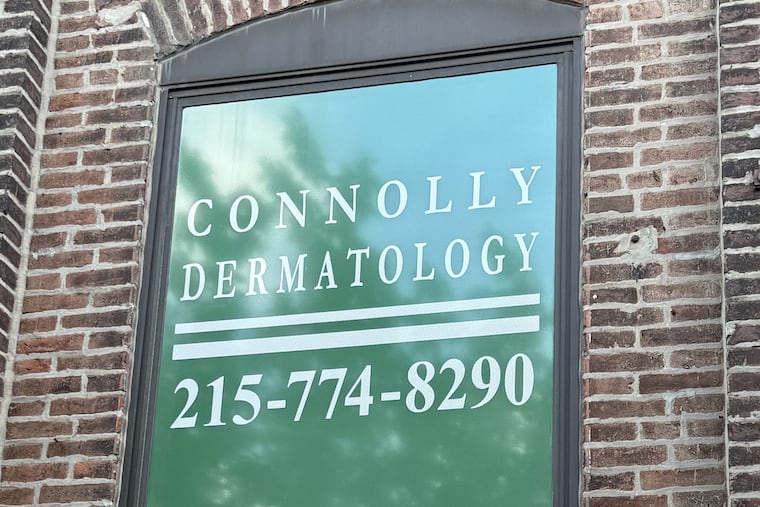
A dermatologist under investigation in New Jersey for missing payroll was Medicare’s top biller three consecutive years for a skin cancer treatment that saw a 40% reimbursement cut this year under the government insurance program.
Coyle Connolly’s private practice, with 30 offices mostly in New Jersey and Pennsylvania, had rapidly expanded its use of a therapy combining low-voltage doses of radiation with ultrasound to target nonmelanoma skin cancers.
The number of Medicare patients treated by Connolly radiation techs soared to 837 in 2024, the latest year available, from 116 in 2020, according to federal records. Patients received on average 16 treatments.
The next biggest provider of the therapy was a dermatologist in Florida with 447 patients in 2024.
The economics of the treatment — known as image-guided superficial radiation therapy — changed dramatically this year after Medicare ruled that it would no longer cover the ultrasound portion of the therapy under the government insurance program mainly for people 65 and older.
In 2024, Medicare paid an average of $166 for the ultrasound and $38 for each radiation treatment. Superficial radiation is an alternative to the far more common Mohs surgery, which is a way of removing cancer while preserving as much skin as possible.
Medicare said in January that evidence did not support the use of ultrasound during each radiation treatment. The coverage decision was not a straightforward rate cut, but a restructuring of how Medicare pays for the therapy.
The Medicare change works out to an effective 40% reduction, according to a company called SkinCure Oncology that supplies radiation machines to dermatologists.
The extent to which that contributed to Connolly’s financial troubles is not publicly available. The Linwood, N.J.-based dermatologist declined to comment for this article.
Since starting to bill Medicare for the treatment in 2020, according to Medicare data, Connolly expanded his practice to 30 locations in four states from a dozen in New Jersey, historical web pages show.
It’s unclear which offices Connolly has closed. Three employees told The Inquirer last week that this is Connolly’s second payroll lapse this year.
They said many employees complained to the New Jersey Department of Labor, which confirmed last week that it is investigating.