Philadelphia asks Pa. judges to approve opioid settlement spending on Kensington revitalization projects
At times on Tuesday, the panel of judges questioned the trust’s decision-making process, which has been criticized for a lack of transparency.
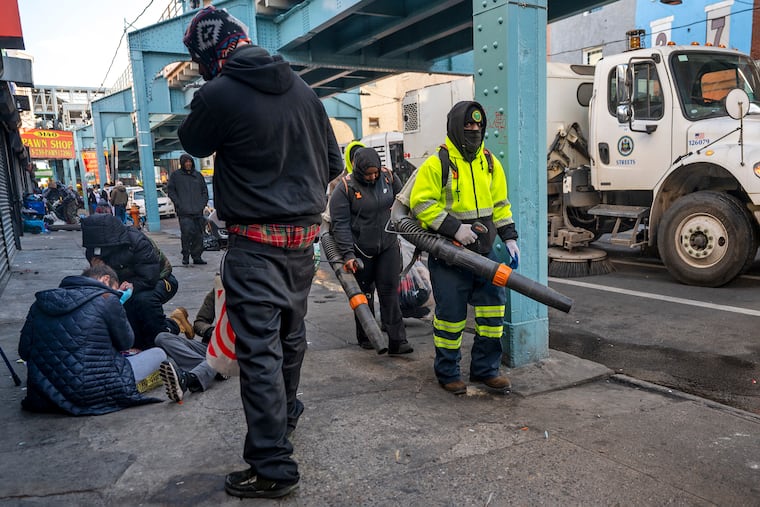
More than three years ago, Philadelphia officials decided to direct part of a multimillion-dollar settlement with opioid drug makers toward fixing harm done in Kensington. They developed projects to repair homes and help small businesses in the neighborhood long at the center of the city’s overdose crisis.
After the money was spent, the state trust overseeing the settlement said it was not an appropriate use of the funds. Philadelphia appealed, and the dispute landed before a panel of three Commonwealth Court judges on Tuesday.
The panel also heard appeals from three other counties, including Chester County, which appealed the trust’s rejection of its plan to spend settlement money on a prosecutor in its drug treatment court.
The hearing was the latest step in a yearslong debate over how Philadelphia and other counties chose to spend opioid settlement money. The Pennsylvania Opioid Trust was created to oversee their spending decisions for more than $2 billion in settlement funds from lawsuits against opioid painkiller manufacturers and distributors accused of fueling a deadly addiction crisis.
At times on Tuesday, the panel of judges questioned the trust’s decision-making process, which has been criticized for a lack of transparency. Work groups meet privately to discuss spending priorities before the trust delivers a decision.
“Apparently, the procedure you’ve adopted is, ‘If we like it, we’ll say yes, and if we don’t, we’ll say no,’” said President Judge Emerita Bonnie Brigance Leadbetter. “How can we review that?”
Jayson Wolfgang, a lawyer representing the trust, said the group’s members joked at times that “we were building the plane as we were flying it.”
He noted that the trust has approved hundreds of programs, and that many counties have accepted the trust’s decision to reject some spending priorities.
Counties do not have to return money already spent, but the trust can reduce or withhold future opioid settlement payments if it determines that a county is spending funds outside the settlement’s purview.
Philadelphia’s appeal centered on portions of the $7.5 million “Kensington Project,” a package of community improvement plans that included a home repair program, supports for small businesses, and park and school improvements.
In 2024, the trust ruled it was not an appropriate use of the funds.
The city appealed, and the trust partially reversed the decision, approving park and school improvements but continuing to reject spending on the home repair program and small business supports.
Ryan Smith, a lawyer representing Philadelphia, said the city did not receive detailed communications about why its spending was being rejected during the trust’s review process.
The city appealed to the Commonwealth Court in December to approve funding for the remaining projects, arguing that the trust’s idea of permissible spending was too narrow and that research shows efforts to improve blighted lots and abandoned buildings decrease fatal overdoses.
Lawyers for the trust countered that the city failed to convince the trust that its plans fall under the parameters of a document from the opioid settlement lawsuits that outlines how counties can spend the money, including on overdose prevention strategies — referred to in court as “Exhibit E.”
Lawyers for other counties also argued that the trust had erred in rejecting their spending.
In Somerset County, on the western side of the state, it rejected spending on an outdoor program for young people aimed at improving mental health. County officials argued that the program was permitted funding under Exhibit E’s provisions for youth-focused prevention programs.
But a lawyer for the county said that six of seven members of a trust committee that rejected the spending “had no background in drug or alcohol anything.” The seventh was the only member who voted to fund the program, she said.