Penn launches $18 million facility to advance RNA technology’s role in health, agriculture
The RNA manufacturing hub opened this spring in University City. The National Science Foundation has invested in five such facilities nationally, each focused on a specific biological material.
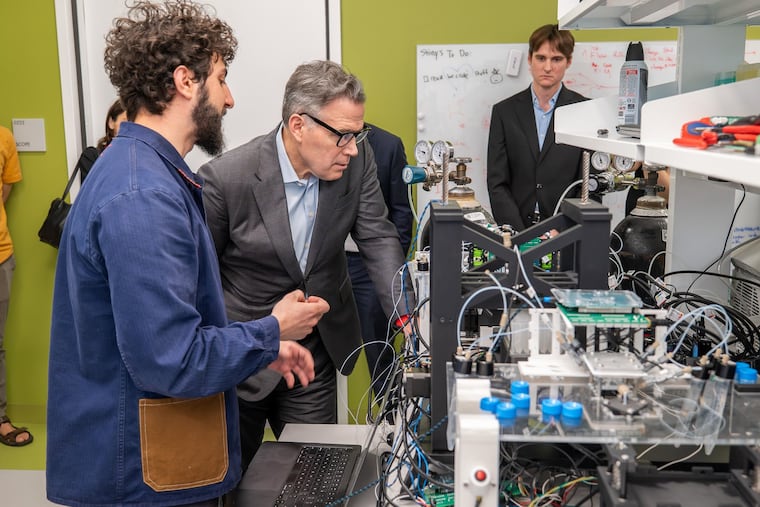
Inside Philadelphia’s new RNA manufacturing hub, scientists are working to create vaccines for fish, precision pesticides, and treatments to protect plants from extreme heat.
The recently launched biofoundry at the University of Pennsylvania aims to expand biotechnological capabilities in the United States, funded by an $18 million federal grant. The National Science Foundation has invested in five such facilities nationally, each focused on a specific biological material.
The term foundry traditionally refers to a factory where metal is melted and shaped into desired forms. Expanding the concept, Penn’s NSF AIRFoundry now offers a one-stop facility for designing and building RNA technology.
All products under development involve ribonucleic acid, or RNA, a key molecule in living cells. Some consider it the cousin of the better-known molecule, DNA. Both can carry the genetic instructions for life.
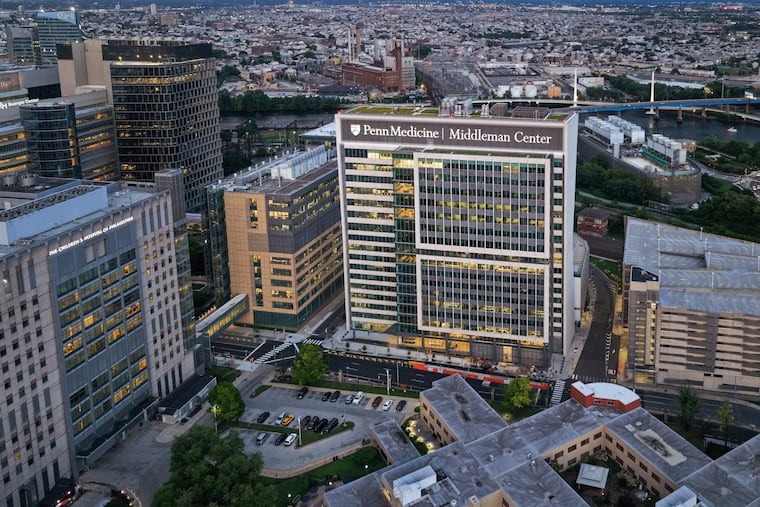
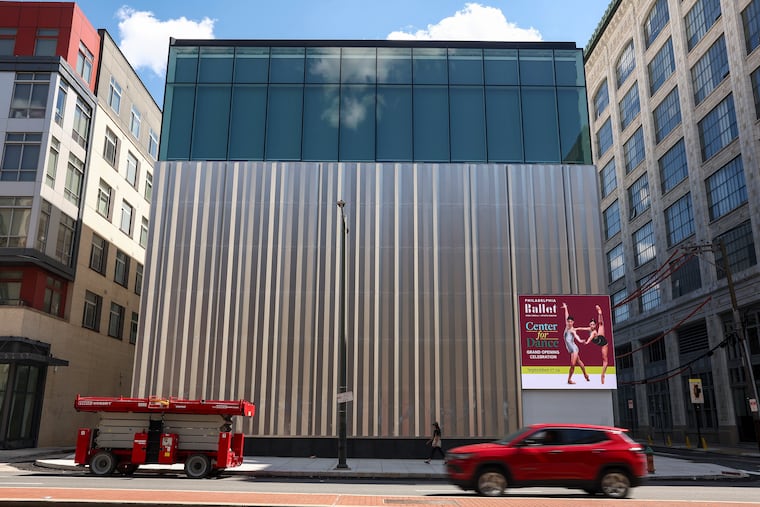
The facility opened in March at One uCity Square in University City. It builds upon Penn’s success with the 2023 Nobel Prize-winning development of an mRNA platform that led to the first COVID-19 vaccine.
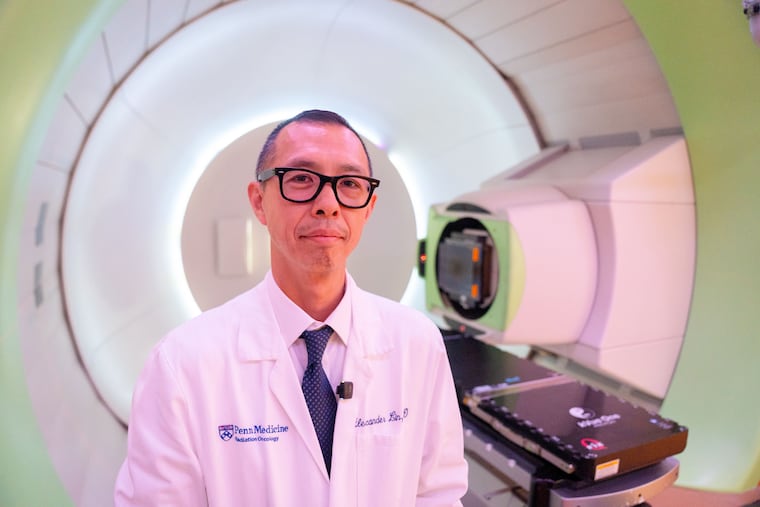
“We need to democratize this technology,” said Daeyeon Lee, a Penn professor of chemical and biomolecular engineering who serves as the foundry’s director.
» READ MORE: Penn mRNA scientists Karikó and Weissman win Nobel Prize
AIRFoundry stands for Artificial Intelligence-driven RNA BioFoundry. Scientists hope AI will help them automate aspects of the design and manufacturing process, serving as a resource for researchers and commercial companies across the world.
Penn’s mRNA work has continued to advance, even as Health and Human Services Secretary Robert F. Kennedy Jr. last year slashed $500 million designated for mRNA vaccine development.
A longtime anti-vaccine activist, Kennedy has claimed the technology is unsafe and ineffective, despite scientific evidence finding the vaccines to be highly safe and beneficial.
Now the foundry seeks to expand RNA’s applications in healthcare, agriculture and beyond.
» READ MORE: UPenn, where mRNA vaccine tech was pioneered, will not lose funding as feds cut $500M in mRNA grants
Lee compared the technology to a hammer — good for certain things, but not everything.
“Our students and postdocs that get trained right now are going to be sort of the first generation of people to think about RNA as a tool for whatever problem they’re trying to solve,” Lee said.
A foundry for RNA
In the mRNA COVID-19 vaccines, injected mRNA provides the instructions for cells to build a harmless fragment of the viral protein. That trains the body to recognize and fight a future infection.
Compared to traditional vaccines that use live or inactivated pathogens, mRNA vaccines can be produced more rapidly — useful in a pandemic.
One of the Nobel laureates behind that effort, Penn scientist Drew Weissman, has operated a smaller scale version of the facility, mainly to make mRNA for his lab and collaborators. The foundry’s launch marked an expansion beyond Penn.
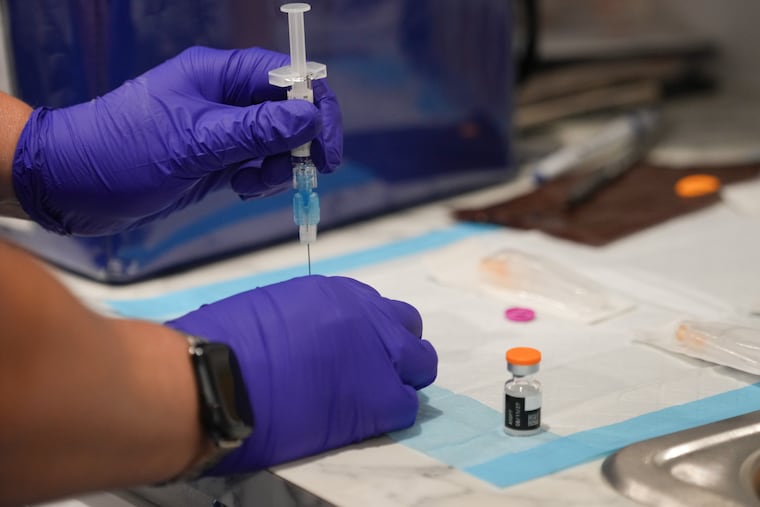
Its sterile instruments and busy lab benches were on display last month as students and faculty walked through the manufacturing process.
“It takes special facilities and skills to make RNA and associated materials,” Lee said.
So far, Penn’s facility has operated on a “fee-for-service” basis, where collaborators request a specific RNA technology and the foundry builds it.
But its scientists hope to incorporate AI to help with synthesizing all the current knowledge, best practices and databases.
They also want to reach a point where users can come to the physical facility and use the instruments themselves.
The federal grant, which started in September 2024, supports the foundry for six years. Lee hopes it will eventually become self-sustaining through the services they provide.
Projects underway include working on vaccines to keep fish healthy.
Another collaborator is developing ways to deliver RNA into plants to benefit the agriculture industry. For example, designing RNA molecules that carry instructions for producing a heat shock protein could protect plants from high temperatures. The plant would produce the protein and theoretically have greater resilience against extreme heat.
The molecule degrades over time, making its effects temporary. So if used during the summer months, the RNA could be gone by the time harvest rolls around.
This transient quality could also make RNA useful for pest control, in lieu of chemical-based pesticides, Lee said.
“We want to interact with everyone that’s interested in using RNA technology,” he said.