NIH director Jay Bhattacharya visits Penn to tout federally funded research
Though President Donald J. Trump proposed cutting NIH funding, legislators including Pennsylvania Sen. David McCormick have rejected cutting funding at the agency.
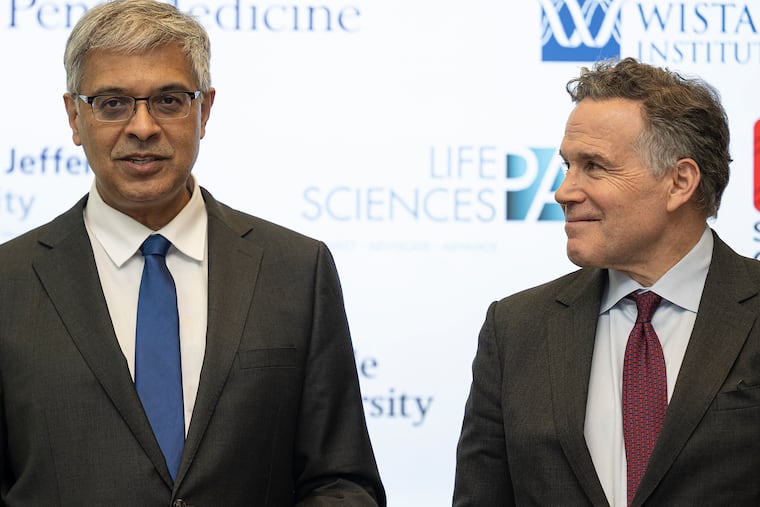
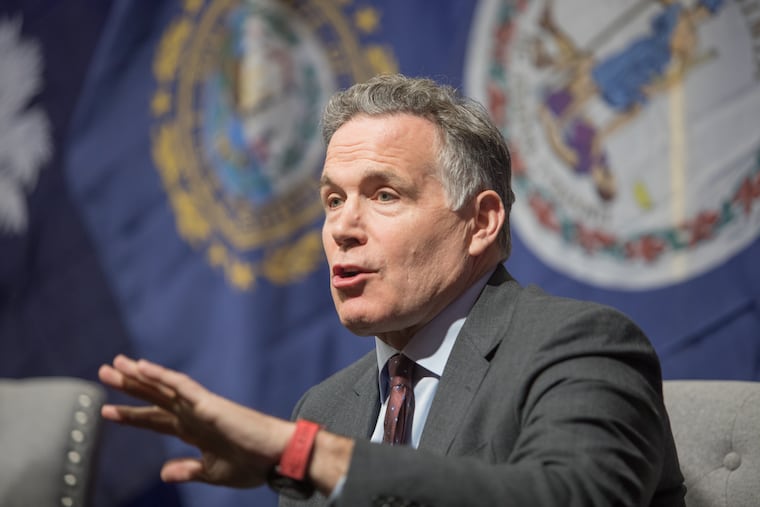
National Institutes of Health Director Jay Bhattacharya touted federally funded scientific research at the University of Pennsylvania on Tuesday, calling a two-day visit to the state “truly, truly inspiring.”
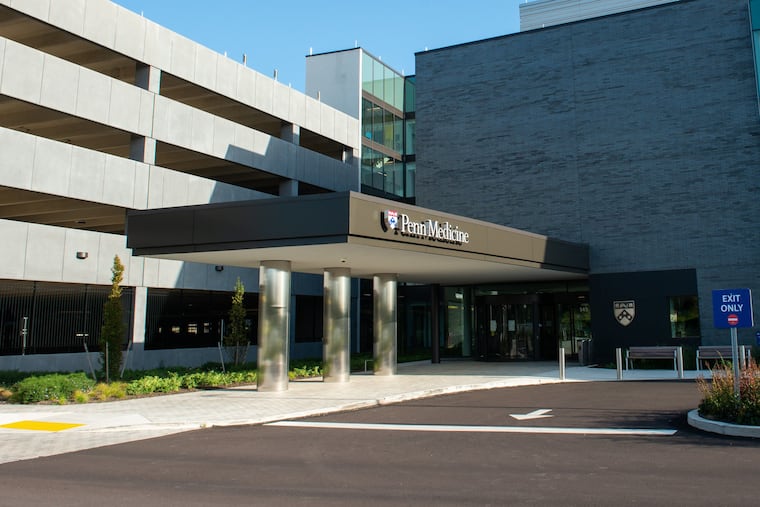
Bhattacharya visited research institutions in Pittsburgh before touring several labs at Penn with Sen. David McCormick (R., Pa.), including the CAR-T lab that develops personalized immunotherapies for cancer.
The visit came after a year of terminated federal grants, court challenges to funding rescissions, and delays in grant approvals that some area scientists say threw their field into chaos.
By last June, two months into Bhattacharya’s tenure at NIH, President Donald Trump’s administration said it had terminated nearly $50 million in scientific research funding from Philadelphia-area institutions.
On Tuesday, Bhattacharya said that the NIH had spent all the money Congress allotted it for research in 2025, and said the agency had “[refocused] where we made those investments.” Fewer grants had been funded by NIH in 2025, he said, but the agency spent the same amount of money as it typically does.
“The idea is to take politics out of the portfolio. Some of the portfolio had gone, previously, to things that were politically divisive that didn’t really translate over to better health for people. So there are some labs that lost funding because they were proposing those kinds of projects,” he said.
Some of the grants terminated in the Philadelphia region last year focused on LGBTQ+ health, health equity, and diversity, equity and inclusion programs, which the administration sees as discriminatory against white people. The terminations are the subject of a lengthy court battle, and the NIH has restored some funding, though Bhattacharya said in December that he would not renew DEI-related grants.
On Tuesday, Bhattacharya acknowledged that there had been “upheaval” at the NIH when he arrived at the agency in April 2025 and said scientists handling grant approvals had “worked like crazy” to send grant money to “excellent science” over the summer and fall.
This year, “we’re a little bit behind things” because of government shutdowns, he said, but he expressed confidence that NIH employees will continue to review and approve grant funding requests.
And although Trump has proposed to slash NIH funding in 2026, legislators including McCormick have so far rejected funding cuts. McCormick said Tuesday that he will continue to vote against cuts.
“I think that the likelihood of NIH funding declining is not high, and I think that there were many people in Congress that will continue to support keeping NIH funding where it is or even growing it,” he said.
Bhattacharya highlighted gene-editing technology developed at Penn and Children’s Hospital of Philadelphia that treated Baby KJ, who received a personalized treatment for a rare liver disorder.
“Advances in genetic editing technology represent decades of NIH investments — decades of huge scientific advances paid off just this past year,” he said.
Penn receives the fifth-highest amount of NIH funding of any university in the country, and Pennsylvania ranks fourth among states that receive NIH funding, McCormick noted in a press release. The agency funds about 21,000 research jobs in the state and generates $5.31 billion in economic activity annually, he said.
“It’s a huge benefit to Pennsylvania and a benefit to the country that Pennsylvania is a big recipient of NIH funding,” McCormick said.
Bhattacharya said he was committed to funding more early-career researchers and hopes to encourage more NIH investment outside of major funding areas like Philadelphia, Boston, and San Francisco.
“We need all of the United States to be places like Philadelphia,” he said.