A financial experiment in Pennsylvania showed how hard it is to stabilize rural hospitals
A Health Affairs study from the University of Pennsylvania found that lump sum annual payments to hospitals resulted in mixed financial results.
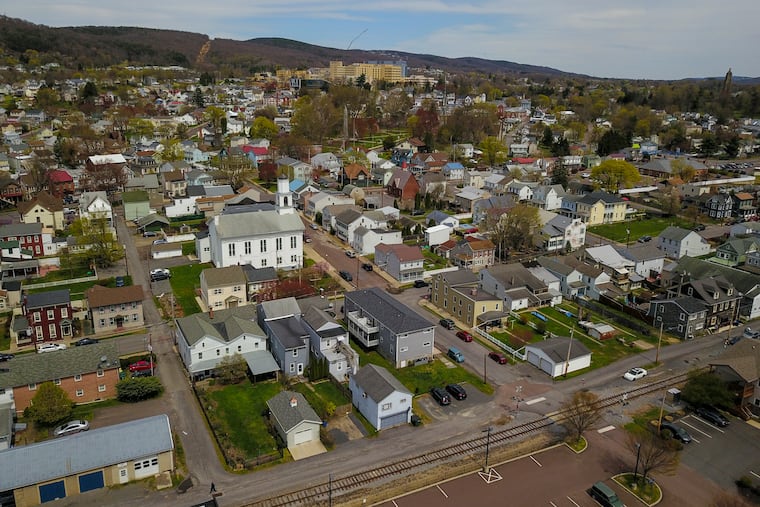
Seventeen of Pennsylvania’s rural hospitals conducted an experiment over the past five years to see if a new way of paying rural hospitals would bring financial stability.
State healthcare regulators and insurers recognized that rural hospitals in Pennsylvania and across the country have long faced fundamental financial challenges because of their locations in areas with low population density.
So they tried to come up with a way to provide financial stability to hospitals with relatively low patient volumes and small tax bases to support them financially. On top of that, rural hospitals have increasingly relied on the most common forms of public insurance, Medicare and Medicaid, which have lower reimbursement rates than private insurance.
The results were mixed, according to a preliminary analysis of the financial impact of the effort, called the Pennsylvania Rural Health Model, published in Health Affairs’ July issue.
The study’s lead author, Paula Chatterjee, an assistant professor of medicine at the University of Pennsylvania and director of health equity research at Penn’s Leonard Davis Institute of Health Economics, spoke with The Inquirer last month about takeaways from the effort.
The experiment lasted five years, ending last December. Chatterjee’s study looked at the financial impact during the first four years.
What was tested
The Pennsylvania Rural Health Model was really trying to test a specific theory, Chatterjee said: “If we can give rural hospitals some element of financial predictability, does that give them some financial stability that lets them then transform care to meet patients’ needs?”
What that meant is that the hospitals were given a set amount of money annually, determined in advance based on historical payments. This is referred to as a global budget.
The disruption of the coronavirus pandemic made it hard to conduct the financial evaluation, Chatterjee said. She and her coauthors used statistical methods to smooth that out.
What the study found
What they found is that operating margins got better, but liquidity did not. “It’s not a rip-roaring success. It’s not a rip-roaring failure,” Chatterjee said.
It may be that managers of rural hospitals just have too much going on, face too many moving targets in the marketplace, contend with consolidation all around them. All of that creates a gap between the intent of global budgets and what actually happens, Chatterjee said.
The July financial analysis was the first step in Chatterjee’s evaluation of the Pennsylvania Rural Health Model. The next step involves talking to executives at the 17 rural hospitals to get their views on how the model helped or didn’t.
What’s next?
As the project shows, officials were already looking for ways to help rural hospitals before the pandemic and long before President Donald Trump’s signature domestic policy act, which he called his party’s ”big beautiful bill," set the stage for the biggest changes to Medicaid in decades.
Now, Pennsylvania heath officials are warning that the expiration this year of expanded tax federal credits for insurance bought on the state’s Affordable Care Act marketplace and reductions in Medicaid in the coming years are going to hit rural hospitals particularly hard.