Rutgers Women’s Brain Health Initiative will explore how hormonal changes affect the brain
The new initiative launched earlier this month.
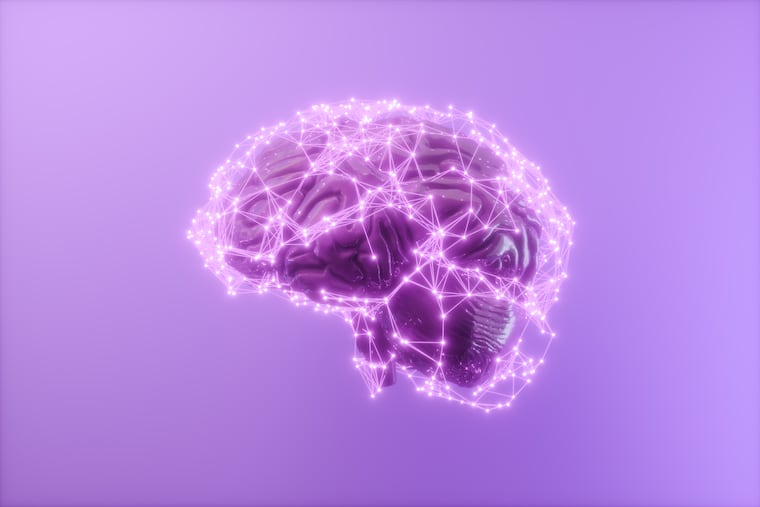
A group of Rutgers researchers led by neuroscientist Ioana Carcea want to learn more about how women’s brains are affected by pregnancy, motherhood, menopause, and other hormonal changes that they say have been under studied.
The Women’s Brain Health Initiative at the Rutgers Brain Health Institute in Piscataway will focus on research and public education about women’s brain function, neurodevelopment, mental health, and disease vulnerability.
The Inquirer spoke with Carcea, associate professor in the Department of Pharmacology, Physiology and Neuroscience at Rutgers New Jersey Medical School, to learn more about the initiative, which launched in June.
The interview has been lightly edited for clarity and length.
What is the focus of your research and the Women’s Brain Health Initiative?
In my laboratory we study different aspects related to how the brain works, how it communicates with the body. One focus area for us is understanding maternal behavior and what regulates maternal behavior. The institute is much broader than what I do. In the Rutgers Women’s Brain Health Initiative, we want to focus on the transitions in life that are specific to women — puberty and monthly menstruation, pregnancy, postpartum, menopause. These are very dramatic hormonal changes that women experience and they impact general health, particularly brain health.
How are the hormonal changes women experience different from men?
Men obviously experience puberty, but it’s a different set of hormones. Post-puberty, testosterone does have a full cycle mode of release, but it’s not the monthly cycle that women experience in hormone levels, and the fluctuations are not as profound as in women. Then with aging, men don’t really experience a “pause.” There is going to be a decrease in testosterone levels with aging, but it’s not a complete pause like we see in women.
What are some of the challenges in this type of research?
It is a difficult topic to study. Menopause varies among women, as far as when it starts, how long the perimenopause period lasts — it can be two years, it can be 10. The symptoms vary, genetic risks can amplify the risk of disease. Another challenge is we don’t really have great animal models for menopause. Menopause is very rare in nature. Other than women, only orcas and some other whales have true menopause, where they can lead healthy lives after the reproductive window closes. Primates can come close to menopause – it’s not quite the same, but they do experience reproductive aging.
Has research funding been a challenge?
We need more funding in this area. The funding climate has been changing and both NIH and private foundations are now investing more in women’s brain health research, but that hasn’t happened for a long time, and I think that’s one of the reasons we have these gaps in knowledge when it comes to women’s brains.