Philadelphia-area Council for Relationships avoids closure after a Lancaster nonprofit steps up to save it
The Sun Point Foundation, a 3-year-old nonprofit mental health organization, will become the parent company overseeing CFR.
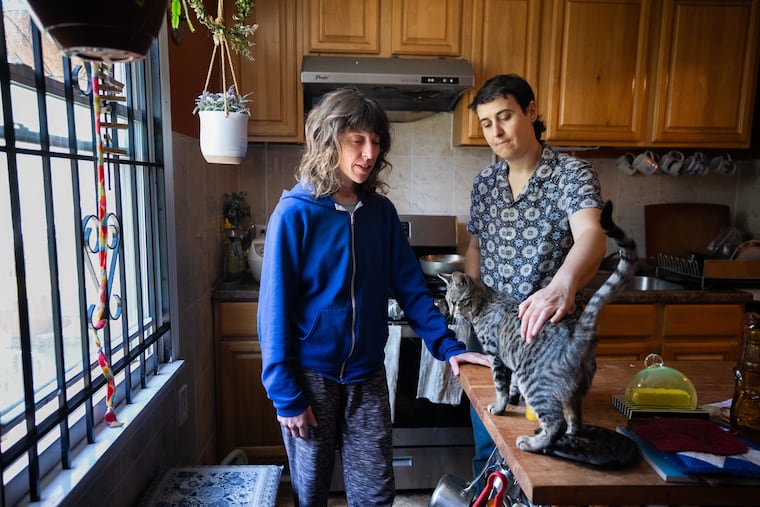
A Lancaster-based nonprofit is taking over the Council for Relationships to prevent its closure in a last-minute agreement announced late Monday.
One of the nation’s oldest relationship counseling centers and a mental health safety net for Philadelphians, CFR had planned to close its doors on May 29 because of financial struggles. The planned closure, announced to CFR staff in late April, had stunned its therapists and clients, who said they were blindsided by the sudden collapse.
The Sun Point Foundation, a 3-year-old nonprofit that provides counseling to low-income clients, and CFR reached an agreement late last week that enables the 94-year-old organization to remain open.
Sun Point will oversee CFR as its parent company and help it grow new revenue by accepting insurance payments. Financial terms were not disclosed.
The partnership means CFR’s “counseling services will continue without interruption,” Sun Point leaders said.
Under the new partnership, Neal Holmes, a therapist and the executive director of Sun Point Wellness Center, will replace Jason Anhorn as CFR’s chief executive officer. CFR’s Sara Corse will remain chief clinical officer.
CFR’s board of directors will assume an advisory role of the new partnership.
CFR will keep its name, programs, and charitable mission. It will also continue educational programs that have made CFR a significant training pipeline for new therapists, according to Holmes.
Holmes said he hopes CFR staff, interns, and clients who haven’t yet found new places to land will stay — and those who left after CFR announced its closure will consider coming back.
“We know that we’re asking people to trust us in this,” Holmes said. “We know it’s going to take time, but we want to partner together to build that trust.”
CFR, a nonprofit founded in 1932, has thousands of clients across eight Philadelphia-area offices, as well as more than 60 staff therapists, psychologists, and psychiatrists, and more than four-dozen student interns and trainees.
Sun Point Foundation currently has about 30 staff therapists with roughly 1,300 clients across three agencies.
Insurance matters
In a key financial difference, Sun Point accepts private and government-funded health insurance, while CFR has never done so. That contributed to CRF’s financial struggles as it competed for clients in a competitive landscape, and more employers offered insurance plans that cover therapy sessions, Anhorn said in an interview last week.
CFR relied heavily on clients who could afford to pay market-rate therapy fees out of pocket. It also offered free, low-fee, or sliding-scale sessions to financially strapped Philadelphians. Those therapy sessions were run by supervised interns working toward their master’s degree or by postgraduates completing hours and training to get fully licensed.
For years, many CFR therapists were resistant to taking insurance because of low reimbursement rates, according to Anhorn. CFR therapists were paid based on a percentage of client fees they brought in.
But the insurance landscape has changed in recent years as mental health has gained recognition as vital to wellness, coupled with higher demand for counseling, said Laura Morse, CEO and founder of Sun Point Foundation.
“There’s just not enough therapists, so insurance rates have slowly increased,” Morse said. “For a while they were priced at a rate that was too low, but it’s become more competitive, and some of them pay $125 or $150 a session.”
The partnership means CFR will be able to begin accepting insurance within two weeks through Sun Point’s established insurance networks, Morse said.
CFR also will be able to accept patients with government-funded Medicaid, which reimburses at about $115 to $130, depending on the area, Morse said.
“Right now CFR is seeing a good amount of its clients completely pro bono and most of them have Medicaid,” Morse said. “There’s a huge need.”
