Bill Gates’ nuclear company broke ground on $450 million plant in Philly’s Bellwether District to make radioactive cancer medicine
TerraPower Isotopes, a subsidiary of a nuclear energy company founded by Bill Gates, is expected to employ 225 people at the site when it is fully operational in 2029.
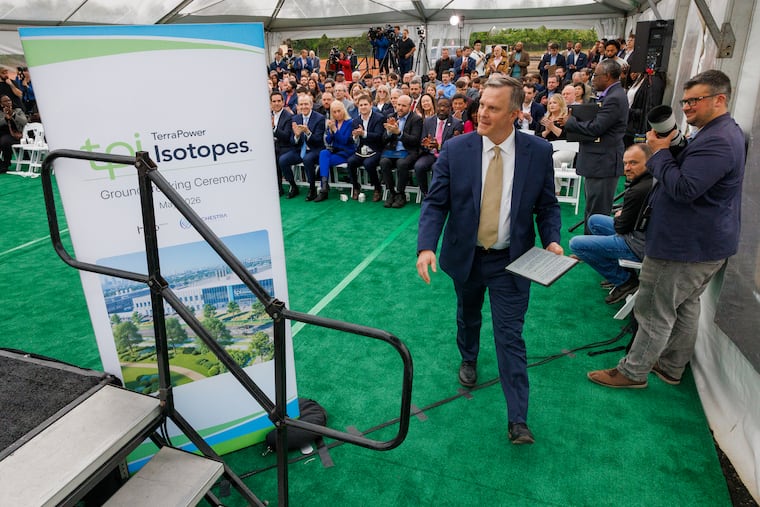
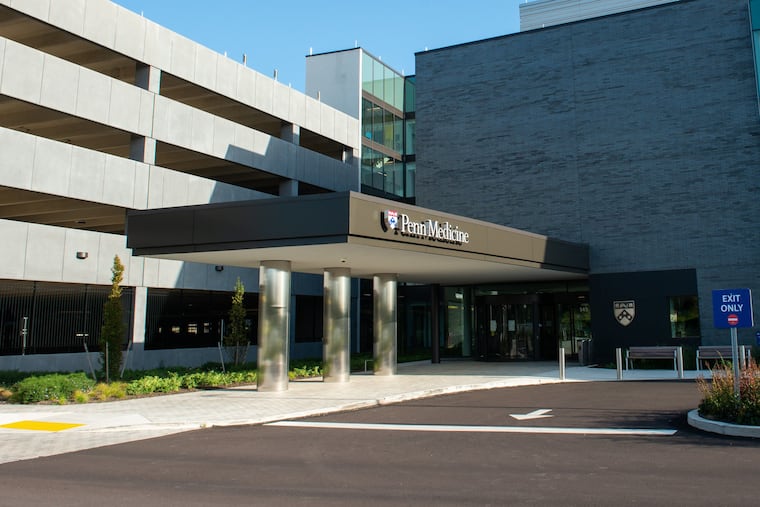
TerraPower Isotopes, part of a nuclear power company founded by Bill Gates, is starting construction on a $450 million factory in South Philadelphia’s Bellwether District, where it plans to make radioactive molecules for the treatment of advanced prostate and other cancers.
Bellwether’s developer, HRP Group, will build a 250,000-square-foot facility at the former refinery site. TerraPower Isotopes is expected to employ 225 people in Philadelphia when it opens in mid-to-late 2029.
TerraPower will produce an isotope called actinium-225. The material is ultimately derived from weapons-grade uranium. Researchers are exploring precision cancer treatments that involve attaching actinium-225 to an antibody targeted to specific cancer cells. The isotope then emits high doses of radiation at close range without damaging surrounding tissue.
The Inquirer spoke with Scott Claunch, president of the Bellevue, Wash. company, to learn more about what the company does.
Here are five things to know:
TerraPower Isotopes’ raw material is a relic of the Cold War
The company’s raw material is derived from Cold-War-era stockpiles of uranium-223 at Oakridge National Laboratory in Tennessee. The federal government has a program to render that material safe. As part of that process, TerraPower extracts an isotope called thorium-229, which has a half-life of 8,000 years. That is how long it takes for half of the radioactivity to decay.
Manufacturing actinium-225 involves what Claunch called “natural decay”
As thorium-229 decays, it forms actinium-225. TerraPower harvests that material and ensures its quality for use in humans before shipping it to drug companies. Actinium-225’s half-life is 10 days. That’s enough time to get the material to a drug company, where it is combined with an antibody that acts as a biological GPS that guides it to the patient’s tumor while sparing surrounding tissue.
Actinium-225 from South Philadelphia could be used to treat advanced cancers
Advanced prostate cancer is considered a promising area for actinium-225 treatments, which are known as targeted alpha therapies. There’s a Phase 3 trial underway now. If that is successful, the treatment would still need FDA approval. Gastroenteropancreatic neuroendocrine tumors, a rare and slow-growing type that can form in the pancreas and gastrointestinal tract, are another area being explored for actinium-225. Other research involves breast, colon, liver, and kidney cancers. Patients receive the treatment through a course of three or four infusions.
The Philadelphia ingredients that led TerraPower to the city
TerraPower wanted to be on the East Coast, for the sake of easier access to Europe, and it was looking for a site in the Mid-Atlantic pharmaceutical corridor, where much of the nation’s drug research happens. It chose Philadelphia over other cities because of its talent pool, regulatory environment, and support from state and local governments.