Universal Health Services could lose up to $400M in Medicaid supplemental payments in 2032
The King of Prussia company's CEO Marc Miller told analysts he thinks Congress will amend the One Big Beautiful Bill Act's Medicaid provisions to prevent that worst-case scenario.
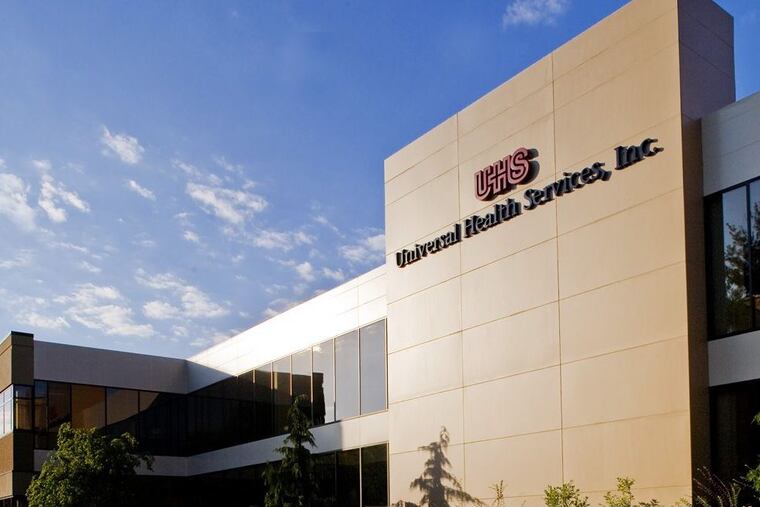
Universal Health Services Inc., a publicly traded King of Prussia company, could lose up to $400 million in supplemental Medicaid payments when new Medicaid rule changes fully take effect in 2032, company officials told analysts Tuesday.
The projection is based on current programs that are expected to give UHS a net benefit of $1.2 billion this year, said Steve Filton, chief financial officer at the company with acute-care hospitals and behavioral health facilities in 39 states.
The company has seven psychiatric facilities in the Philadelphia area, but no hospitals.
UHS’s estimate of a $360 million to $400 million loss in revenue is a worst-case scenario. The company’s CEO Marc Miller doesn’t think it will come to that, based on UHS’ conversations with lawmakers in Washington.
“They are starting to recognize right now that what they passed simply can’t be left as is,” he said.
Members of Congress are seeing the potential for a detrimental impact, “not just at a place like UHS, but these not-for-profit hospitals in their states,” he said.
The Republicans’ signature One Big Beautiful Bill Act, which was approved along party lines and signed by President Donald Trump July 4, limits states’ ability to use special levies on providers to get bigger Medicaid matches from the federal government. Pennsylvania and New Jersey are big users of such maneuvers.
Filton said the company would take steps to mitigate the losses in Medicaid funding by limiting its exposure to programs centered on the patients Medicaid serves, particularly in behavioral health. The company’s behavioral health facilities account for 60% of the supplemental Medicaid revenue, he said.
The timing is tricky, Filton said, because the Medicaid changes don’t start taking effect for three years and are then to be phased in over five years.
“It doesn’t make sense for us to all of a sudden exit Medicaid-centered programs when Medicaid reimbursement over the next several years will remain at current levels,” he said.