Toddlers are getting their hands on e-cigarettes and inhaling at an alarming rate, new Rutgers study shows
Researchers at the New Jersey Poison Control Center analyzed nearly 93,000 calls to centers nationwide and found a 243% spike in the number of children who ingested or inhaled e-cigarette products.
A few years ago, toxicologist Diane Calello noticed a troubling trend: More parents were calling the New Jersey Poison Control Center for help after their toddler inhaled an e-cigarette vape or drank liquid nicotine.
“We had several cases, and I thought, ‘Gosh, kids really can get into anything, and accidents really do happen in an instant,’” said Calello, who runs the center based at Rutgers New Jersey Medical School.
These calls from frightened parents prompted a new Rutgers Health study that examines e-cigarette poisonings nationwide among young children.
Her research team found the number of calls about children, ages 5 and under, who ingested or inhaled e-cigarette products spiked 243% in recent years, according to their study published last month in the medical journal JAMA Network Open.
The study analyzed nearly 93,000 nicotine-related pediatric calls to poison control centers around the country from 2016 through 2023.
Meanwhile, calls related to kids consuming traditional tobacco products, such as cigarettes, decreased by 43%. Those cases still accounted for more than 60,000 calls to poison control centers, remaining the highest overall source, the study found.
“Even though exposure to things like cigarettes did go down in the study period, what is definitely going up repeatedly, year after year, is young children being poisoned by vapes, nicotine liquid, and nicotine pouches,” Calello said.
Inhalation is a new risk
The study also detailed an alarming increase in children inhaling from a vaping device, up from 70 incidents in 2016 to 5,292 in 2023.
“The rise in inhalation exposures tells us that kids mimic what they see,” Calello said. “If there’s an adult in their environment who is using the device over and over, that young child is going to pick it up and do it.”
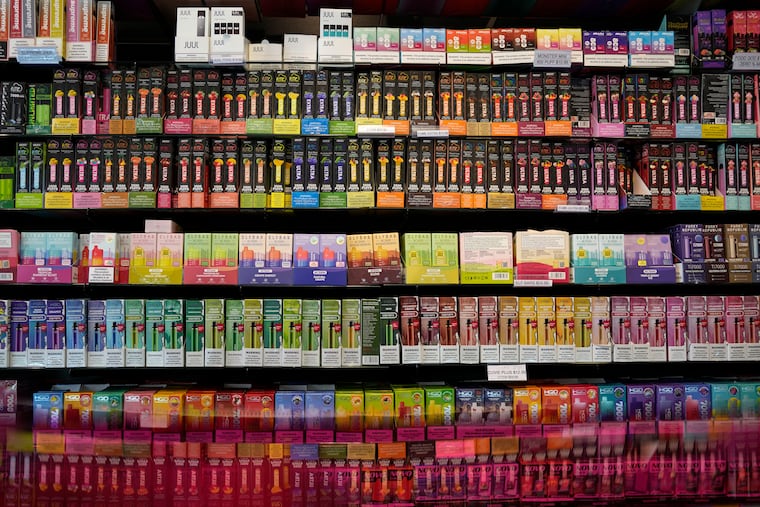
Calello faulted a lack of childproof controls on vapes, which are easy to activate, brightly colored, and look like toys.
Under state and federal laws, liquid nicotine must be sold in child-resistant containers, but those regulations are insufficient, Calello said.
“The study underscores the need for safety regulations at the device level,” she said.