What to know about the wildfire smoke in Philly and its health impacts
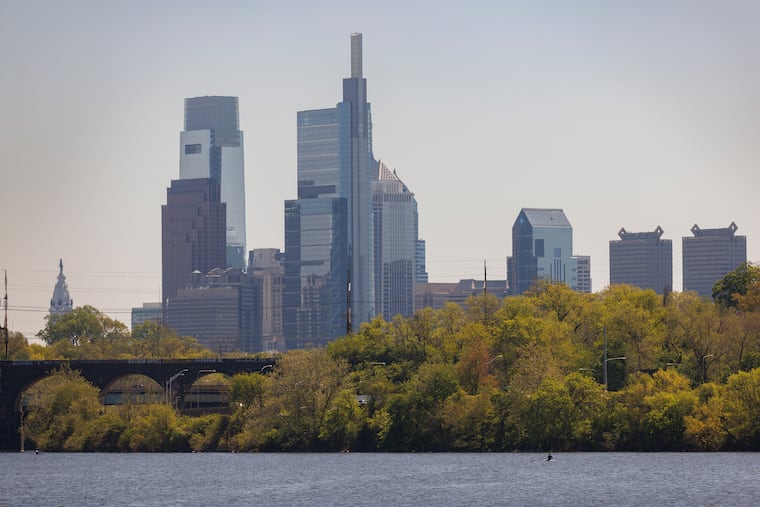
The cloudy horizon isn't just affecting the views. Here is how to stay safe as the fire smoke travels through Philadelphia.
As Canada grapples with hundreds of active wildfires, the rest of North America is feeling the impact with air quality alerts.
In Philadelphia and elsewhere, the air quality score is considered unhealthy, particularly for the most sensitive people.
Whether you are planning to go out or stay home, here’s what three experts had to say about staying healthy and what precautions are needed:
What makes this smoke so toxic?
Exposure to this particular fire smoke is a serious matter due to “photochemical aging,” said Eric Balaban, a pulmonary and critical care fellow at Temple University.
As smoke travels, it interacts with oxygen, heat, and sunlight, creating a toxic profile that helps generate high levels of ground-level ozone and highly irritating aerosols, Balaban said.
Ground-level ozone is a pollutant that forms when nitrogen oxides and volatile organics emitted by vehicles, power plants, and industry react in sunlight, especially during hot days such as Thursday.
The pollutants aren’t the only problem.
The fine particulate matter within the smoke is small enough to cross from the lungs directly into the bloodstream, Balaban said, increasing the risk of heart attacks and strokes, in addition to causing acute chest tightness, shortness of breath, and dizziness in otherwise healthy people.
Who is at risk during the current unhealthy air quality?
Philly’s air quality score was in the red stage Thursday, according to the Philadelphia department of public health, meaning we are breathing air considered unhealthy. The state Department of Environmental Protection issued a code purple alert for Friday, the second-highest step on the U.S. Environmental Protection Agency’s color scale, which indicates “very unhealthy air.”
It is not the hazardous condition of the maroon level reached in Minnesota, where everyone is presumed to be impacted. But, for Ruth McDermott-Levy, a professor at Villanova University’s school of nursing, “all of us are at risk.”
The risks increase for those with preexisting conditions like chronic obstructive pulmonary disease, asthma, emphysema, and chronic bronchitis.
“Certainly there are groups of people at greater risk, from pregnant women, children, older people, and those with cardiac and respiratory illnesses. But we’re at an unhealthy level for everyone,” McDermott-Levy said.
Symptoms of poor air quality and sensitive populations
While most of the city is continuing daily life as normal, Michele Columbo, the allergy and immunology chief at Main Line Health, urged people to keep an eye on how their bodies react to the air quality.
People can experience “difficulty breathing, dry cough, wheezing, tightness in the chess, and even feel light headed because of [the added] high heat,” Columbo said.
Children in particular are at risk because they breathe faster than adults. And, pregnant people in the third trimester can already be experiencing difficulty breathing without the added contaminants to their lungs.
Adults 65 years or older, individuals with cardiovascular disease, asthma, and other respiratory issues can also be more affected.
What precautions to take if you go outside during unhealthy air levels?
Columbo cautioned people from staying outside for more than a couple of minutes at the time, and even encouraged rescheduling outdoor activities.
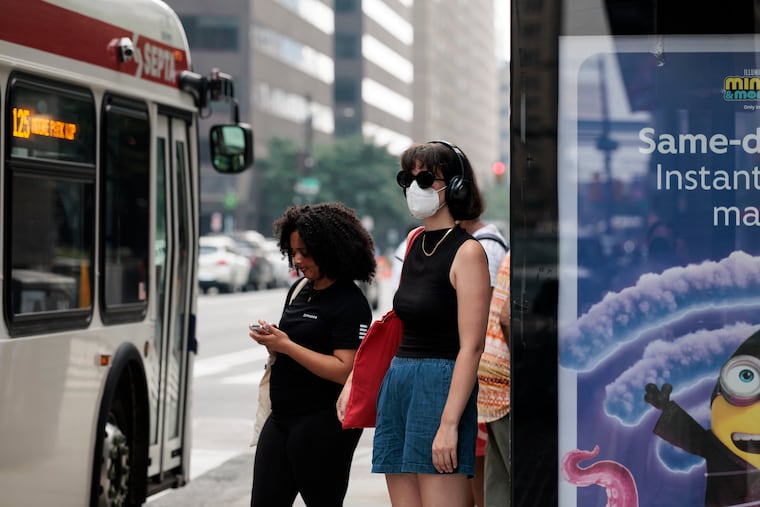
If you can’t avoid going outside, wear an N-95 mask, he said.
Traditional surgical face masks are not meant to keep out the kind of pollutant particles that fire brings. During the 2023 Canada wildfires, experts recommended KN95 and N95 masks as the best options.
Both Columbo and Balaban urged patients with preexisting conditions to make sure they have extra respiratory medications and inhalers on hand.
“Anybody with respiratory problems should seek medical advice because it is better to be proactive and inquire medical personnel before the respiratory problem might become potentially more serious,” Columbo said.
Should you take any precautions if staying inside?
Balaban recommends replacing the home air-conditioning filters to improve indoor air quality.
When will air conditions return to normal?
The health department hopes air quality will improve by the end of Friday, but the U.S. Interagency Wildland Fire Air Quality Response Program said good air quality wouldn’t return until Saturday.
Is fire-related unhealthy air quality the new normal?
For McDermott-Levy, the newest round of wildfires from Canada, as well as the second heat dome to descend on the area in as many weeks, are a window into the future we might already be living in.
“This is climate change and we are living it,” she said.
Balaban encouraged the public to address the “root cause” of it through civic action.
“We have opportunities to mitigate and prevent these environmental catastrophes from happening, but it is something that we need to agree to do together,” he said.