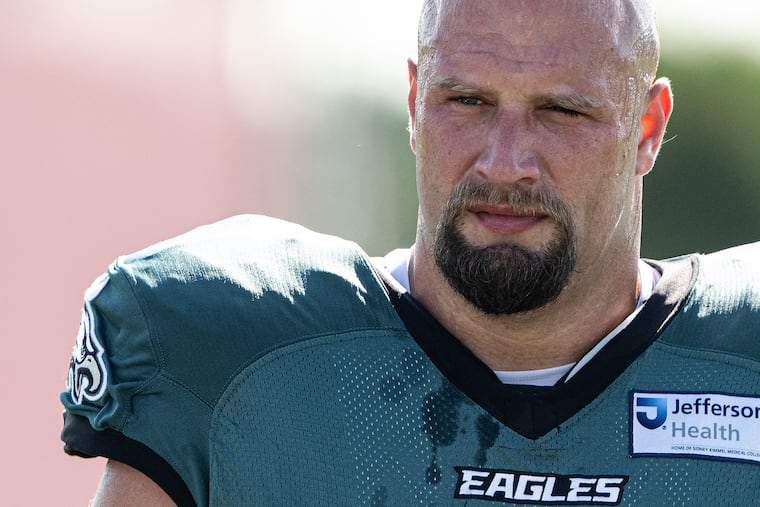
Former La Salle nursing school dean researches nurses who intentionally kill patients
Nurses who become serial killers are exceedingly rare. But this patient safety expert says the phenomena warrants attention. She teaches healthcare administrators how to spot a potential problem.
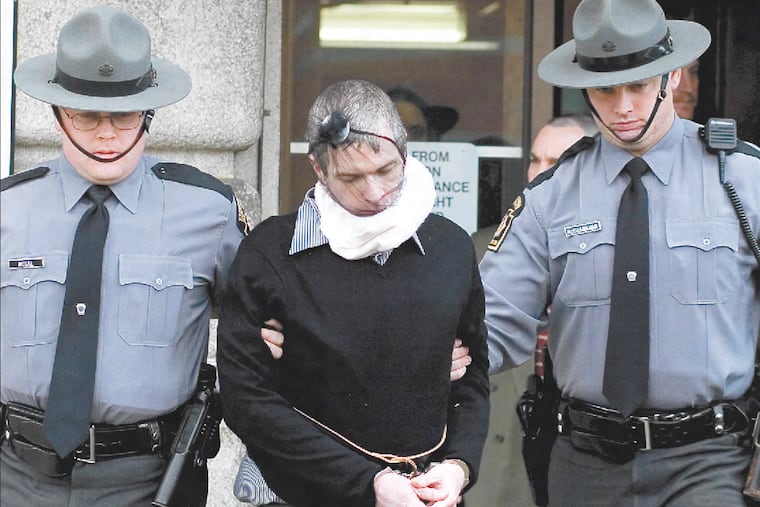
Zane Robinson Wolf’s research into nurses who make medication errors led her to a rare and dark phenomena that’s often treated as a footnote in the academic study of patient safety: nurses who’ve murdered patients by giving them lethal doses of medication.
Since then, Wolf, dean emerita and professor at La Salle University’s School of Nursing and Health Sciences, has delved into the lessons to be learned from nurse serial killers.
Examples include ex-nurse Charles Cullen, who confessed to killing 29 patients in New Jersey and Pennsylvania in 2003, and more recently, former nurse Heather Pressdee, who admitted giving lethal doses of insulin to nearly two dozen patients — 17 of whom died — at five medical facilities around Western Pennsylvania between 2020 to 2023. Both are serving life sentences.
Wolf strives to educate healthcare administrators on how to identify patterns of possible murders by providers and conduct investigations.
“It’s a major safety threat,” Wolf said. “It’s not like giving a medication that isn’t ordered to keep a patient calm. It’s taking their life. It’s the ultimate opposite of `Do no harm’ as an ethical principle in healthcare.”
Wolf co-edited a book that explores what she describes as the “gray and dark sides of nursing.” The book, Breaching Safe Nursing Practice: Case Studies of Failures, Omissions, Commissions and Crimes, compiles stories about nurses who abuse or neglect patients, bully peers, or fail to report wrongdoing. One chapter, written by Wolf, is about nurses who kill patients.
Wolf also has hosted a webinar, called “Healthcare Serial Murders: Patterns and Challenges,” for the Pennsylvania Patient Safety Authority, or PA-PSA, an independent state agency that maintains a database of patient harm and medical errors.
The Inquirer spoke with Wolf about what sparked her interest in the topic, potential criminal motives, and why investigations into an uptick in deaths are high stakes. The conversation has been lightly edited for length and clarity.
What got you interested in nurses who kill patients?
I had decided to do a study on nurses making medication errors, and when I started looking at the literature, I found research articles in medical journals on suspected nurses who the writers thought might have been killing patients. And I said to myself, ‘This is a real scary problem. I never heard of this.’ I decided to explore it because it’s the ultimate safety threat to patients.
Some peers expressed skepticism about your focus on this topic. Why?
People don’t like to admit that a healthcare provider of any type would want to murder anyone or hurt anyone because of the longtime code of `Do no harm.’ It’s a principle that we’re raised on as healthcare providers.
So there is disbelief that this is going on, and because the incidence is low, thank goodness, it becomes something that people think may not be real or even that relevant on a day-to-day basis.
One of my colleagues, who’s an extremely bright nurse, said, ‘Zane, why are you doing this?’ She was thinking I was doing it for exposure and to be like dramatic or something, but I wasn’t. I’m not trying to be famous. I’m too old for that. I think that people need to be educated about it.
What are some motives among perpetrators?
It might be power. It could be control. It could be getting rid of someone in society who is deemed unworthy.
It also can be feeling important by getting attention, like if you want to cause cardiopulmonary resuscitation and then rescue people. People really are fascinated by crisis. They may enjoy the fact that something is going on. And they might be present. They might be the assigned person who is there.
What red flags should healthcare administrators look for?
Somebody should pay attention if there is an increase in deaths on a unit. An increase in cardiopulmonary resuscitations. Deaths that are unexpected. Something happens when you thought that the patient was doing well and getting better. Changes or increases in certain medication orders or missing medications.
Can you talk about the pitfalls of these investigations?
The evidence is very circumstantial, so you have to be very careful about the way you go internally with the investigation. There’s one example of someone who I know about from the literature who really didn’t murder patients, and it affected her dramatically. She was exonerated.
You need to take it on and go after it, but you need to be extremely careful, because it can injure someone’s reputation forever.