Charles Lindbergh dedicated the airport on this week in Philly history
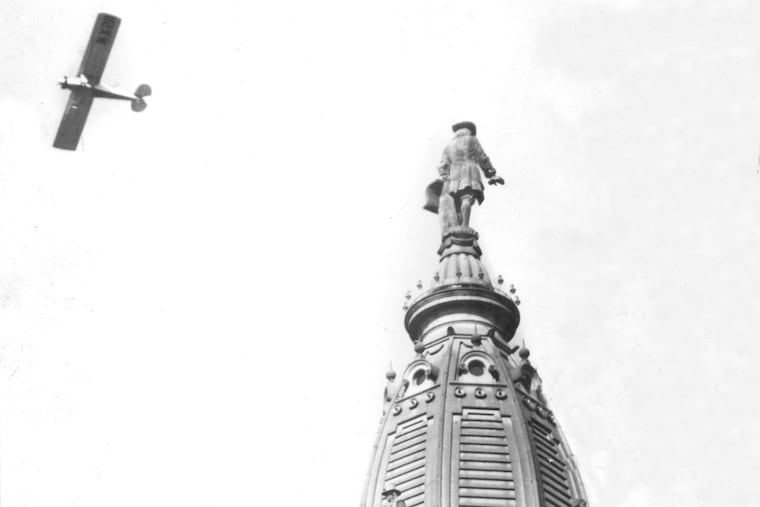
It was a big deal when Lindbergh landed the Spirit of St. Louis at Philadelphia's airport on Oct. 22, 1927.
He had a long flight.
In May 1927, Charles A. Lindbergh became the first person to fly nonstop between New York and Paris. A feat that launched him and his plane into a level of stardom today reserved for the likes of Taylor Swift.
He was held up as the poster boy for an expanding empire. He epitomized the delicate balance of American exceptionalism and humble appreciation.
So when he returned stateside, there was a nationwide celebration. The victory tour covered nearly 100 cities and ended in Philadelphia.
So maybe he was a little cranky when a gaggle of reporters fawned over the 25-year-old aviator from Missouri.
One problem
Lindbergh landing the Spirit of St. Louis at Philadelphia’s airport on Oct. 22, 1927, was a big deal.
During this PR tour, which also helped sell his forthcoming memoir We, the city saw an opportunity to hype its airport.
Only problem?
Lindbergh said he didn’t like the airport.
His thoughts
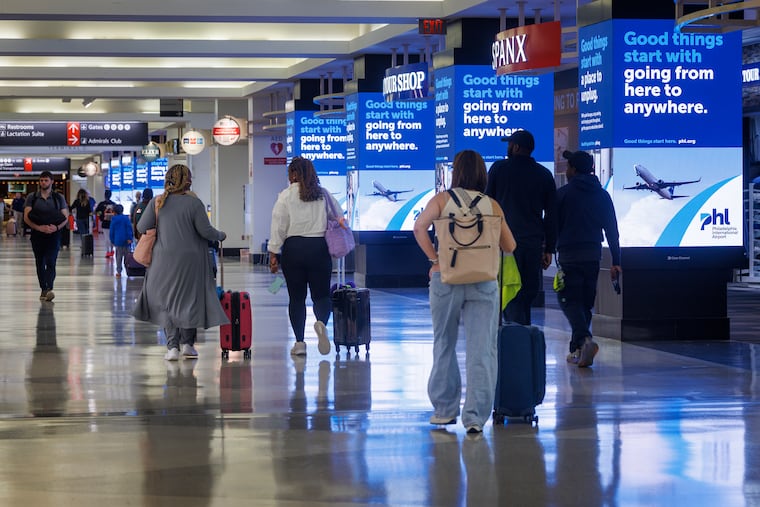
After landing, Lindbergh raised Old Glory as part of a ceremony to dedicate what was then called Philadelphia Municipal Airport, which is now part of the Philadelphia International Airport. Two years earlier, in 1925, the municipal airport had opened as a training facility for National Guard aviators.
Later, he was honored at a reception at Municipal Stadium, which stood at the site of what’s now Xfinity Mobile Arena. The stadium was originally built for the 1926 Sesquicentennial.
It was followed by a banquet at the Bellevue-Stratford Hotel, which is where he made his thoughts on the airport known.
“What do you think of Philadelphia’s landing field?” a reporter asked.
“Well,” he paused, “it could be improved.”
He laughed at his frankness, The Inquirer reported.
He thought that the airport needed longer runways and needed to be closer to the city.
“I think that the field is a little far out,” he said.
An Inquirer reporter covering the event observed Lindbergh was not the only out-of-towner to express disdain for the city.
“A stranger finds Philadelphia the most difficult of American cities at first,” Richard Beamish wrote in The Inquirer, “and the most charming after he has become known.”
In fairness, Lindbergh was also advocating for the expansion of airports and expansion of aerial accommodations across the country.
If only Lindbergh could see PHL’s traffic now.