Head House Square’s restoration has begun with a $1.5 million makeover
City officials and a conservancy group are working to give one of the oldest continuously operated farmers markets in the nation with a makeover.
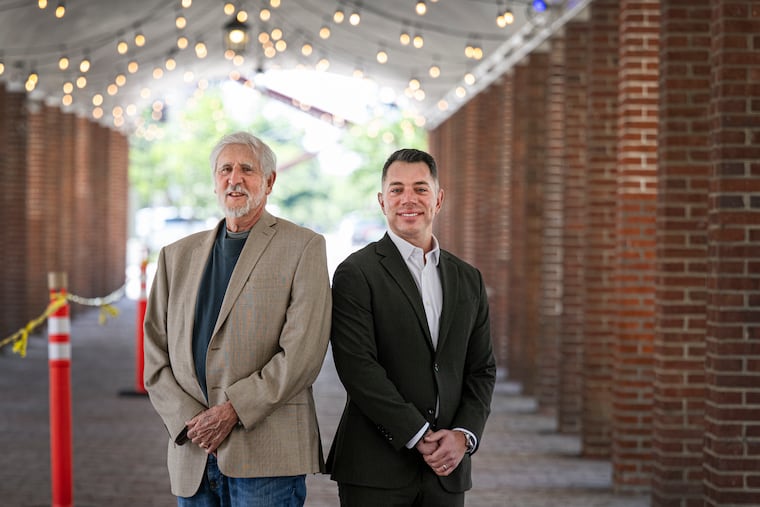
Head House Square is getting a makeover, and just in time for America’s big birthday.
Construction has begun on the first, $1.5 million phase of a restoration that will repair the Society Hill landmark — one of the oldest continuously run farmers markets in America. The repairs would address the building’s deteriorating brickwork, roof, windows, and cupola. Initial renovations also include a new headhouse office and ground-floor bathroom, and restoration of the historic Isaiah Lukens clock.
City officials and members of a nonprofit organization working on the repairs, the New Market & Head House Conservancy, say the project should be completed by mid- to late summer. They are working to raise another $500,000 for repainting, a new clock face, facade lighting, updated historical signs, and cobblestone repairs.
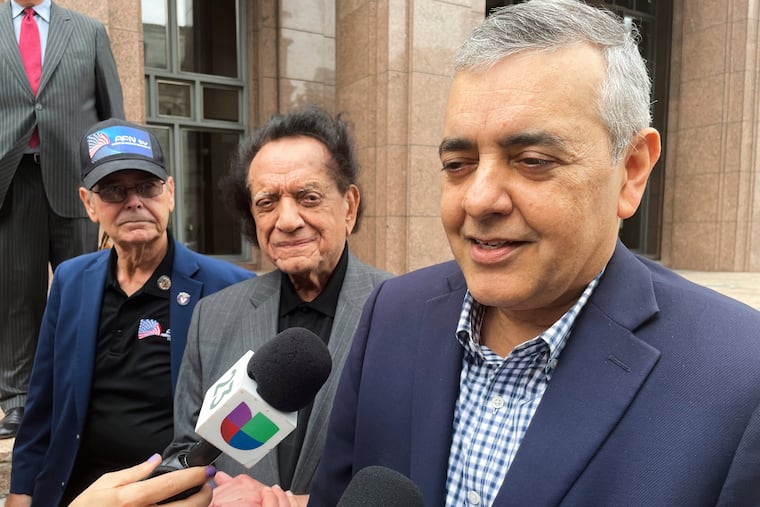
“We want to be able to program it as a regular space for families with kids, for events — for things that really serve the neighborhood and attract people to the area,” said Paul Levy, who retired as the founding CEO of the Center City District in 2024 and now serves as volunteer board member for the conservancy.
John Peruto, who serves as the conservancy chair, said the landmark is not only important to the neighborhood, but to the entire city.
“It’s an important piece of Philadelphia history and deserves to be restored and reactivated,” he said.
Built in 1745, the area was dubbed “New Market” to distinguish it from the booming colonial city’s established market on High Street (modern Market Street). At the time, Second Street had to be nearly tripled in width to accommodate all the wagons that would crowd the market shambles, as the structure’s covered colonnade was known. The Revolutionary War slowed market renovations. But by 1805, the headhouse had been constructed at the northern end of the market as a fire house.
The city has long owned the historic site. An earlier conservancy organization oversaw a similar restoration of the area in the 1990s. For years, the site was leased from the city for the nominal amount of $1 per year by the South Street Headhouse District, a neighborhood business improvement organization. The district rented out the grounds for weddings and the farmers market. By 2025, the new conservancy was formed to assume responsibility for the landmark, overseeing its renovations, special events, and weekly market. (The conservancy is finalizing a new $1 lease with the city, said board member Greg Montanaro.)
The hope, said Levy, is that a more visible and vibrant shambles and head house could help rejuvenate the district, which despite boasting popular restaurants and cafes, has suffered notable vacancies in recent years, including the former Second Street Wawa and CVS. The closures came on top of the stalled Abbotts Square retail space at Second and South. The 22,000-square-foot space has sat vacant since 2017.
“The whole theory of this project is ‘Let’s get some momentum going with the restoration of this historic site,’” said Levy.
Councilmember Mark Squilla, who represents the area, secured the $1.5 million city grant that will fund the first phase of renovations.
“This takes a village to do this type of project,” Squilla said, during a recent news conference held by the conservancy to announce the project. “We want to make sure we can sustain this and keep this for generations to come.”
The site, which stretches from Pine to Lombard and has been partially surrounded by construction fencing since March, is far from crumbling, said Levy. But it suffered from “advanced deterioration,” he said, adding that the nationally respected historic firm, John Milner Architects, drew up the renovation plans.
It became clear that more money would be needed to fully restore the simple, elegant structure with some nonessential preservation touches, like the new lighting, repaired walkways, and brighter face. Advocates are hoping private donors will make that work possible.
“The $1.5 million that we got from the city is huge and important, and it’s enabled us to do the basic preservation of the building,” Levy said. “But it does not cover everything that needs to be done nor some of the extras that could really enhance the place.”