What to know about John Veasey, the hit man-turned-informant in Netflix’s ‘Mob War’
The South Philadelphia native was a central mafia figure who now says he regrets ever having joined.
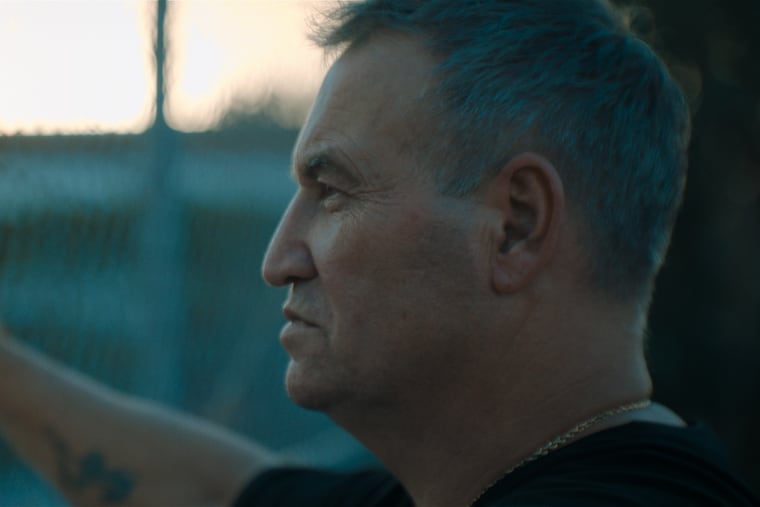
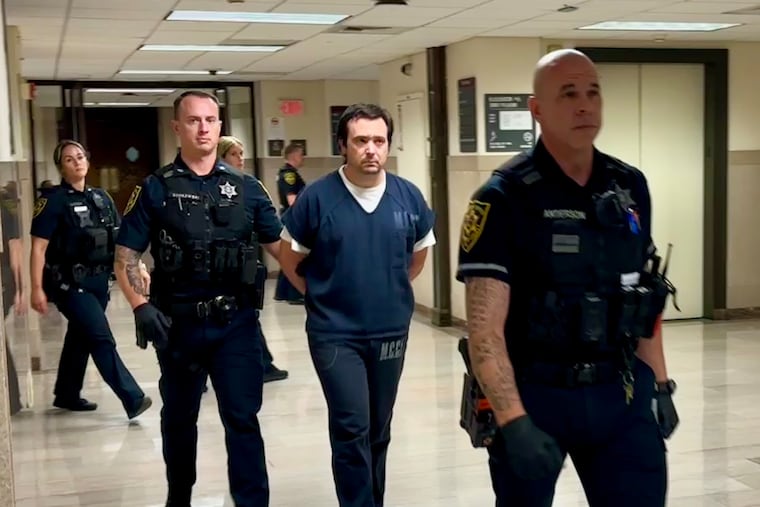
Hit man-turned-government informant John Veasey, whose testimony helped bring down mob boss John Stanfa and a dozen of his top associates in the 1990s, says he’s on the road to redemption.
The new Netflix docuseries Mob War: Philadelphia vs. The Mafia, now streaming, chronicles a violent 1990s power struggle in the local La Cosa Nostra through the eyes of investigators and former crime family members who were there.
Veasey, a South Philly native, was a central figure in the ’90s Philly mob, having admitted to participating in two high-profile murders. He went on to serve nearly 11 years in prison after becoming a government witness against Stanfa and other top mob associates in a federal racketeering trial, and was released in 2005. He has since denounced the mob life, and, in the Netflix series, calls joining the mafia the “worst decision” he ever made.
While he became a feared killer, Veasey was also something of a folk hero after Stanfa’s 1995 trial. The jury, according to Inquirer and Daily News reports from the time, was enamored with his frank and sometimes graphic testimony, which was a key component of federal prosecutors’ case against Stanfa and others.
» READ MORE: How the Inquirer and Daily News covered the 1990s mafia power struggle seen in Netflix’s ‘Mob War’
Here is what you need to know, based on Inquirer and Daily News coverage from the time:

An admitted hit man
Veasey agreed to become an FBI informant in January 1994 after his brother, William “Billy” Veasey, told him Stanfa had taken a contract out on his life, reports from the time indicate. In agreeing to work with federal authorities, Veasey admitted to being one of the shooters behind two then-recent mob killings: Michael “Mikey Chang” Ciancaglini and Frank Baldino Sr.
Ciancaglini was killed in August 1993 in a shooting that also wounded Joseph “Skinny Joey” Merlino. The pair were the purported leaders of the so-called “Young Turks” faction who opposed the rule of Stanfa, reports indicated. Merlino has long denied having been behind a faction of the city’s mob and has never been convicted of mob violence.
Ahead of that shooting, Veasey testified, Stanfa had given orders to “kill anybody aligned with Merlino” and circulated a list of about a dozen people who were to be killed. Veasey undertook the hit with fellow mob enforcer Philip Colletti in a white Ford Taurus that, shockingly, was leased in Colletti’s name.
Veasey also admitted to burning the vehicle, badly burning his hand in the process. Knowing he needed an explanation to have his injury treated, Veasey returned to his house and poured lighter fluid into a barbecue grill, and intentionally lit his injured hand on fire.
“I screamed and told the neighbors I had burned it trying to light the grill,” he told jurors during the Stanfa trial. The cover, he says in the Netflix docuseries, wasn’t a great one — the grill he used was electric, arousing the suspicion of police.

The Melrose Diner killing
Likewise, Veasey was the triggerman in the killing of Frank Baldino Sr., a then-suspected low-level mob associate who was killed outside the Melrose Diner in September 1993.
Baldino was shot multiple times in his car in the diner’s parking lot, and died en route to Thomas Jefferson University Hospital. Veasey later tipped off authorities to the location of the murder weapons, which divers found in a pond at FDR Park in April 1994, reports from the time indicate.
The attempted murder of John Veasey
In January 1994, police found Veasey grievously injured near Sixth and Sigel Streets, having somehow survived a brutal assassination attempt in which he was shot four times and stabbed seven. The attempted murder, he later testified, was undertaken by Stanfa associates Frank Martines and Vincent “Al Pajamas” Pagano in an apartment above a meat store near where Veasey was found.
“One bullet fragmented in the back of my head. One went in the back and out through my forehead,” Veasey later said of the shooting. ”One hit the back of my head and bounced into my neck. And one is still in my chest, in my rib cage.”
His assailants, Veasey said, had targeted him because they believed he was working with the FBI — which he had been for a few days by the time the attack happened.

The shots failed to kill Veasey, who in the struggle wrestled a knife away from Pagano and used it to stab Martines near the eye. The ordeal lasted about 18 minutes, according to a Daily News report, and ended with Martines and Pagano letting Veasey go in exchange for their lives.
After he escaped, Veasey attempted to stop a car for help. But because of the way he looked, he said, no one would help him.
Eventually, police arrived but believed Veasey would die.
“I could hear them talking, saying I was DOA,” Veasey said. “I’m saying, ‘I’m alive, I’m alive. Everyone is giving up on me tonight.’”
Veasey later said he left the mob that night, putting his time in the mafia at just over five months, the Daily News reported. He had been recruited in August 1993, days before the Ciancaglini murder, after landing a job at a construction company owned by Stanfa’s brother-in-law.
“I wouldn’t recommend this life to an enemy,” he later said of the mob.

A fallen brother
Hours before Veasey was set to take the stand for Stanfa’s trial in October 1995, his brother, Billy, was shot and killed on the 1700 block of Oregon Avenue. The killing, authorities speculated, could have been ordered by Stanfa as a way to silence Veasey, or by suspected Young Turks leader Merlino as revenge for the Ciancaglini and Baldino murders.
» READ MORE: In the 1990s mob wars, John Stanfa didn’t have a nickname. The Daily News tried to change that.
Ultimately, it only delayed Veasey’s testimony by five days.
From the stand, Veasey referred to himself as a triggerman and divulged his involvement with the murders of Ciancaglini and Baldino.
Veasey’s testimony at trial
In total, Veasey testified for about two and a half days, which he wrapped up with two pieces of information: That he refused to kill kids, and he did not like gambling. He also mocked Sergio Battaglia, a would-be Stanfa hit man who, despite going on a number of hits, never actually killed anyone, according to an Inquirer report.
Battaglia “went on a hundred hits and didn’t shoot nobody,” Veasey said.
He quickly became well-liked by the jury, who seemed to hang on his every word, The Inquirer reported. Among his more graphic accounts from the witness stand was the “drilling” of Joseph “Joe Fudge” DeSimone, a mob associate who had wanted to kill Veasey, to which Veasey took less-than-kindly.

Veasey testified that he had warned Stanfa of a coming altercation with DeSimone, and at one point persuaded another mob associate to bring DeSimone over to Veasey’s house to settle their dispute. Veasey was on house arrest at the time.
DeSimone arrived, kicking off a violent encounter with an electric drill.
“I smacked him in the face with the drill. I stuck the drill in his chest and in his legs. I stuck it in his head, and from the rotation of the drill, clumps of hair was going out,” Veasey testified. “Then I hit him in the knee with a baseball bat. I chambered the gun … gave it to him and asked, ‘Do you still want to kill me?’”
Veasey said that DeSimone declined.
The testimony was not only well received by jurors, but it was considered a success by prosecutors. Though violent, Veasey appeared relatable to the jury and seemed to have a secret weapon against the defense.
The reformed hit man
Stanfa was ultimately found guilty and sentenced to five consecutive life terms. Veasey, meanwhile, spent almost 11 years in prison, and was released in 2005. By 2012, he was back in the news, this time for a detailed account of his story in The Hit Man: A True Story of Murder, Redemption and the Melrose Diner, a book by former Inquirer reporter Ralph Cipriano.
By then, Veasey was working as a car salesman in the Midwest, and claimed to have turned over a new leaf.
“I never respected the Mafia or what it stood for,” Veasey said in an interview with The Inquirer in 2012. “My only regret was being dumb enough to join … I always said they either rat or kill each other.”