Phillies gave up trying to plant their flag in the New York TV market on this week in Philly history
In December 1958, the Phillies officially gave up trying to convert New York baseball fans.
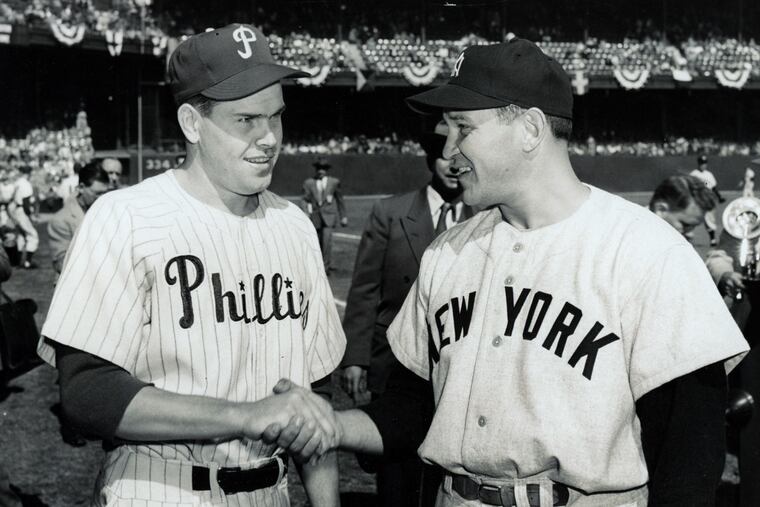
The National League made a dramatic exit.
Two of its tentpole baseball franchises — the Brooklyn Dodgers and the New York Giants — packed up before the 1958 season and moved to the West Coast. Leaving behind only the Yankees and the rival American League to carry the New York City banner.
Just down the (not-yet-under-construction) I-95 corridor, the Carpenter family wondered if their own N.L. franchise, the Philadelphia Phillies, could help fill the void.
Broadcasting Phils’ games to the New York market could help soften the blow of losing two beloved franchises. It could also be lucrative.
And it would help a Philly team build a fanbase in — of all places — the Big Apple.
A league of their own
Now they’re just organizing devices, but back in the 1950s, there was a difference between the two leagues under the Major League Baseball umbrella.
The N.L. was faster to integrate Black players, featured more competitive teams, and thus more competitive pennant races. The A.L., on the other hand, was mostly dominated by one glory-hogging franchise.
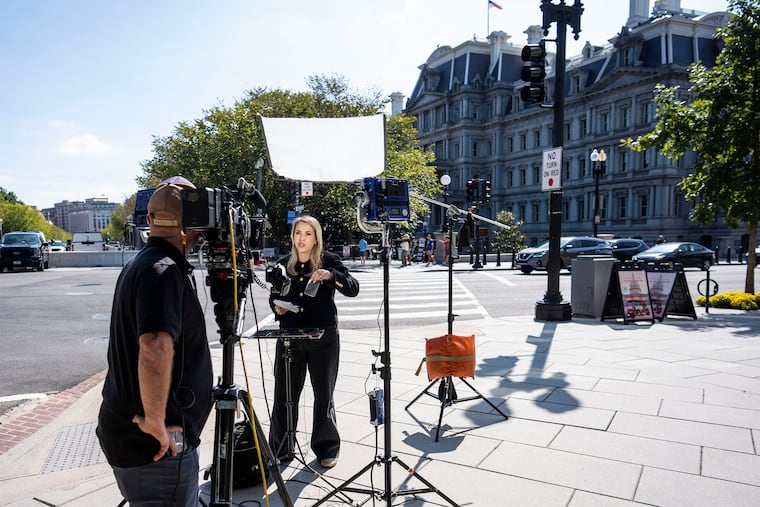
So Phillies owner Bob Carpenter, hoping to help fill the vacuum, made a deal with TV station WOR, which had previously aired Dodgers games.
New York would carry 78 Phillies games during the 1958 season: 58 from Connie Mack Stadium, and 20 from the road (including night games).
And they weren’t alone.
‘The market is shot’
The St. Louis Cardinals and Pittsburgh Pirates made deals to broadcast two dozen of their games against the Giants and Dodgers to a New York audience.
Yankees brass reacted with trademark tact: They started making threats.
If Phillies (or Pirates or Cardinals) games returned to New York television sets the next season, then the Yankees would look to televise their games — featuring World Series-winning superstars like Mickey Mantle and Yogi Berra — on a national network. They’d even partner with the National League’s Milwaukee Braves to complete the package. Together stealing away scores of diehards and converting scores of casuals, from sea to shining sea.
So on Dec. 5, 1958, the three teams announced that they were dropping their New York broadcast plans for the 1959 season.
None of the team representatives admitted to backing down.
“The market is shot,” Carpenter said, according to The Inquirer. “There is not enough money.”
But the joke was really on us: Those left-behind Dodger and Giants fans in New York didn’t get much joy from Philadelphia’s signature brand of baseball.
The Phillies went 69-85, and finished in last place.
And to make it worse: the Mets would arrive four years later.