University City holds 11% of Philly jobs. Can it continue to thrive as higher ed faces a national crisis?
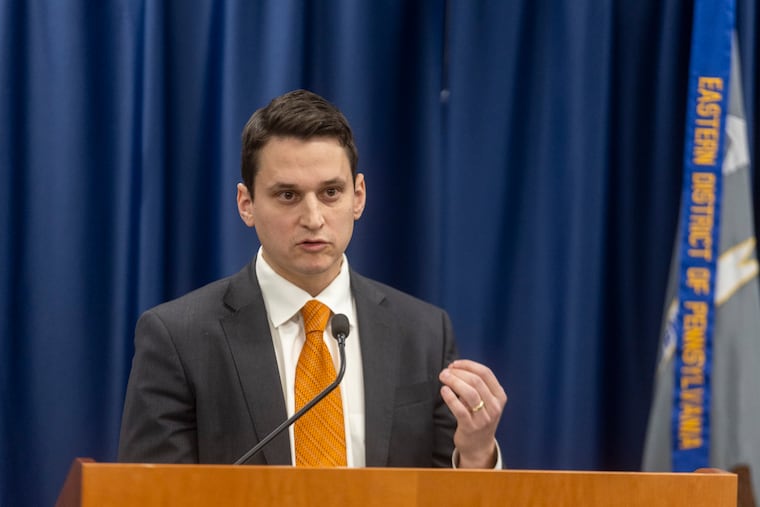
The new head of the University City District is confident in the future of this Philadelphia jobs hub.
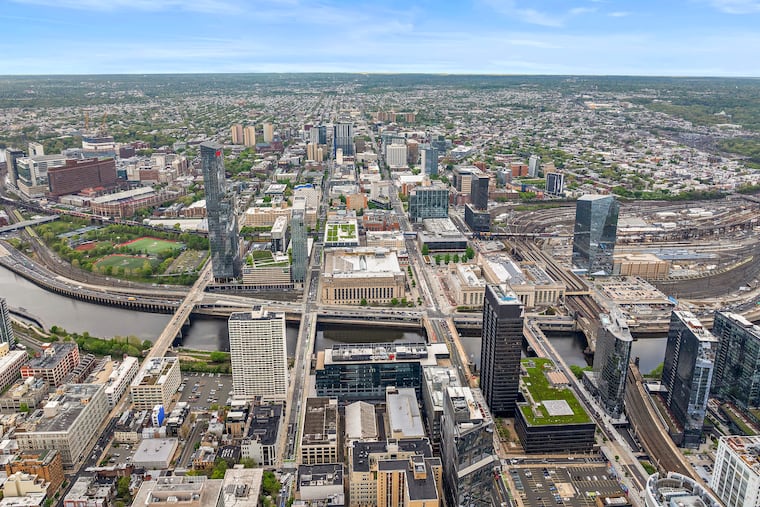
University City has been on a roll for decades.
Even as much of the city faced deindustrialization and population loss, this corner of West Philadelphia thrived as higher education and healthcare boomed.
Today, University City hosts 11% of Philadelphia’s jobs.
But its model faces headwinds, as higher-education enrollment shrinks across the country due to slowing demographic trends, the life sciences industry struggles with high interest rates, and federal research funding is cut by President Donald Trump’s administration.
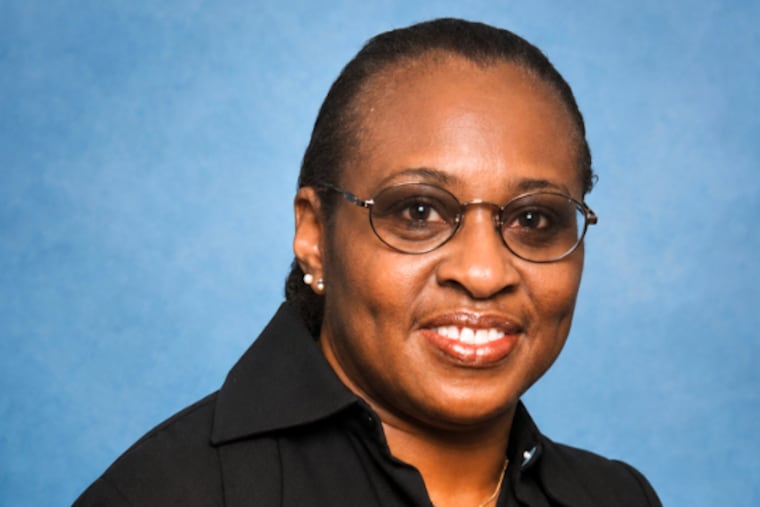
Sarah Steltz is the new president of the University City District (UCD), an organization funded by eds and meds institutions to advocate for the area’s interests, provide research on its status, and offer place-making efforts — like a proposal for a huge water park on the bank of the Schuylkill.
Before coming to UCD two years ago, Steltz worked at Drexel University, the city’s Commerce Department, and the Chamber of Commerce. She is taking over from former UCD president Matt Bergheiser, who led the organization for 16 years.
Steltz talked with The Inquirer about the organization’s 2026 State of University City report, and discussed the housing development in the area, if macro political economic turmoil is showing up in their data yet, and what’s going on with that water park.
This interview has been edited for length and clarity.
What are your priorities as you step into this new role?
The first ambition we have is connected to developing a comprehensive view for public space in University City.
We recently got an award from the William Penn Foundation that’ll give us the opportunity to begin a community engagement process about public space. We will talk about waterfront access as part of that work.
What is the status of the riverfront water park proposed almost two years ago?
The waterfront is the kind of ambitious project that West Philadelphia deserves. We’ve done fundraising and had some successes, but they’ve largely been for the preliminary phases of the project. The gift that I just mentioned from William Penn is among those.
What’s evolving is how we approach it. We want to have a broader understanding of what the community is looking for in its public spaces, to ensure that we’re really connected to how people actually use the neighborhood. So that’s where the idea for an expansive, larger vision for public space comes into play.
I’m not saying that the waterfront is going by the wayside. What I’m suggesting is it’s part of a bigger portfolio that includes project ambitions of a variety of sizes.
Is there a timeline for the water park?
The future of the project will be determined by the community engagement process, which will kick off this summer. We think it’ll take nearly a year to complete a comprehensive process.
There is a crisis facing higher education due to enrollment challenges. How are you thinking about this?
The education data [we use for the State of University City report] lags, so we don’t yet have the data for fall ‘25. [University of Pennsylvania] independently reported its enrollment and they had a 0.5% increase over 2024. For Drexel, the new president has made enrollment a major priority, along with student experience and retention. We expect their numbers to improve.
We can’t deny that University City is facing the same demographic and financial pressures as the higher-education sector nationally. I do think that there is something to be said for the depth of our institutions. They’re academic institutions, but they’re also research hubs and healthcare providers, and we think and hope that diversification will make us more resilient than many other markets.
How is University City effected by President Donald Trump’s cuts to research funding?
The short answer is we have a data lag. Early indications tell us that there might be some decline next year, but we won’t know the extent until the data comes out in fall ‘26.
I can say that so far, Penn has received more than $228 million in new [National Institutes of Health] grants, which is down by about 3% from the same point last year. On the positive side, the worst-case scenarios that we were planning for have not come to pass.
Any small decline needs to be considered in context. We have more than a decade of blockbuster growth. And we’ve had disruptions in the level of NIH funding [before] and we have always rebounded. It’s our feeling that’s because of the undeniable quality of the research and cures coming out of University City institutions.
What can be done to help Philly catch up to other biotech and life sciences hubs like Boston and San Francisco?
We see a lot of appetite for supporting the industry. At the same time, we recognize that the current vacancy rate in University City is largely due to empty lab space. We saw a boom, like many places in 2020 through 2025, but now the capital environment for life sciences has led to the current vacancy rate [of almost 20%].
Regionally, I think we’ve seen positive signs. We have announcements like TerraPower choosing to locate in the [Bellwether District], which is a big vote of confidence for the ecosystem.
I know it’s anecdotal, but our workforce subsidiary does training for life sciences employers that are hiring. Over the last two years programs in that industry have really slowed almost to a halt.
But when I look at our 2027 calendar, the volume is picking back up. The way that we see it, we’re well positioned for the next stage of industry growth.
If the capital environment doesn’t shift, an area of focus for us going forward is that [vacant] medical and lab spaces don’t lend themselves as easily to residential conversion. There are not any office-to-residential projects we’re aware of in core University City.
Do you think Philly’s inclusionary zoning law, which requires most multifamily projects to devote one-fifth of their units to lower-income tenants, has an impact on development in University City?
It is hard to say what would have happened without the overlay, because of the general slowdown in life sciences, construction costs, financing. Also many of the parcels that are the easiest pickings have already been developed in recent years.
We have seen several projects moving forward as part of the overlay. But overall, new construction permits have declined slightly over the past few years.
So while we have some data, but I don’t think we can confidently answer that question yet.