A new project has turned ‘dry numbers’ into a ‘vivid picture of Black life’ in 1840s Philly
1838 Black Metropolis and Swarthmore College have partnered to compare two censuses taken of Philly's free Black community in the mid-19th century.
If you were a free Black person living in antebellum Philadelphia, you may have worked as an astrologer, an oyster catcher, or a pepper pot seller. You might have owned several horses, ferried people through your home along the Underground Railroad, or been one of the wealthiest people in the whole city.
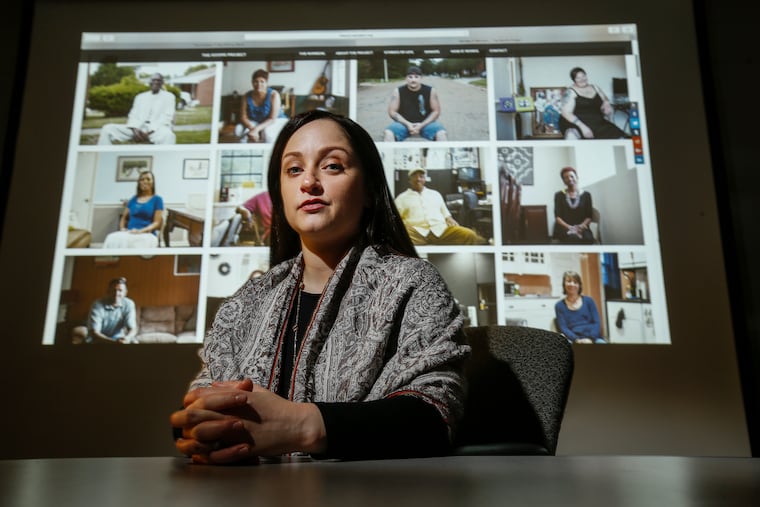
A collaboration between the 1838 Black Metropolis history nonprofit and Swarthmore College is creating a clearer picture of what daily life was like for the roughly 20,000 free Black people living in Philadelphia at that time.
Two years ago, Black Metropolis launched what has become an award-winning series of walking tours, curricula, and other resources based on its findings from an 1838 census funded by the Pennsylvania Abolitionist Society of Philly’s free Black population.
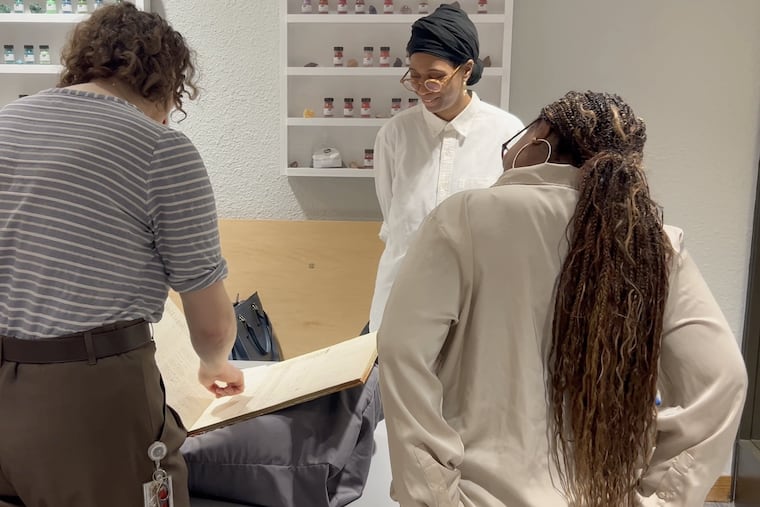
Meanwhile, Swarthmore held in its archives a copy of a similar 1847 census conducted by a group of Quakers. The later census included additional details about households. Black Metropolis and Swarthmore recently partnered to track the changes in the community over time.
The project has transformed “dry numbers” into “a vivid picture of Black life in the city,” James Truitt, digital archivist with Swarthmore College’s Friends Historical Library, said in a statement.
“We are really committed to the idea that the Black ordinary is extraordinary. And so our goal is always to make these lesser-known histories and lesser-known figures visible,” said Kirsten Lee, 1838 Black Metropolis’ academic director and board member.
Black Metropolis and Swarthmore matched about 400 households between the two censuses, and have published tools that trace the differences in the community over the intervening decade. Here are a few of the people they tracked:
One of Philly’s wealthiest widows
Hagar Ballard was likely one of the richest people in all of Philadelphia, not just among the city’s free Black population. And she made sure that others knew it, too.
Ballard lived at Quince and Locust Streets, in a large house that still stands today. Her husband died likely at some point during the 1820s, and by the time the 1838 census was recorded, she was living with five other women in the home.
In the first census, Ballard made a somewhat unusual decision: She declared her net worth of $56,000, which would translate to roughly $50 million today.
Declaring what one owned was optional in these Black community censuses, and other wealthy individuals kept their holdings private. Stating one’s wealth could attract harassment or attacks, especially for someone at Ballard’s level.
“The significance of Ballard saying, ‘This is how much my property is worth,’ is hard to understate,” Lee said.
But Lee said people did so anyway out of a sense of pride about what they owned, and to demonstrate that they were part of a potential voting bloc with power and wealth that ought to be courted. When the state’s constitution was amended at the 1838 Pennsylvania Constitutional Convention, Black men lost their right to vote, which they would not regain until after the Civil War. The Black census that came out that year was a response intended to show how valuable the community was.
The project tracked a man named William Jefferies and his wife, who declared in the 1847 census that in addition to their modest incomes as a porter and washer, they had paid for the freedom of three enslaved people for about $500.
“It’s clear that for them, this is a very important genre of identifying what their household’s contributions to society are,” Lee said.
Where Ballard and her husband’s wealth came from remains a mystery. While the 1847 census lists her occupation as “domestic duties,” Lee said that Ballard likely was living off her preexisting wealth, and possibly underreporting the full extent of her holdings.
Nat Turner’s inspiration
Shadrack Bassett’s official occupation listed in both censuses may have been a humble hominy seller, someone who hawks the corn-based food. But his work as a preacher and hymn writer is what might have inspired the country’s most famous uprising of enslaved people.
In addition to his day job, Bassett was a reverend in the African Methodist Episcopal Church. He was ordained in 1817 by Bishop Richard Allen, the founder of Philadelphia’s Mother Bethel A.M.E. Church. Bassett (his first name is spelled multiple ways in official records; Black Metropolis chose to use the spelling used in a 1902 A.M.E. history book) was assigned to be an itinerant pastor in Maryland and later Virginia.
» READ MORE: The Rev. Carolyn Cavaness, Mother Bethel A.M.E.’s first female pastor, reflects on her first year
He became known for using the Bible to preach about emancipation, and white authorities eventually banned him from preaching. But in 1830 he wrote “The African Hymn,” a song meant to inspire Black people in their fight for freedom. Some of its lyrics include:
We shall not always weep and groan
And wear these slavish chains of woe,
There’s a better day that’s coming
Come and go along with me.
The song and its message spread through Virginia, and was likely an inspiration for Nat Turner’s rebellion in 1831. Participants were later found to have printed editions of the hymn in their possession.
1838 Black Metropolis researchers discovered that Bassett had bought a home on South Fourth Street in Philadelphia in 1825, meaning he must have split his time between the city and Virginia for some period. By the 1847 census he was still living in the same home with his wife, a shopkeeper. He remained in Philadelphia at least until 1862; it is unknown when he died.
“Here’s this person who’s got all this almost mythology around them, and now here they are very firmly in place with actual statistics,” said Michiko Quinones, cofounder and lead public historian of 1838 Black Metropolis.
“I feel the beauty of the censuses is that it’s irrefutable that this person existed,” she said.
An Underground Railroad hub
Philadelphia served as a critical stop for many formerly enslaved people as they moved north through the Underground Railroad. And there’s a good chance that if someone passed through here, they spent some time in the home of John and Mary Lewton.
They lived on Paschall’s Alley in Northern Liberties, which is now the 400 block of Wallace Street. Paschall’s Alley was a buzzing junction for the Underground Railroad, where neighbors worked together across the narrow street to provide shelter for freedom seekers. One three-story home was noted in the 1847 census for having 33 people living inside it.
But the Lewtons, and Mary in particular as reported in a 1914 Philadelphia Tribune article, were noted for their aid. The 1838 census said they had just one child, but six members of their family. In 1847, they listed four women in the home along with two orphans. Some oral histories recalled the nickname “Mother Mary” for Mrs. Lewton.
“To have a distinction of being one of the more active members of the Underground Railroad on an active block is a huge deal,” Lee said.
Honoring Black Philadelphia’s legacy
Those who worked on the project hope the two censuses inspire other researchers and community members to take interest in this period of Philadelphia history.
“It’s about really honoring their legacy and making sure that their contributions as well as their experiences are not forgotten,” said Mwihaki Kiiru, a senior at Cheyney University who worked with 1838 Black Metropolis on the matching project.
Their work helps bring to life “people who help us to imagine that Black people were there in early Philadelphia, and to tell a story about … early American life in the city that centers Black people rather than keeps them on the margins,” Lee said.