In advance of development, archaeologists begin search for Philadelphia’s lost waterfront
Exploratory trenches are now being cut in an old Hertz lot across from Dave & Busters, site of the historic West Shipyard, active from the late 17th century. A 18th century ship slipway was uncovered there in the 1980s, the only such structure known to still exist on the east coast.
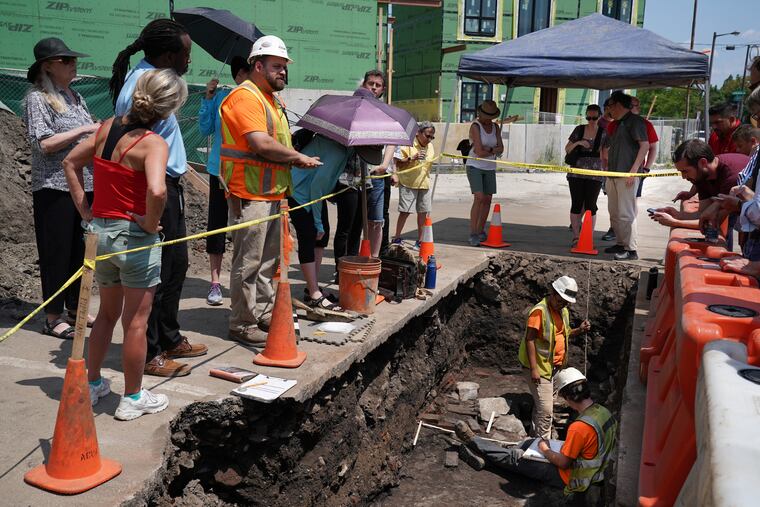
Across Columbus Boulevard from Dave & Buster’s, in what is now a parking lot with weeds poking up through the cracked and riven asphalt, archaeologists have begun exploratory excavations seeking evidence of Philadelphia’s 17th- and 18th-century maritime bona fides.
The excavation, which began last week, aims to uncover a window into the past, to try to get a more precise understanding of what may lie underground before a large development planned by New York’s Durst Organization begins its less surgical digging.
The site is known as the Hertz lot, and though there is nothing there built above ground, the archaeological remains that are below are believed to be so rich that the site is listed on the National Register of Historic Places and is certified as a landmark by the Philadelphia Historical Commission.
A city-run archaeological excavation in the 1980s uncovered 18th-century wharves, bulkheads, and, most surprisingly, a slipway for hauling boats out of the river water for repair. It is the only such structure ever found on the East Coast. The results of that excavation were left in the ground and covered over again.
But because of the results of that earlier dig and another in 2012, archaeologists believe that chunks of the city’s old riverfront, which began at the edge of Water Street in the 17th century, may still exist.
The Delaware River Waterfront Corp., which owns the property, has an agreement of sale with Durst, and has made the deal contingent on archaeological excavation and investigation.
So far, two trenches about 4 or 5 feet deep and about 20 feet long have been excavated by archaeologists from AECOM, a New Jersey-based international engineering firm.
One trench turned out to be largely barren of maritime artifacts and features. But the other may have unearthed a rock-filled structure for anchoring the 18th-century slipway.
“We think we might have the back-end anchor for that,” said archaeologist Joel Dworsky. Further study is needed.
Dworsky said that the intention was to dig down three more feet or so in search of the city’s 17th-century river bank. (By the 1830s, water had been pushed east by relentless fill activity. By the time Delaware Avenue, now Columbus Boulevard, was constructed in the 1850s, the river lay to its east.)
Three more trenches will be dug over the next month at the southern end of the site, near Vine Street. It is at that location that James West began his boat building and repair operations in the late 17th century, probably before the founding of Philadelphia.
“We’ll be looking for another slipway at the southern end of the lot,” said Dworsky.
The exploratory excavations should wrap up by the end of August. The information obtained will guide Durst in the design of its multi-use development, officials said.