Delco teen sentenced to at least 20 years in prison after attacking, locking up 72-year-old woman in her Chesco home
Khemmathat Fariss, 19, had escaped from a Devereux behavioral-health facility in 2017, then attacked and locked up a 72-year-old woman in a closet of her Chester County home, almost killing her.
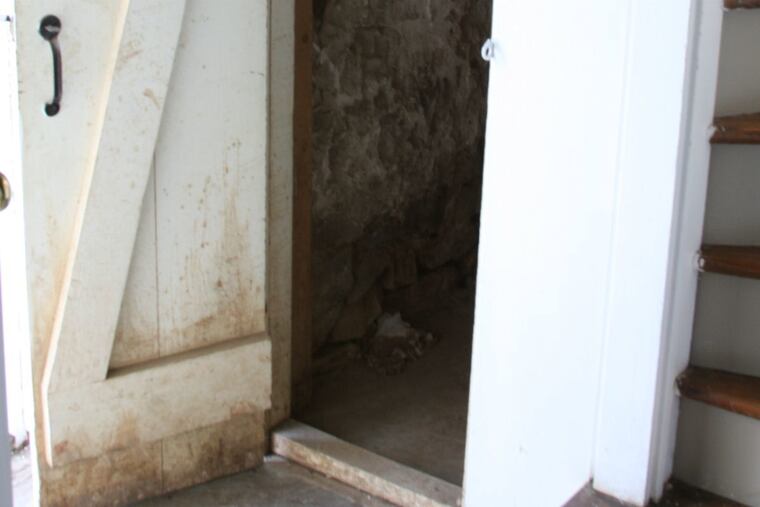
A judge on Thursday sentenced a Delaware County teenager to 20 to 80 years in state prison for attacking, choking, and locking up a woman in a storage closet of her East Brandywine home after he fled a mental-health treatment center two years ago.
“The crime was a brutal attack on a 72-year-old woman in her own home,” Chester County Court President Judge Jacqueline C. Cody told 19-year-old Khemmathat Fariss. “It was a well-planned-out crime.”
The woman, who had been locked in the closet for four days without food or water until her daughter-in-law found her, told the judge that by the time she was found, “I had asked God to take me.”
“He is a sociopath," said the victim, whose name the The Inquirer is withholding at the request of the Chester County District Attorney’s Office over concern for her safety. "Given the opportunity, he will kill someone, I have no doubt about that.”
Fariss committed the attack after running away from the Devereux Advanced Behavioral Health Brandywine campus in Wallace Township. He told the judge he realizes he needs mental-health treatment and apologized to the victim “for all the pain and the suffering I have caused her, and to her family, too, and my family.”
Fariss pleaded “guilty but mentally ill” to attempted murder and related offenses in January, but the Chester County District Attorney’s Office challenged the plea. After a February hearing and reviewing the lawyers’ arguments, the judge last month issued a one-page ruling accepting Fariss’ plea and finding that he was mentally ill at the time of the crime.
In sentencing him, Cody said she would recommend that he receive mental-health treatment in prison.
Fariss had been abandoned by his mother in his native Thailand at age 3, then was placed in an orphanage, where he was severely abused. When he was 7, he was adopted by Nancy Fariss, who brought him back to the United States to live with her and her two older children in Media.
Although family members loved and supported him, Fariss was traumatized by moving to a new place, was bullied in school, and engaged in self-harming behaviors, according to testimony at the February hearing.
In October 2016, Fariss burglarized two homes, for which he was arrested as a juvenile and placed in a detention center.
His adoptive mother told the judge Thursday that her son was sent in January 2017 to the Devereux campus but ran away the next month, walking nearly two miles to the victim’s Creek Road home.
When the woman returned from work that evening, Fariss covered her head with a cloth shopping bag, secured it with duct tape around her neck, bound her legs and hands, then threw her into the small, ground-level storage closet beneath stairs in her home, locking the door.
Leaving the woman in the closet without food or water, Fariss told her, “You’ll be with Jesus soon,” authorities have said. He stole her credit cards, money, cell phone, laptop, and jewelry, and drove off in her car.
Assistant District Attorney Christine Abatemarco asked the judge Thursday to sentence Fariss to a minimum of 35 years behind bars.
Defense attorney Robert Keller told the judge that Fariss was “a child" when he committed the crimes, is remorseful, and can be rehabilitated. Fariss’ family members also asked the judge for mercy.
Devereux facilities differ from secure residential treatment programs, where juveniles are sent by judges after committing crimes. By state regulation, Devereux’s campuses are prohibited from having a prison-like environment with surrounding gates or fences, Devereux spokesperson Leah Yaw explained in an interview.
Yaw could not discuss Fariss’ case, but noted the upgraded security measures that Devereux implemented after the 2017 escape. Since then, doors have been upgraded with more audible alarms that require a staffer to turn them off by key. Sensors with alarms have been installed in windows. And staffers who check on the boys during bedtime and overnight now have facial-recognition software to ensure that a resident is in his bed.
Devereux also partnered with the West Brandywine Police Department to set up a voluntary alert system to notify nearby residents if a boy runs away from the campus.
