Food truck owners who spoke out against new curfew claim the city retaliated
The national Institute for Justice is threatening to sue the city.

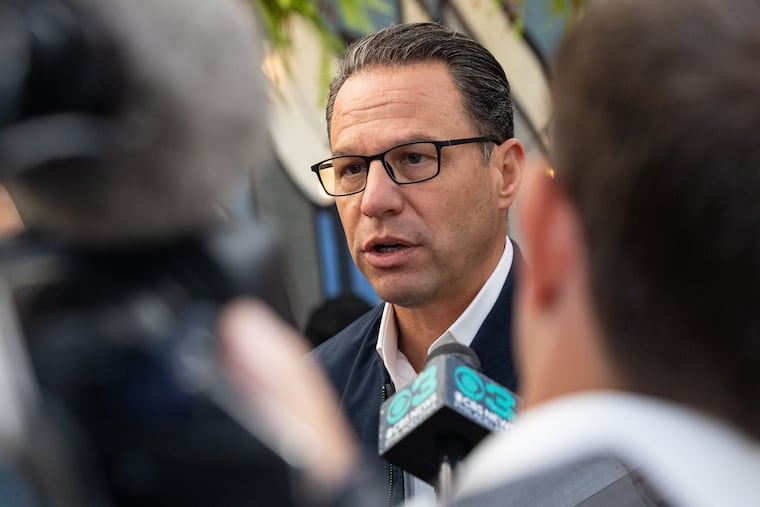
Food truck owners who testified in City Council last week against a new business curfew said they were retaliated against by the city for speaking out when a number of city agencies visited them hours after their testimony to check their licenses and registrations.
The vendors are backed by the Institute for Justice, a national libertarian law firm that has recently been organizing against the city’s new curfew. That curfew, which became law last week without Mayor Cherelle L. Parker’s signature, mandates that businesses in large swaths of North Philadelphia, Kensington, and Northwest Philadelphia close by 11 p.m., and imposes $1,000 fines on violators.
It’s an expansion of an effort by Councilmember Quetcy Lozada to crack down on so-called nuisance businesses that she saw as attracting crime. A bill she introduced establishing a more limited curfew for much of Kensington was signed into law in 2024.
The city denied the allegations of retaliation.
“No vendors have been targeted in connection with the individuals who testified in City Council last Thursday,” the Philadelphia Managing Director’s Office, which oversees the Department of Licenses and Inspections, told The Inquirer in a statement. “We can say with certainty that enforcement was pre-planned before Thursday, and is indeed part of ongoing enforcement of various code provisions.”
The city ultimately issued four violations for “illegal electrical connections,” an L&I spokesperson said. A vendor who testified said his food truck was also towed last week.
Now the Institute for Justice is threatening to sue. An attorney at the firm sent the city solicitor a letter on Monday “to express serious concerns that the City of Philadelphia is retaliating against local businesses that exercise their First Amendment rights” and told the city to preserve all documents related to the matter.
“There are things the city can do to make [litigation] less likely, such as not retaliating against people who speak out against policies moving forward and educating city employees on how and why this type of retaliation is unconstitutional,” said Erica Smith Ewing, senior attorney at the firm.
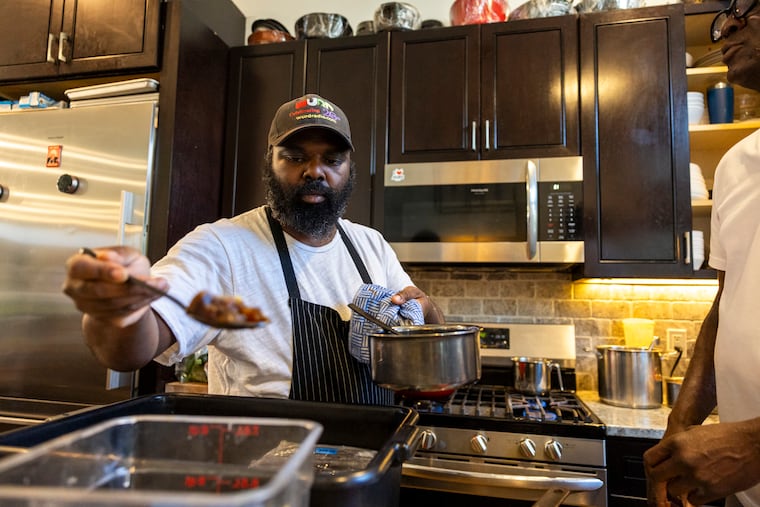
Food truck owners have been organizing against the controversial curfew since the spring, when they say increased enforcement began costing them thousands of dollars in sales each night and required them to lay off workers.
The trucks serve affordable food to late-night shift workers, from SEPTA drivers to police officers, and vendors say they have nothing to do with crime.
Some food truck vendors testified to that effect last week, hoping that Council might take the rare step of rescinding the proposed ordinance before it became law.
» READ MORE: ‘What do food trucks have to do with crime?’ North Philly vendors say new curfew enforcement may wipe them out.
Hours after his testimony at City Hall, vendor Edward Bonilla said, city officials from the Philadelphia Police Department, the Philadelphia Parking Authority, and L&I arrived at his truck, the Fifth Street Super Juice Bar, in the Harrowgate section of Kensington. They wanted to see his permits and licenses.
“It felt like retaliation, because how do you explain that just four hours after the hearing, we get L&I, the parking authority, and the PPD? How do you explain them going to the area where José Luis’ truck is and then coming right to my truck?” Bonilla said, referring to another food truck owner who testified and was later visited by city officials.
The Philadelphia Parking Authority directed the Inquirer to the city’s press office. The Philadelphia Police Department did not respond to requests for comment.
Bonilla, who runs four food trucks and two brick-and-mortar stores in the area, passed an L&I inspection in January of this year, according to city records. But officers informed him that his vehicle registration had expired in January. Since registration renewal can usually be completed online, he pleaded with the officers to let him do it then, before they towed his truck, he said. They refused, he said, and proceeded to tow it.
The managing director’s office confirmed that Bonilla had an expired permit and said that’s why his truck was towed, not because of his testimony.
Bonilla retrieved his truck on Friday, after paying hundreds of dollars in fines and towing fees. He also lost two nights of work. He said he is now looking to leave Philadelphia and move his businesses elsewhere, though he has lived here for 27 years.
“I am exhausted and feel harassed,” he said. “I need a city that will let me work in peace.”
José Luis Reinoso, a chef and food truck owner who operates the Alta Cocina truck in Juniata Park, also testified against the curfew at City Council on Thursday and was also visited by city officials later that day, he said.
All of his paperwork was in order and he received no violations, he said, though officers told him to remove the promotional signs on the side of his truck without explaining why.
“Right now, we are alone. Our representatives have turned their backs on us,” Reinoso said. “It feels like nobody is listening to us. They have left us powerless.”