Mayor Cherelle Parker allows expanded business curfew to become law without her signature | City Council roundup
In its first fall session, Council also introduced a bill on parking regulations and bike lanes, and called for tighter enforcement on businesses that sell unregulated hemp and kratom.
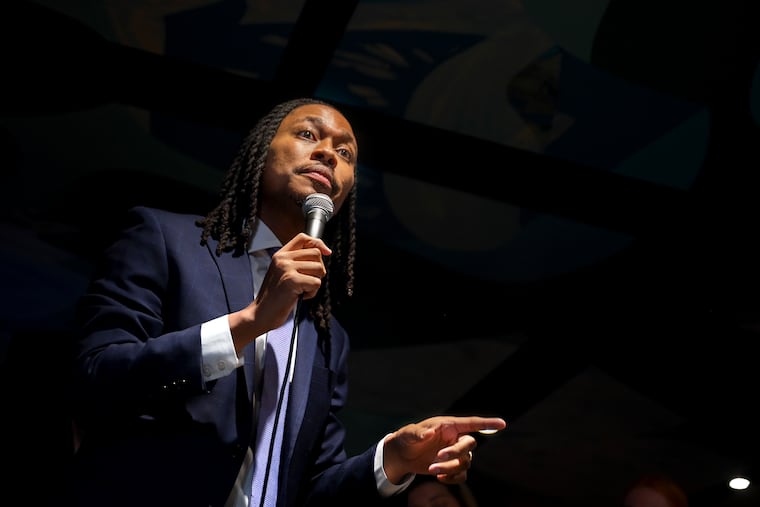
Mayor Cherelle L. Parker has allowed a controversial bill expanding an 11 p.m. business curfew to additional parts of the city, beyond Kensington, to become law without her signature.
In June, lawmakers approved the bill, which was authored by Councilmember Quetcy Lozada, in a 16-0 vote, sending it to Parker’s desk. The bill faced opposition from food truck owners, who said it would hurt their businesses, as well as questions about whether it was legal for officials to put such sweeping restrictions on businesses over a large swath of the city.
Parker at the time declined to sign it into law, indicating the administration had concerns and leaving the proposal in limbo throughout the summer, when Council was in recess. The mayor recently said she supports the intent of the bill, but noted that several city departments have concerns about enforcement and implementation.
On Thursday, at Council’s first meeting of its fall session, Parker told Council members she was going to allow the bill to become law rather than veto it, which likely would have been futile given that lawmakers approved the legislation with enough votes to override a mayoral veto.
The bill is an expansion of an effort to crack down on so-called nuisance businesses that allegedly attract crime. Lozada in 2024 established a curfew requiring businesses in much of Kensington to close at 11 p.m.
The new law dramatically expands areas subject to the curfew to include all of Lozada’s 7th District, as well as all of Councilmember Cindy Bass’ 8th District in North and Northwest Philadelphia, and stretches to parts of Councilmember Mark Squilla’s 1st District, including a part of Kensington. It also increases fines for violating the curfew from $500 to $1,000.
Food truck operator Edward Bonilla said his business, which was subject to the original curfew, has suffered as a result.
“I’ve had to cut down the hours for my workers, and if they do not work, they have less hours. They have less money to support themselves,” Bonilla said through a translator during public comment. “While I respect the goal of safety …. I ask that you take us into account and understand the schedule, the hours.”
Legal fight on the horizon?
Also during public comment, Jennifer McDonald, cities work director and assistant director of activism for the Virginia-based libertarian law firm Institute for Justice, highlighted other examples of business owners who said the new law would hurt their bottom lines and urged lawmakers to consider a solution to the nuisance business problem “without harming the community trust and economic vitality of our small-business owners.”
McDonald’s organization has sued the city before over its civil forfeiture practices. Her comments did not go over well with Lozada.
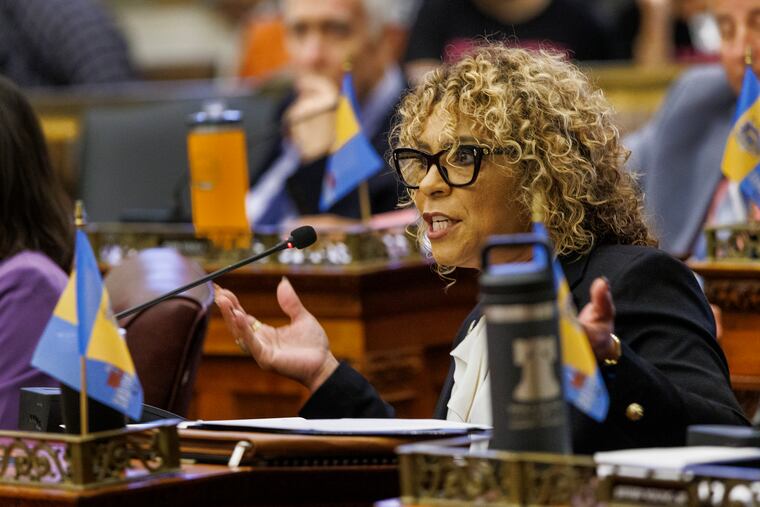
“They are not in Philadelphia — I want to say that first. They are not in Philadelphia," Lozada said, adding that her community is “going to continue to fight for quality of life.”
Lozada added that the curfew measure and her other efforts to clean up Kensington are key to attracting businesses to her district.
“In order for businesses to choose the 7th Councilmanic District as a place where they want to bring their business, we have to do something,” Lozada said. “No one is going to bring their business to the 7th Councilmanic District in the conditions we have today.”
Legal fix for Center City bike lane case
Bike lane back-and-forth: After a judge this summer blocked the city from establishing car loading zones in arterial bike lanes in Center City, Parker on Thursday sent Council a bill in hopes of providing a legal fix to break the judicial logjam and allow the city to move forward.
Council recently made it illegal for vehicles to idle in bike lanes following a series of rider and pedestrian deaths in Philadelphia last year. The Streets Department subsequently attempted to add loading zones to the popular bike lanes on Spruce and Pine Streets in Center City to allow residents space to briefly park their vehicles when dropping off passengers or unloading groceries without idling in the bike lanes.
The loading zones would take the place of a handful of parking spaces, however, angering some neighbors.
A lawsuit from residents on those blocks spurred Common Pleas Court Judge Sierra Thomas Street to order the city to stop taking parking spaces on Spruce and Pine for the loading zones.
Thomas Street said that the city does not have the authority to create the loading zones without a specific ordinance from Council. The judge disagreed with the city’s argument that the Streets Department has the authority to create the loading zones without passing a new ordinance.
Parker spokesperson Joe Grace said Council granted the Streets Department independent power over parking regulations in Center City and University City in 1982. Although the ordinance was never incorporated into the city’s code of laws, the Streets Department has promulgated thousands of regulations under this power in the last 43 years.
Parker’s bill, which was introduced Thursday by Councilmember Jeffery “Jay” Young Jr. on behalf of Council President Kenyatta Johnson, would officially incorporate the 1982 law into the city code.
“It also clarifies that the Streets Department can create loading zones and legalizes all existing regulations,” Grace said. “The bill doesn’t actually change anything in law. It just makes it clearer and more transparent.”
George Bochetto, the attorney for the advocacy group that filed the lawsuit, said in a statement Thursday that “City Council should be careful what it wishes for.”
“Politicians normally seek to acquire more control, not give it away,” he said.
Council explores a kratom crackdown
Inquirer investigation: Council Majority Leader Katherine Gilmore Richardson on Thursday also took action to combat the stubborn problem of “nuisance businesses,” including smoke shops and convenience stores offering unregulated recreational drugs, paraphernalia, and slot machines.
Gilmore Richardson called for tighter enforcement and hearings on the proliferation of stores that sell unregulated hemp and kratom, citing findings from recent Inquirer investigations.
One story linked hemp products to toxic contamination, while another uncovered a rising tide of addiction linked to an opioid-like kratom extract called “7-OH.”
» READ MORE: City Council bill would crack down on unregulated smoke shops, citing Inquirer report
More broadly, these stores have led to neighbor complaints and incensed Council members, who have repeatedly sought and passed legislation to crack down on these storefronts — with limited success.
Gilmore Richardson’s fresh set of bills would close what she described as loopholes that have frustrated past attempts by the city to bring owners into compliance. A companion resolution, which passed unanimously, would further examine the sale of unregulated drugs at these stores.
“We hope to use this hearing to inform a future bill addressing the surge of these dangerous products devastating our communities,” Richardson said.
Quotable
Doctor in the house: Ala Stanford, a surgeon and health equity advocate, was recognized by Council on Thursday for her work leading It Takes Philly, a nonprofit youth empowerment organization.
Stanford founded the Black Doctors COVID-19 Consortium, an initiative of It Takes Philly. The consortium gained national attention during the coronavirus pandemic by providing vaccinations and testing to underserved communities in Philadelphia and Southeastern Pennsylvania.
Of note: Stanford is rumored to be considering running in next year’s crowded Democratic primary to replace U.S. Rep. Dwight Evans (D., Pa.), who announced he will not seek reelection to his seat in the Third Congressional District.
Staff writers Zoe Greenberg and Max Marin contributed to this article.