Judge temporarily bars ICE from deporting man who helped police investigate his daughter’s shooting death
Erasmo Zavala Almanza was detained by ICE and could have been removed from the United States as early as Monday.
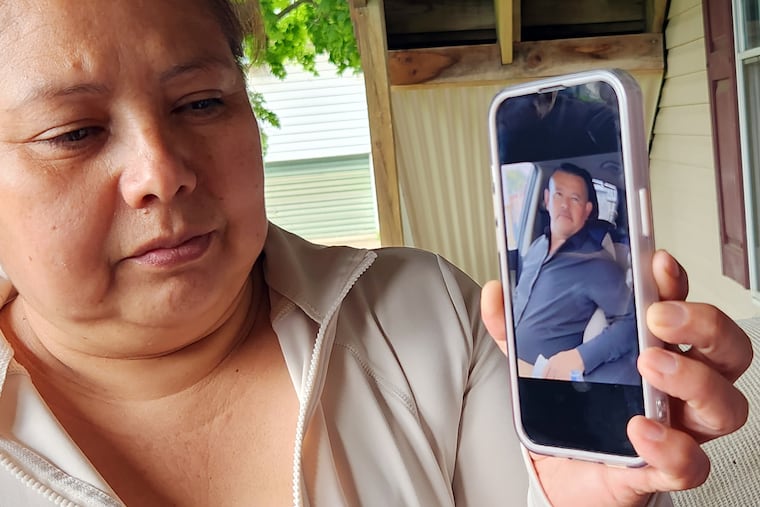
ICE has been blocked, at least for now, from deporting an undocumented Mexican man who helped Berks County authorities investigate the shooting death of his daughter.
Erasmo Zavala Almanza, 50, will not be removed from the United States before June 1, a federal judge ruled Thursday. He could have been deported as soon as Monday.
Zavala Almanza helped Berks County authorities as they investigated the 2025 killing of his daughter, Selena, and the wounding of her 2-month-old baby, Selene, for whom he is now a primary caretaker. The mother and child were shot by the child’s father, who then killed himself, police said.
The Berks County District Attorney’s Office certified Zavala Almanza to apply for a U visa, which if approved puts undocumented victims and witnesses who help the police investigate serious crimes on a path to live permanently in the U.S.
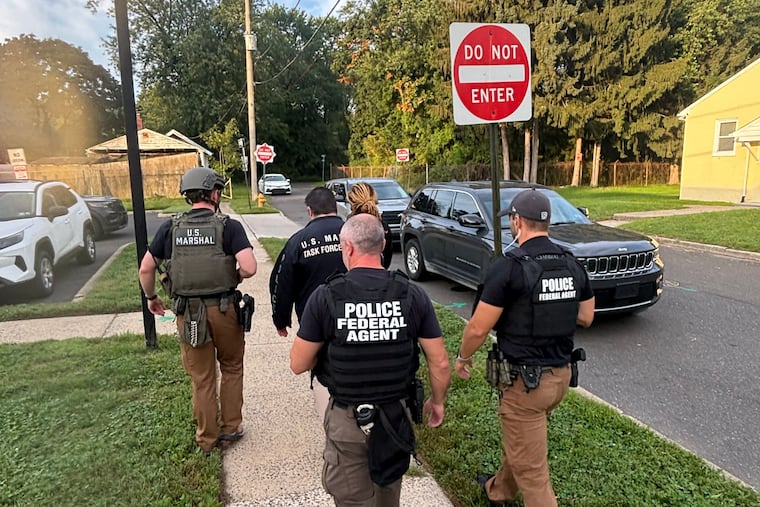
On April 15, three months after the federal government received Zavala Almanza’s application, ICE agents appeared at his home in Temple, Berks County, and arrested him for immigration violations.
Zavala Almanza remains in detention at the Moshannon Valley Processing Center in Clearfield County, Pa.
Thursday’s ruling by U.S. District Judge Stephanie Haines comes in a complicated and wrenching case, one in which the baby barely survived grievous injuries and her grandfather faces expulsion from the U.S.
During a court hearing Wednesday, Haines said she found aspects of Zavala Almanza’s case “very compelling,” and directed pointed questions to Assistant U.S. Attorney Adam Hallowell.
“How about fundamental fairness?” the judge asked. “Fundamental fairness has to come into play … It’s very frustrating to this court.”
At the county level, the judge said, Berks authorities relied on Zavala Almanza, certifying him to apply for a U visa. But at the federal level, the judge said, “we’re punishing this person,” as ICE arrested and detained Zavala Almanza after he provided assistance.
“We understand the sympathy factor,” Hallowell responded.
“I’m not talking sympathy,” the judge told him.
Hallowell said he was applying the law, and that aid afforded by immigrants to local police must be balanced against federal immigration priorities.
The life of Zavala Almanza and his family changed forever on Feb. 17, 2025, when Reading police responded to reports of gunfire at a home in the 1200 block of Locust Street.
They found Selena Zavala Hernandez shot to death, and her baby, Selene Zavala Hernandez, critically wounded in the stomach. Mother and child, both U.S. citizens, had been attacked by the child’s father, 31-year-old Jesus Peñaloza Cruz, who then shot and killed himself.
The child survived multiple surgeries and months of hospitalization, supported by the love and care of Zavala Almanza and his wife, whom the courts appointed as guardians to their orphaned granddaughter.
Every day, the family said in legal filings, Zavala Almanza commuted from work to the hospital bed of his granddaughter. He slept beside her in the hospital and learned how to flush her feeding tube, to change her colostomy bag, and to clean and dress her wounds.
His arrest and detention marked part of a dramatic change in longstanding ICE policy, which had acknowledged that all U visa applicants have immigration violations, that they must disclose those violations ― and that those transgressions would be forgiven through the award of a U visa.
The new policy also departs from what Congress intended when it created the U visa in 2000, by passing the Victims of Trafficking and Violence Protection Act and the Battered Immigrant Women’s Protection Act. Congress created T visas at the same time to fight trafficking.
The goal was to strengthen the ability of law enforcement agencies to investigate crimes like the one that took the life of Zavala Almanza’s daughter. The visas help police solve crimes and increase public safety by gaining cooperation from undocumented people who might otherwise fear to come forward.
After taking office in 2025, President Donald Trump weakened the shield that U visas provide.
ICE agents previously were directed to take “a victim-centered approach,” dissuaded from acting against people known to be victims or witnesses, particularly in cases involving domestic violence, trafficking, and sexual assault.
The new guidelines rescinded policies that had discouraged detention and deportation, shifting instead to what Zavala Almanza’s attorney described in court as “removal-first, removal-only.”
Lawyer Bridget Cambria, executive director of Aldea — the People’s Justice Center in Reading, told the court Wednesday that the new ICE guidance is arbitrary and capricious. She asked that, in this case, the government be directed to apply the earlier guidelines.
“This is not just a sympathetic case, it’s a meritorious case,” she told the judge. “When law enforcement needed information, he stepped up.”
It’s exactly the kind of case for which Congress created the U visa, she said. And yet, she said, ICE paperwork “shows the trigger for that arrest was the filing of the U visa application.”
She has asked the court to order:
That Zavala Almanza be released from detention.
That U.S. Citizenship and Immigration Services conduct what’s called a bona fide determination, a process established by Congress as a mini review of whether a U visa application is likely to be approved. A favorable bona fide decision typically comes with a work permit and with deferred action, a pause on prosecution to let other legal processes play out.
That the government be barred from deporting Zavala Almanza while the bona fide determination is taking place.
Efforts to reach officials at Immigration and Customs Enforcement and the Department of Homeland Security for comment were unsuccessful, as were requests for comment from USCIS.
The federal government says Zavala Almanza has a final order of removal. His attorneys say that is not true — and even if so, that order would be wiped away by the award of a U visa.
In court papers, Zavala Almanza said he and his wife entered the United States without permission in March 2004, crossing the border in Arizona and settling in Pennsylvania. They welcomed two American-born daughters, Stephanie and Selena.
In September 2009, the couple was stopped by Wilkes-Barre police for a traffic violation, and the officer contacted ICE.
Eleven months later, an immigration judge in Philadelphia granted voluntary departure, which meant husband and wife would be allowed to leave the country on their own, without accruing the penalties that accompany deportation.
Zavala Almanza acknowledged in court documents ― and as required, in his U visa application ― that while his wife departed on time, he overstayed the December 2010 deadline by at least a year before returning to Mexico.
He recrossed into the United States in late 2015 or early 2016, followed by his wife.
The government maintains that what the Immigration Court initiated as voluntary departure converted into a deportation order when Zavala Almanza failed to leave on time. And that he must go back to Immigration Court to try to resolve that.
Cambria argued ― and the judge seemed to agree ― that any deportation order was fulfilled when Zavala Almanza departed the United States, no matter how he left.
Hallowell argued that Zavala Almanza could pursue his visa application from outside the United States. And that others could care for Selene, now about 17 months old.
“He’s not the only caregiver,” Hallowell said, citing Zavala Almanza’s wife and surviving daughter.
Zavala Almanza said in court documents that part of the reason for seeking a U visa was to be here to provide continued care and financial support for his granddaughter. His wife cannot leave home to work because she tends full time to Selene.
Her continued recovery depends “on the consistent presence of the only two caregivers she has ever known,” the family’s attorney said in court papers. “She cannot be cared for by anyone other than Mr. Zavala Almanza and his wife, and she certainly cannot be taken to Mexico.”