For Philly-area immigrants, an ICE arrest can take them thousands of miles from home. Some say that’s by design.
In detentions involving nearly 20,000 transfers, some immigrants were sent hundreds or even thousands of miles, far from attorneys, family members, and support networks.
At the time, Francisco thought the worst had happened on that day in August, when he was stopped and arrested by ICE on his way to work in South Jersey.
But he never imagined the odyssey that would follow — a series of transfers among detention centers that propelled him through several states and different court jurisdictions, moving him 1,700 miles from his home and, eventually, 1,700 miles back.
Some nights he slept on a concrete floor. He never knew where, when, or why he was being moved. Or if the next trip would be the one to deliver him to Mexico, the homeland he left 30 years ago as a teenager.
“I’m traumatized,” said Francisco, who asked to be identified by only one name because he fears government retribution. “Every time I see a cop I’m shaking. I’m not the same guy.”
In fact, Francisco’s experience was not that unusual, as President Donald Trump pursues his plans for record deportations and immigrants are thrust into a sprawling and expanding detention system that reaches from New Jersey to California.
More than 12,000 people were placed in detention in Pennsylvania, New Jersey, and Delaware in the nine months after Trump took office in January. That is nearly three times the number of detentions during the last nine months of former President Joe Biden’s administration, as determined by an Inquirer analysis of U.S. Immigration and Customs Enforcement data.
Those detentions involved nearly 20,000 transfers, in which immigrants were sent hundreds or even thousands of miles, far from attorneys, family members, and support networks.
More than a third of detainees, about 36%, were transferred three or more times. The typical detainee was transferred twice and sent more than 1,200 miles total.
And while about 37% of detainees who arrived during the last nine months of the Biden administration were never transferred, that figure has fallen to 14% under Trump.
The data were made public by the Deportation Data Project, a group of immigration-focused academics and lawyers that acquired the information through a Freedom of Information Act lawsuit.
ICE officials did not reply to a request to discuss detainee transfers.
The agency has virtually unlimited authority to move detainees within the system, and those transfers can occur at any time and with little or no warning.
Generally, ICE says it moves people to make use of available bed space, for medical needs, and to meet specific security and custody determinations. But immigration attorneys and advocates see a different goal at play.
They say transfers often are designed to wear down immigrants’ resolve and complicate their ability to fight deportation.
“The point is to not make it easy for them, so they give up,” said Philadelphia-based immigration attorney Matthew Archambeault, who represents Francisco.
He has had clients who were arrested in Philadelphia and transferred to the Deep South or Far West. That matters, he said, because a client held in Pennsylvania falls under the U.S. Court of Appeals for the Third Circuit, while New Mexico is under the 10th, and Arizona under the Ninth. When jurisdictions change, legal briefs may need to be rewritten and interviews rescheduled across different time zones.
“It’s scary, every time they put them on a plane, they wonder, ‘Am I being sent out?’” Archambeault said. “There is something psychologically comforting about knowing, ‘I’m still in Pennsylvania, my family is here,’ as opposed to, ‘I’m in Denver, Colorado, and I don’t even know where that is.’”
Archambeault finds himself having more conversations with clients about “voluntary departure,” a legal mechanism by which noncitizens can leave the U.S. on their own, avoiding a formal deportation that carries a 10-year ban on return.
Voluntary departures of detainees increased nearly 750%, from just 61 over the final nine months of Biden’s term to 516 over the first nine months of Trump’s administration.
Francisco entered the U.S. without permission three decades ago, when he was about 16. He has an employment permit to legally work — he is a chef — while he pursues permanent immigration status.
After his arrest, he said, he was taken to an immigration office in Mount Laurel, then moved in shackles to a detention center in Elizabeth, N.J.
After about a month there, he was flown to Louisiana. He said he spent four days in that state before being moved again, to El Paso, Texas, and then, after roughly a week, to Denver.
He was never told where or why he was being moved, he said, and uncertainty preyed on him. Fear of imminent deportation loomed, even as he applied for relief from removal and a son in the U.S. military sought to help him through a program for service members.
Francisco said that after weeks of confinement in Denver, agents approached and shackled him again — he thought this was finally the end, that he was about to be sent to Mexico.
Instead, a federal judge had ordered his immediate release and return to New Jersey, and he was flown back to Elizabeth.
“They move you around because they want to distract your lawyer,” he said, “so you got no chance to see the judge and you get deported.”
And deportations of detainees have become increasingly common during Trump’s second term.
About 41% of detainees who were booked into facilities in April 2024 were deported within two months, while 11% were released. By August 2025, 68% were deported and less than 2% were released.
Immigration attorney Bridget Cambria, executive director of Aldea — The People’s Justice Center, in Reading, says that for those who are transferred, the loss of family and community support can be traumatic. They are often sent to rural, conservative areas that do not have robust immigrant-defense organizations.
“It isolates them,” she said. “You lose the resources, you lose access to counsel, to your witnesses, to your evidence. … Not every attorney will keep a case that’s now out of the local jurisdiction.”
The government’s goal is not to ensure access to legal relief, she said, but “to exert the maximum possible pressure or harm to facilitate removal. ‘How can I make it so difficult that you give up?’”
The number of people in ICE detention has reached historic highs, topping 70,000 this year, up 75% from when Trump took office. The ability to confine and process large numbers of immigrants is essential to the president’s plan to carry out an unprecedented deportation campaign.
The administration says it needs more space, that an estimated 220 jails, prisons, and holding centers around the country, as counted by the American Immigration Council, do not provide enough beds.
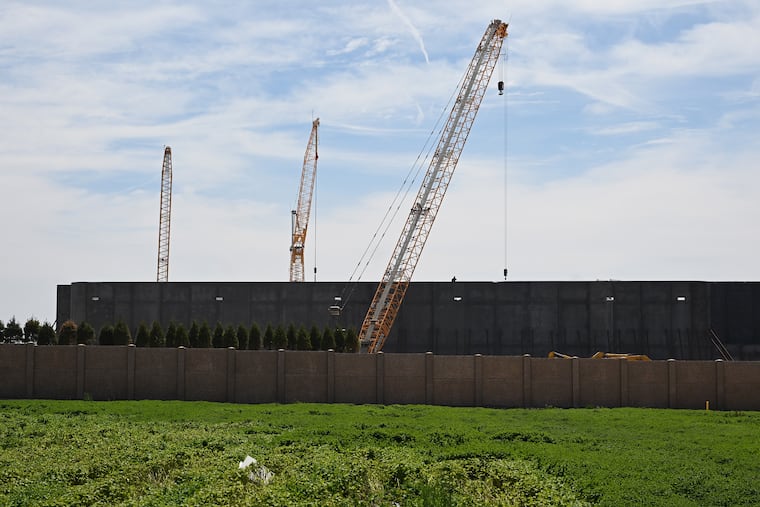
Now ICE expects to spend $38.3 billion to buy and retrofit warehouses across the nation, turning them into large-scale detention centers. Immigrant advocates call the warehouses “concentration camps” and question how structures built to store consumer and industrial goods can safely and humanely hold thousands of people.
Two of those conversions are planned in Pennsylvania, in Berks and Schuylkill Counties.
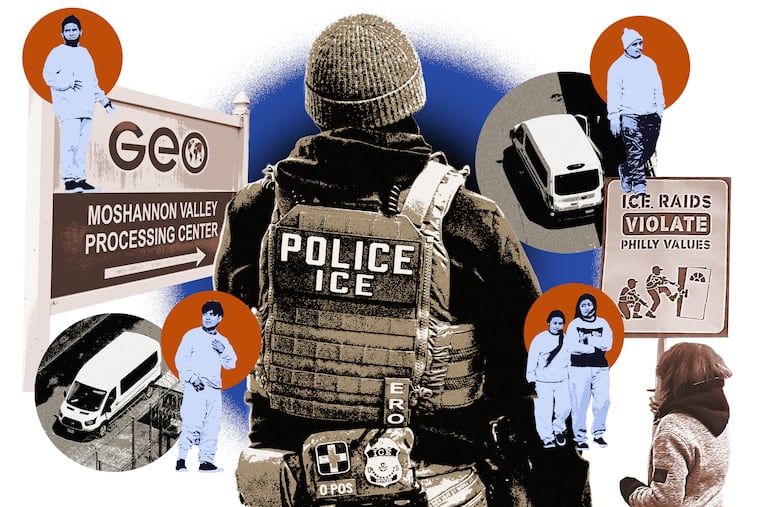
ICE already operates five detention facilities in Pennsylvania, including the 1,876-bed Moshannon Valley Processing Center in Clearfield County, the largest detention center in the Northeast. It is located about 220 miles west of Philadelphia.
In New Jersey, detention centers operate in Elizabeth and Newark.
So far, Philadelphia resident Sereyrath “One” Van has been transferred once, from Moshannon to Indiana, lodged in a state prison that holds detainees.
“I hate to say it, but Moshannon was like a hotel compared to this place,” Van said in a call from the Miami Correctional Facility near Bunker Hill, Ind., where he was moved in December. “This is real prison. It’s real corrections officers. The same rules that apply to state prisoners apply to us.”
Van is fighting a deportation order that stems from a 2018 felony conviction for possession with intent to manufacture or deliver drugs. Such a conviction can lead to revocation of green-card status.
He was born in Thailand, after his family fled the Khmer Rouge genocide in Cambodia. He was 4 when they came to the United States and were resettled as refugees in 1984. Now the government seeks to deport him to Cambodia, a place he has never lived or visited.
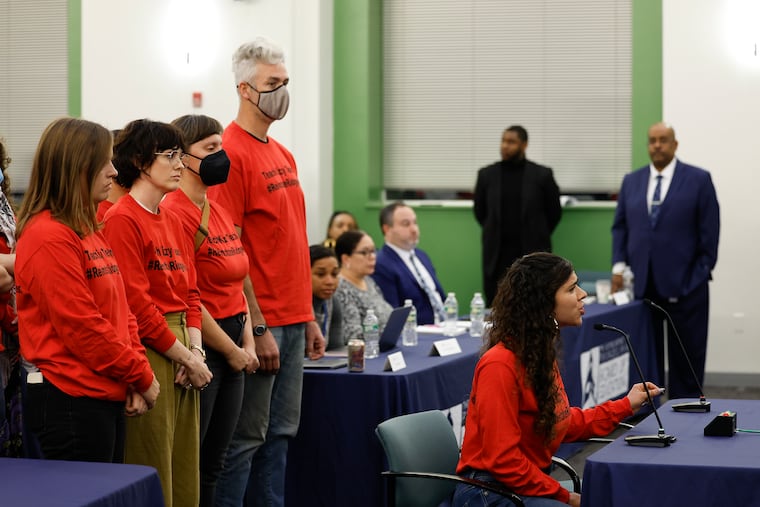
Van’s case became a cause celebre in Philadelphia, where supporters rallied on his behalf and City Council passed a resolution that called on ICE to immediately release him. The resolution also asked local congressional representatives to recognize Philadelphia as a city of second chances, particularly for formerly incarcerated noncitizens.
Immigration detention is civil confinement, not supposed to be punitive. But Van said that’s not how it feels in Indiana.
At least at Moshannon, he said, relatives and friends were close enough to visit, as did supporters from the Juntos advocacy group in South Philadelphia. Now he has been moved 469 miles farther away.
That kind of distance has impact.
Philadelphia immigration attorney Adam Solow said one of his clients was arrested outside a Home Depot in South Jersey, detained in Elizabeth, then sent to El Paso, then to New Mexico, then back to El Paso.
“They’re sent to court where we don’t know anything about the judges,” he said, “and that does make a difference.”
Arguing a case in front of a familiar judge, he said, is like a ballplayer batting in front of a known umpire — you get no favors, but at least you know the size of the strike zone and how the ump calls balls and strikes.
The Inquirer analysis found that often the facility at which a person entered the system was not where they spent the longest portion of their stay, nor the facility from which they were eventually released or deported.
The most common first facility was the Elizabeth Detention Facility in New Jersey. More than 2,200 people began their stays there, but only 1,400 spent the longest portion of their stay there and only about 700 ended their stay there.
People are often initially detained at a temporary holding center, such as the Philadelphia District ICE Office or the Mount Laurel Hold Room in New Jersey. Then they are transferred to a different facility for the longest portion of their stay, and released or deported from a handful of deportation hubs, including some far away from their initial point of detention.
Among the last group is the Alexandria Staging Facility in Louisiana, from which about 2,600 people first detained in Pennsylvania, New Jersey, or Delaware were deported or released — more than any other in the country.
Freedom for Immigrants, a California-based advocacy group, tracked 70 cases of what it called “circular transfers.” In those, immigrants were sent between multiple detention facilities, sometimes traveling thousands of miles, before being returned to the same facility where they had originally been detained.
“Transfers are a uniquely traumatizing experience, and they inflict a devastating toll on individuals’ physical and mental health,” the group said in a 2023 report.
Other studies reached similar conclusions.
An analysis by the Journal of Law and Policy at the Brooklyn Law School said ICE uses transfers strategically, to further enforcement goals. But for some, those transfers can shape the outcomes of immigration cases that determine their futures.
Immigrants are regularly funneled to detention centers in jurisdictions that are hostile to petitions for relief or located in rural communities where they are more likely to face barriers to battling deportation.
“The intractable problems raised by transfers,” the study said, “highlight the problems inherent in an enforcement strategy with detention at its center.”