New project helps LGBTQ people move from homelessness to housing
The initiative offers rent to landlords to house young LGBTQ people.
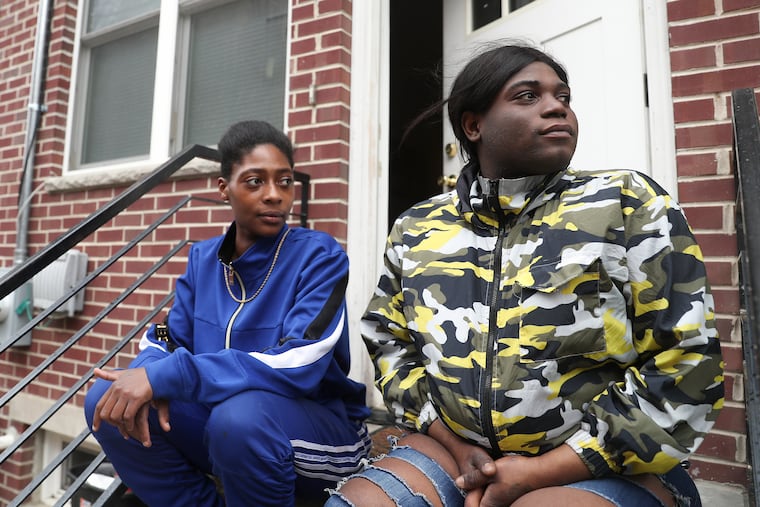
When Nadia Butler, 23, came out as a transgender person, her North Philadelphia family couldn’t handle it.
“You’re not welcome here,” she was told. “Get your stuff and go.”
She did, experiencing homelessness for six years, starting at 17. “Staying in bandos [abandoned buildings], having sex for money, being attacked a couple of times,” Butler said. “That’s hard, sleeping in the streets.”
Just a month ago, all that changed.
Butler began living in a five-bedroom West Philadelphia apartment as part of a new initiative open to individuals who identify as LGBTQ. She’s studying heating and air conditioning at a North Philadelphia vocational training center that’s part of the nonprofit National Center on Institutions and Alternatives.
It’s called the Way Home Project, and Philadelphia’s Office of Homeless Services is offering one year of rental assistance — worth around $400,000 — to landlords around the city to support it. By June, a total of 40 LGBTQ individuals who’ve been living on the street will have their own rooms in various buildings. As of this week, 12 people have been housed, and a waiting list is forming.
The project is operated by SELF Inc., the largest provider of emergency housing services to single adults in Philadelphia, in partnership with the William Way LGBT Community Center in Center City.
While Project HOME, the Philadelphia anti-homelessness agency, built the Gloria Casarez Residence for young LGBTQ people in North Philadelphia in 2019, “there’s never been a program like Way Home,” said OHS director Liz Hersh. “It’s innovative, cutting-edge stuff. It’s designed and tailored to connect LGBTQ people to landlord rental-assistance,” also known as rapid rehousing. “We will try to sustain it, grow it, replicate it, learn from it.”
Much of the impetus for the project, which is also open to non-LGBTQ people, originated organically with LGBTQ activists and community members, said SELF president and COO Mike Hinson.
“It’s very exciting,” he said. “There are large numbers of LGBTQ+ people who, for valid reasons, don’t access our city homeless services. It could be because of prior mistreatment within the system, safety issues, or privacy considerations among people who are transgender or transitioning.”
Stable housing is the key to building a solid life, Hinson added, “but unfortunately, for too long, LGBTQ individuals have not had the same access to safe housing others have.”
Throughout the region, 40% or more of people aged 18 to 26 who experience homelessness identify as LGBTQ, said Chris Bartlett, executive director of William Way. Many have aged out of foster care. “A large proportion of these young people do not find support from their families or community,” he added. “I think this project may be model for other cities.”
Along with housing, formerly homeless LGBTQ tenants are receiving social services to help them adjust to life, including education, job training, and mental health support. Many LGBTQ people experience family rejection, discrimination, harassment, and violence, experts on homelessness say.
» READ MORE: How to find LGBTQ-friendly mental health resources in Philadelphia
Cold-calling landlords
Having a home helps a person deal with past struggles, and learn to heal, experts say.
To make that possible, Cara Trattner, housing assistance manager for the Way Home Project, “probably cold-called or reached out to hundreds of landlords,” she said. “I was pitching them to get involved, trying to match people to housing.”
The biggest challenge was that some landlords believed that renting to people who were coming off the streets — a few with criminal records — was high risk, Trattner said. The incentive, of course, is that property owners who work with Way Home are guaranteed at least a year of rental income, from both the city and, in some cases, the tenants themselves, who contribute as much as 30% of the rent if they have jobs or receive stipends from federal programs such as Supplemental Security Income.
Ultimately, Trattner said she found 54 landlords willing to work with the project. She raved about the five-bedroom place where Butler and two other roommates live, which goes for $800 a room: “It’s really nice, new construction, with each room having its own bathroom. It would normally be rented to college students.”
Kevin Smith, the property manager of the apartment, described himself as part of the LGBTQ community, making it “absolutely essential that I take on the project. And the landlord was all for it. So many other landlords aren’t willing to take a chance.”
Smith said he never lived on the street, but did experience homelessness himself. “It behooved me to figure out a way to give back,” he said. “I wanted to make sure people have adequate housing to move forward in life.”
Primer in survival
As though offering a primer in survival, Imani Silver and her partner, Kaprie Jones, who live in the West Philadelphia apartment with Nadia Butler, talk of all they’ve endured before arriving at their safe haven.
“I was born in a shelter,” said Silver, 21, who, like Butler and Jones, is enrolled at the vocational center, where she’s studying culinary arts. She’d one day like to be a journalist.
The West Philadelphia native, who is a lesbian, said she eventually moved into a home with family members, but they “didn’t want the hassle of my sexuality” being part of their lives. At one point, she tried to kill herself, she said.
Life on the street, where she lived for two years, proved to be “rough and hard.” She herself came to embody those characteristics. “Aside from my partner, Kaprie, I didn’t care about people,” she said. “I didn’t care about who got hurt, as long as I survived. I had weapons. I would attack people.”
Experiencing homelessness with Jones added stress, as Silver was constantly watching out for her partner, and looking for a secure place for the couple to land. Neither felt comfortable in shelters. “I just wanted to get the person I love out of that whole situation,” she said. “I didn’t care about me.”
Jones, 22, a Camden native, was born into a conservative Haitian family. Hiding her sexuality made her angry, causing a rift in her family, which in turn hastened her move to the streets, and she spent more than two years living homeless.
“You do whatever you have to to survive if you love yourself,” Jones said. “Stealing, beating people up. My thinking was, ‘I will always eat. I will never be eaten.’”
But there comes a moment when a person gets tired of fighting, Jones said. “A moment when you say, ‘I’ve had enough.’”
In the apartment, the three women, who are expecting two more roommates to join them soon, say they love the quiet, the calm, the order. Like Butler, Jones is studying heating and air conditioning, dreaming of job security.
Behind locked doors, in rooms of their own, the women can look through their windows at the streets they left, and exhale.
“This is lovely,” Butler said. “So lovely for me. This is home.”